
An Opening Thought:
We have an obsession with aliens. I suppose the reason why this same obsession is not shared with marine life is because a majority of curiosity is satisfied with a initial impressions. General interest precedes, and plummets, with discovery of the formerly hypothetical. However, entertain for a moment that sea stars did not exist and we found one crawling around Mars. Would it not be an instant overnight celebrity in not only the scientific community, but also the general population? Would it not inspire and intrigue billions? Well the reality is, they do exist, yet the extent of recognition these Echinoderms often get are “ooh, cool shape” and “SpongeBob’s bestie”. Let’s give our resident intra-terrestrials a deserved deep dive 🌊🐙💙.
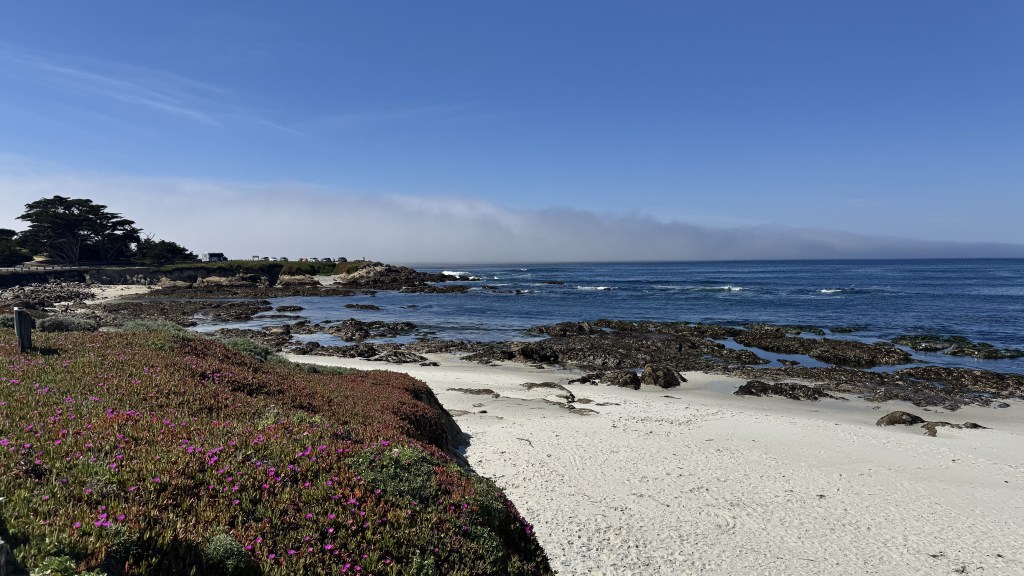
I have always loved marine biology/zoology (aquariums are still one of my favorite types of “museums” to visit). The most accessible marine ecosystem to me as a child growing up in California was the intertidal – a rich and extreme habitat straddling the arid rocks and the salty depths. A good tide pool offers both a density and variety of fauna matched by no other ecosystem in the world – within size of a hula hoop. As you peruse my finds, keep in mind that ALL of these animals can be found within a single pool. Not even the densest litter layer in the Amazon comes close to offering such an ensemble cast. From the first Pachygrapsus crassipes that I painfully un-wedged from its hiding spot beneath the sponge-encrusted rocks, I never stopped exploring these alien pockets.
This almanac is a running list of interesting marine creatures I have personally seen/collected/studied. There is a bias towards invertebrates and animals local to the Pacific Northwest. I have also extended my finds to coastal dives. As a naturalist would, organisms are grouped by phylum. For a full public Google-Photos album of my photos, click here.
Jump To:
- Porifera (Sponges)
- Ctenophora (Comb Jellies)
- Cnidaria (Jellyfish, Anemones, Corals, Hydra)
- Arthopoda (Crabs, Lobsters, Isopods, Barnacles)
- Mollusca (Snails, Clams, Octopus, Squid, Limpets)
- Echinodermata (Sea Stars, Sea Cucumbers, Urchins)
- Platyhelminthes (Flatworms)
- Bryozoa (Colonial filter-feeders)
- Annelida (Segmented worms)
- Hemichordata (Acorn worms)
- Chordata (Vertebrates, Tunicates)
Porifera
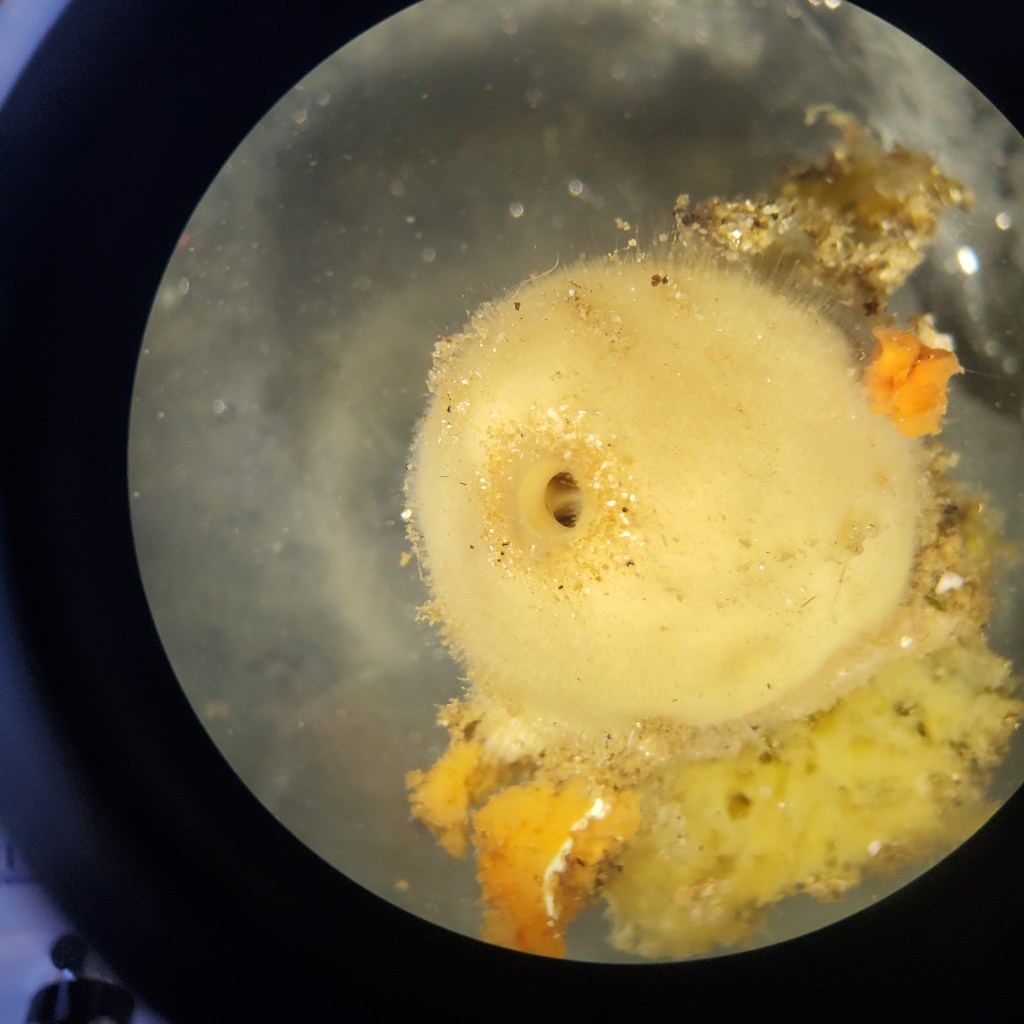
Leucandra heathi (bristly vase sponge)
Class: Calcerea
Location: Monterey Bay, CA – collected off of rocky intertidal
Yellow intertidal sponge with a single large central Ostia (water exit).
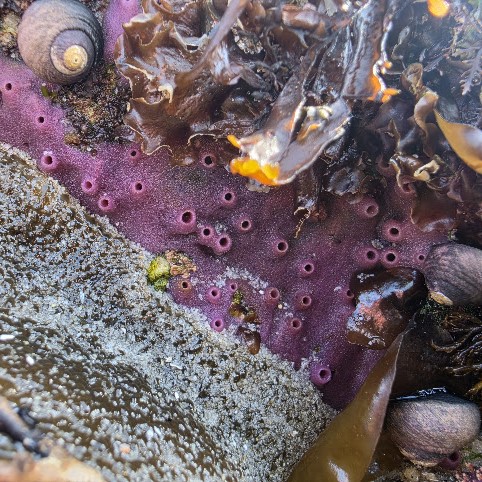
Haliclona rufescens (purple volcano sponge)
Class: Demospongiae
Location: Fanshell Beach, CA
The opening mounds (volcanoes) are the oscula, or the exhalant pores of the sponge. The inhalant pores, or ostia, are much less visible.
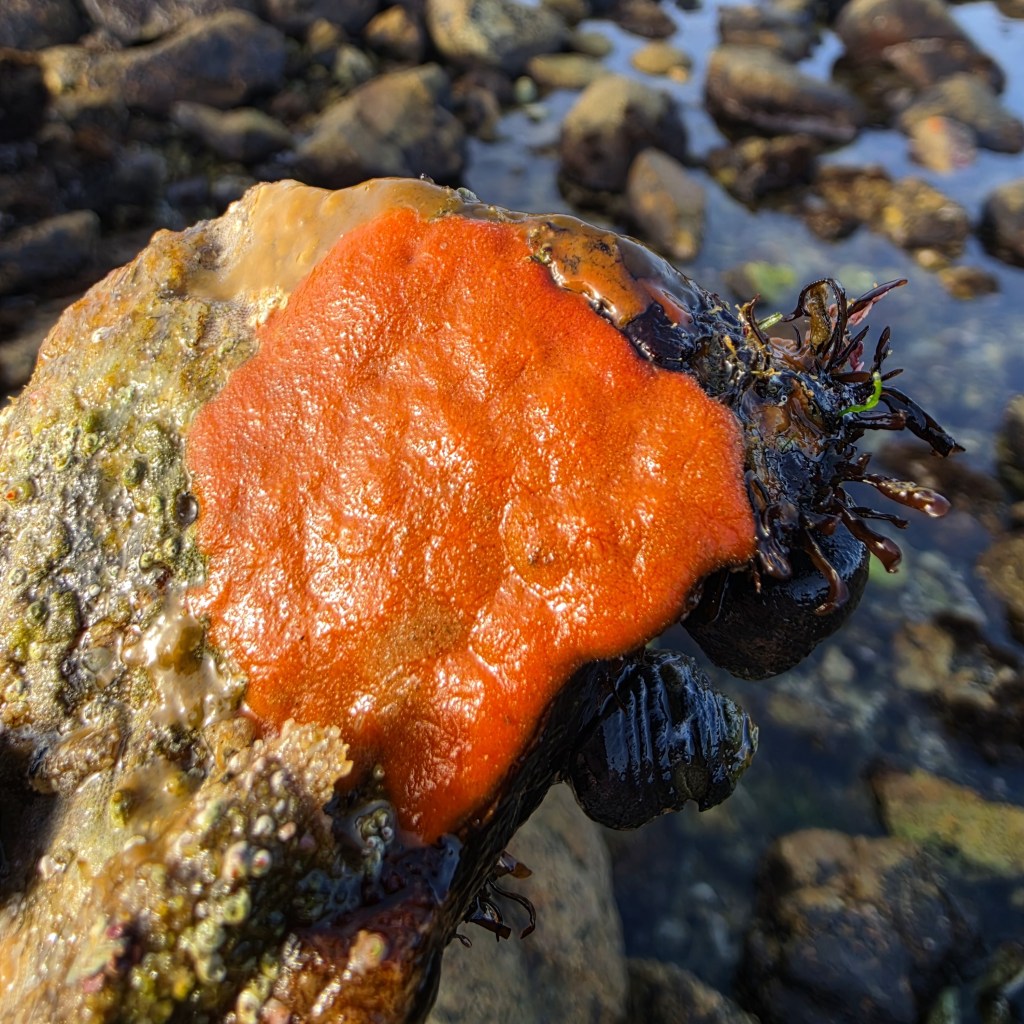
Antho ??? (Orange encrusting sponge)
Class: Demospongiae
Location: Asilmoar, CA
A common but inconspicuous sponge found on the underside of larger, less-mobile rocks. The exact species is quite hard to identify in field.
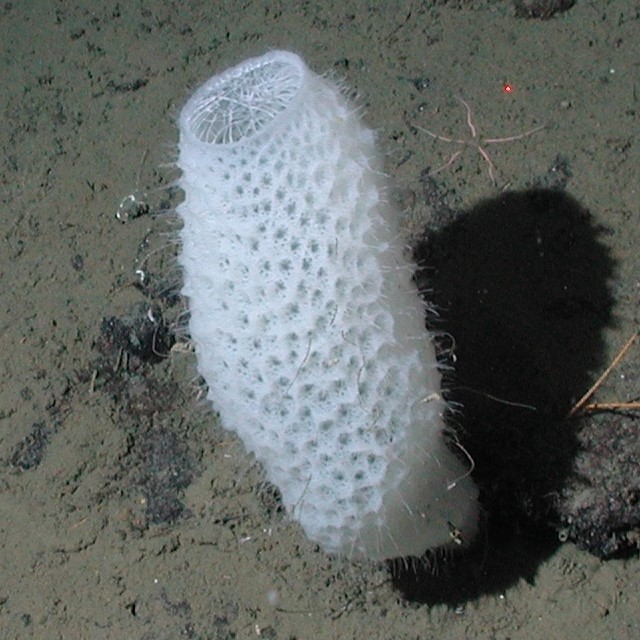
Euplectella aspergillum (glass sponge)
Class: Hexactinellida
Location: Unknown
Image Credits: https://en.wikipedia.org/wiki/Venus%27_flower_basket
Rare deep-sea sponge with a silicone-based skeletal structure (spicules) arranged in a crystal-lattice structure
Ctenophora
*a rare sight. still searching
Cnidaria
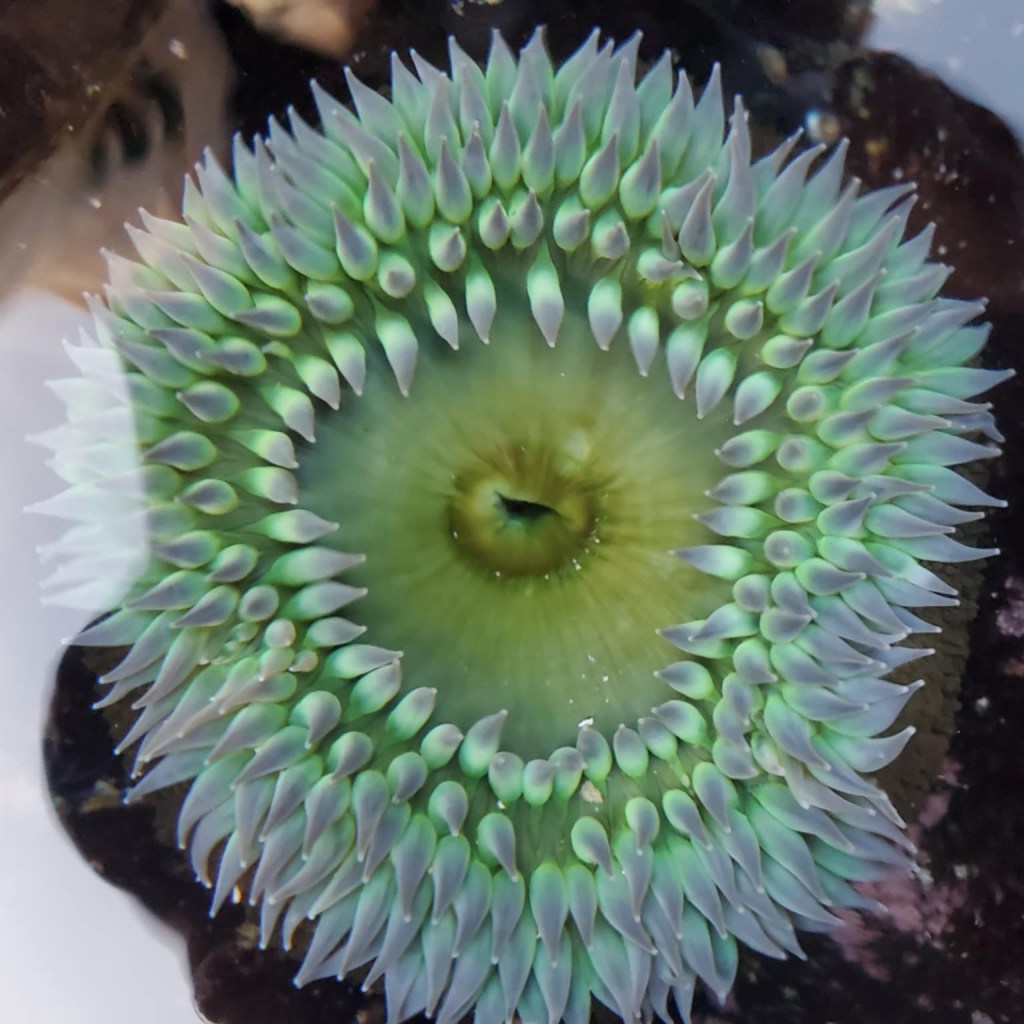
Anthopleura xanthgrammica (Giant green anemone)
Class: Anthozoa
Location: Monterey Bay, CA – Asilomar
A vibrant, solitary cnidarian sure to catch your eye on a trip to the intertidal. Their amazing color comes from the algae they eat.
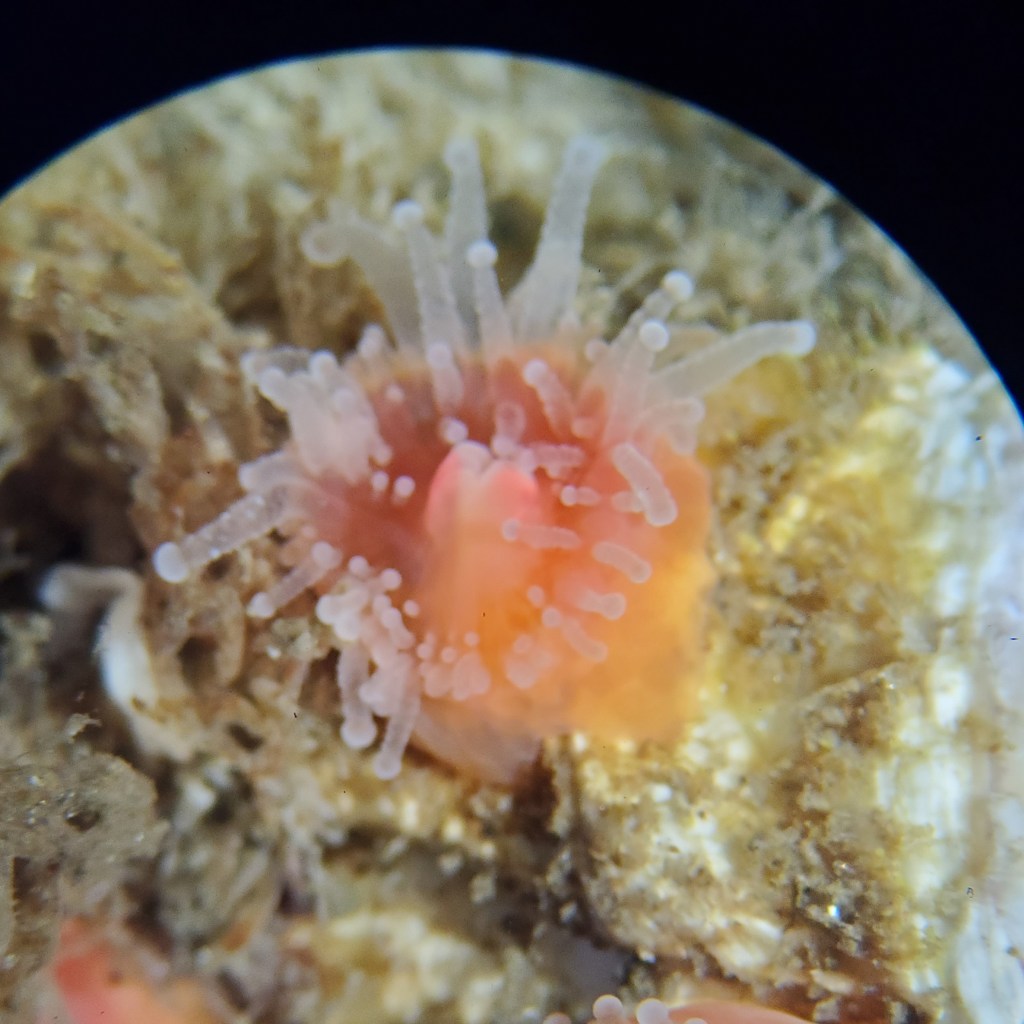
Corynactis californica (strawberry anemone)
Class: Anthozoa
Location: Monterey Bay, CA – collected off of a scuba dive
A cute, softly scarlet, club-tipped anemone found in great abundance off the coast of California.
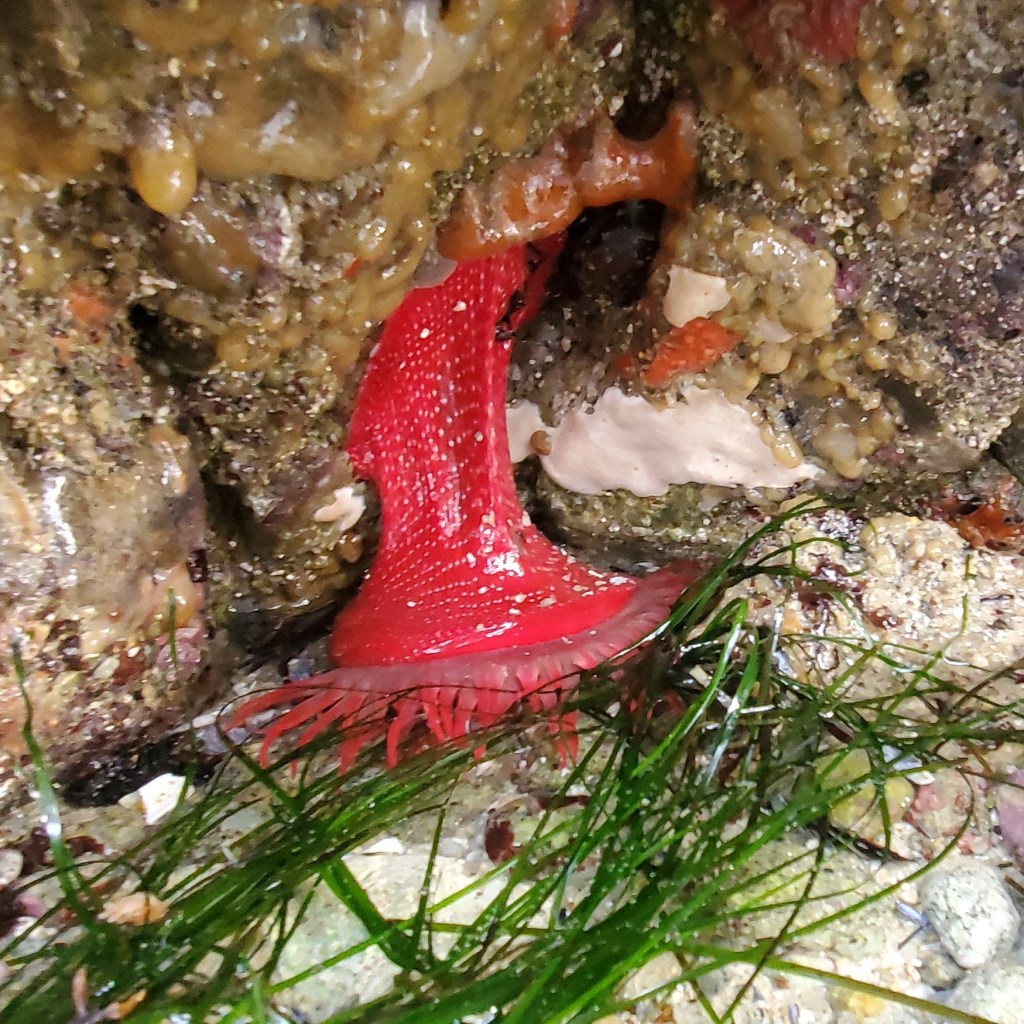
Urticina lofotensis (White-spotted anemone)
Class: Anthozoa
Location: Fanshell Beach, CA
This red booger of an anemone is noted for its white spots on its stalk. Apologies for the poor photo quality, but this was a rare find wedged deep underneath a rock.
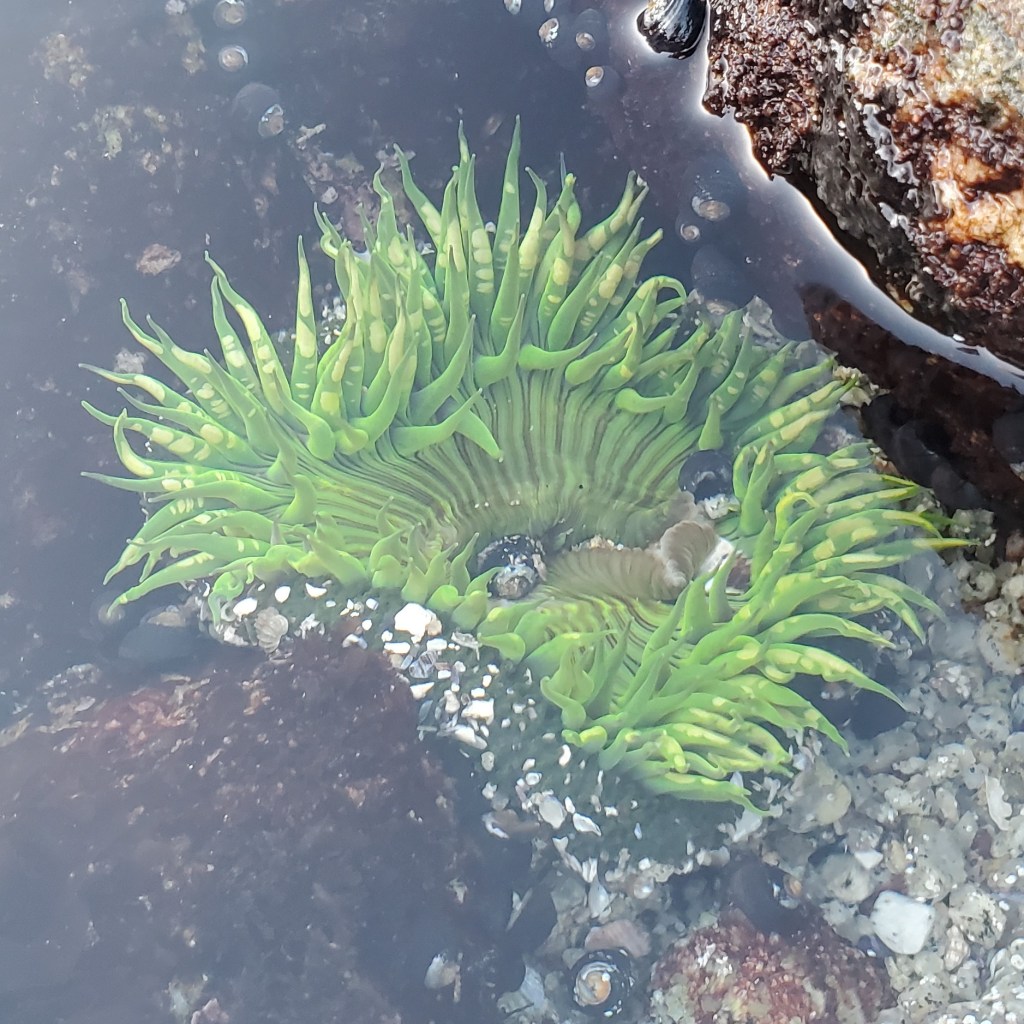
Anthopleura sola (starburst anemone)
Class: Anthozoa
Location: Fanshell Beach, CA
Though similar in color, size, and solitude to A. xanthogrammica, these giants have unique radial lines emanating from their mouth.
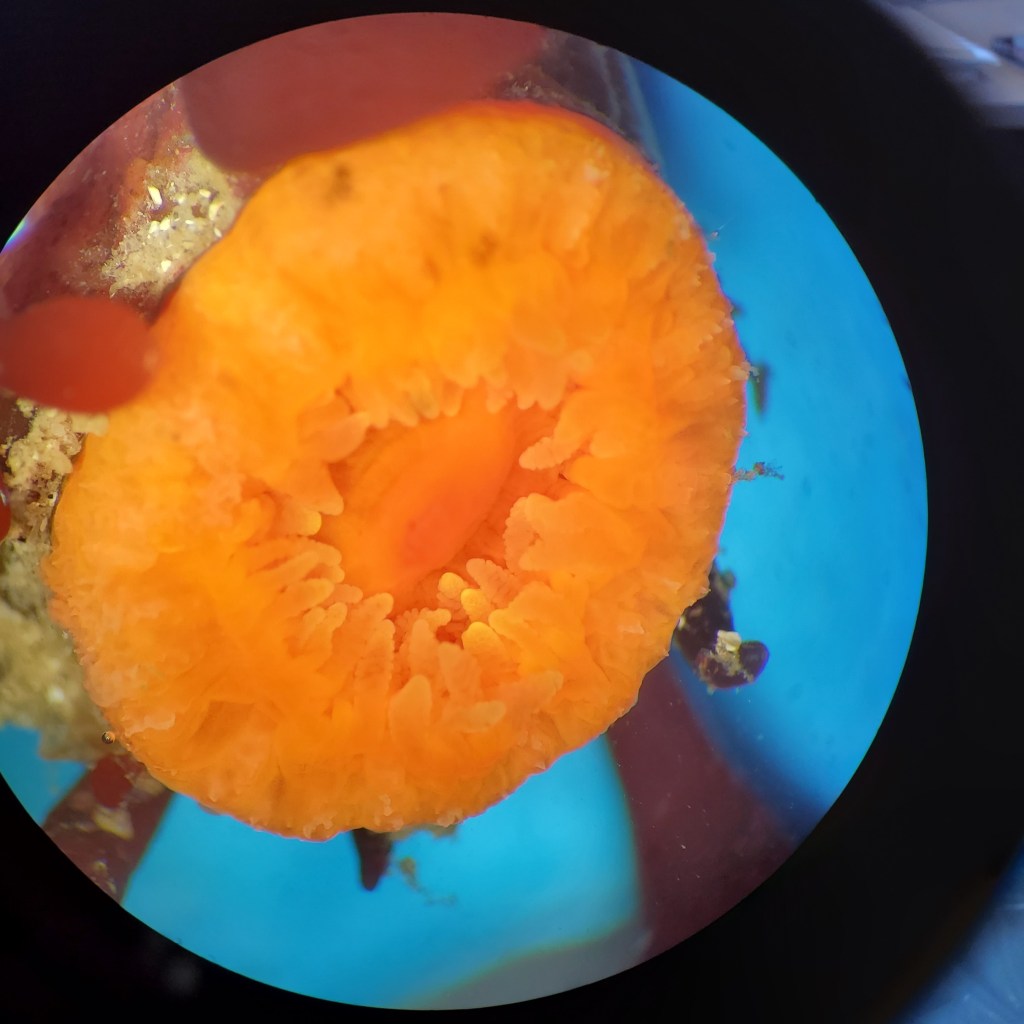
Balanophyllia elegans (starburst anemone)
Class: Anthozoa
Location: Monterey Bay, CA – collected off of a scuba dive
Despite its anemone-like appearance, this is actually an encrusting coral. Anemones and corals are close cousins.
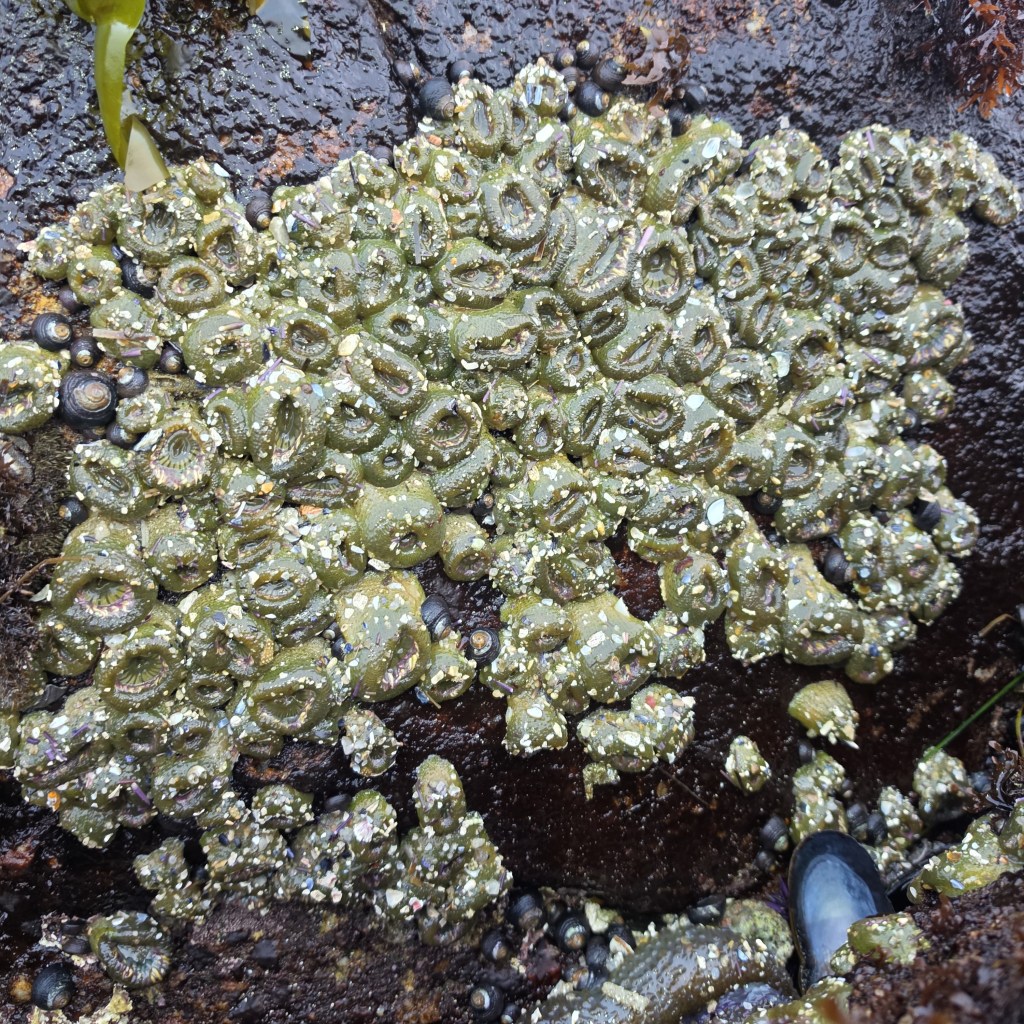
Anthopleura elegantissima (aggregating anemone)
Class: Anthozoa
Location: Asilomar, CA
These colonial anemones are polymorphic. The members on the fringes of the colony may lose their ability to reproduce, instead secreting a defensive deterrent.
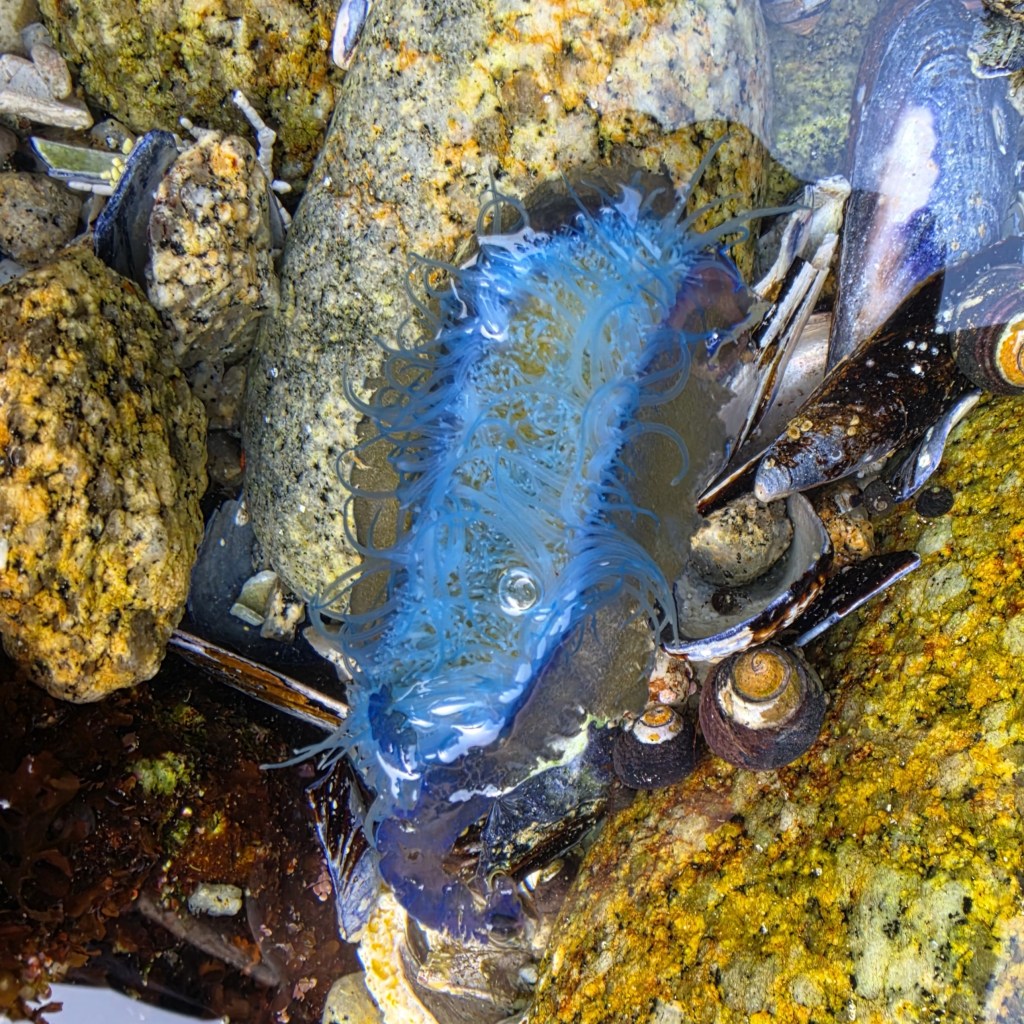
Velella velella (by-the-wind sailor)
Class: Hydrozoa
Location: Asilomar, CA
These close relatives of the iconic portugese-man-of-war wash up by the thousands on beaches when stranded. They can be found all over the world and have a rotational symmetry that depends on the hemisphere of the earth they live on.
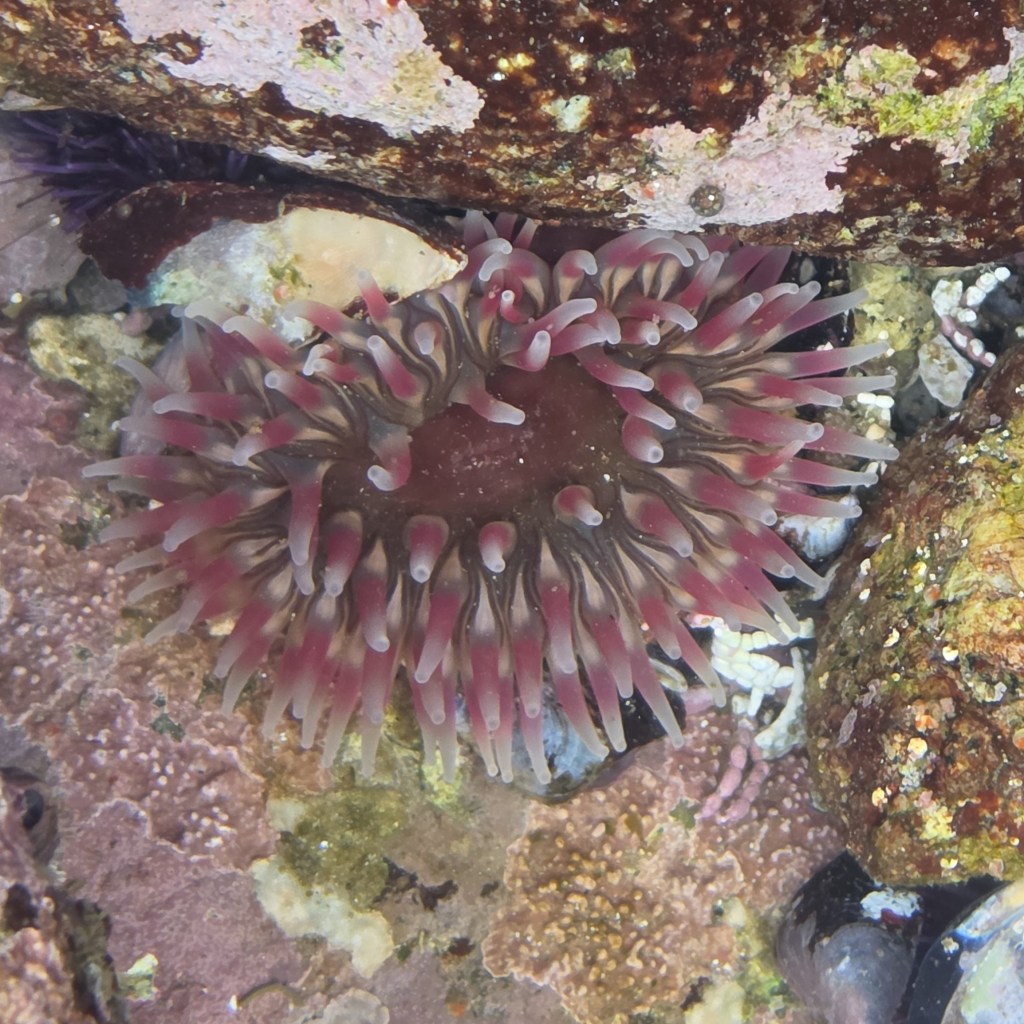
Urticina coriacea (stubby-rose anemone)
Class: Anthozoa
Location: Fanshell Beach, CA
Somewhere between the insisting scarlet of U. lofotensis and the bland green of A. elegantissma lies this anemone that thrives along open coast deeper down the intertidal. These anemones interestingly prefer partial burial in the sand.
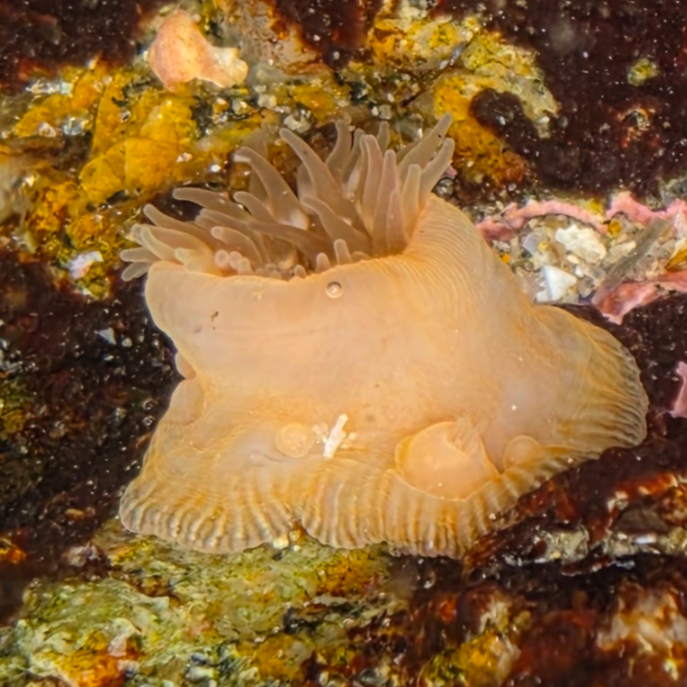
Epiactis prolifera (brooding anemone)
Class: Anthozoa
Location: Fanshell Beach, CA
As the name suggests, this comparatively rare anemone broods juvenile anemones at the base of its stem. For about 3 months, the larvae grow into their adult form right next to the parent, separating after a certain size is reached and moving out for good. Can you see the tiny juveniles?
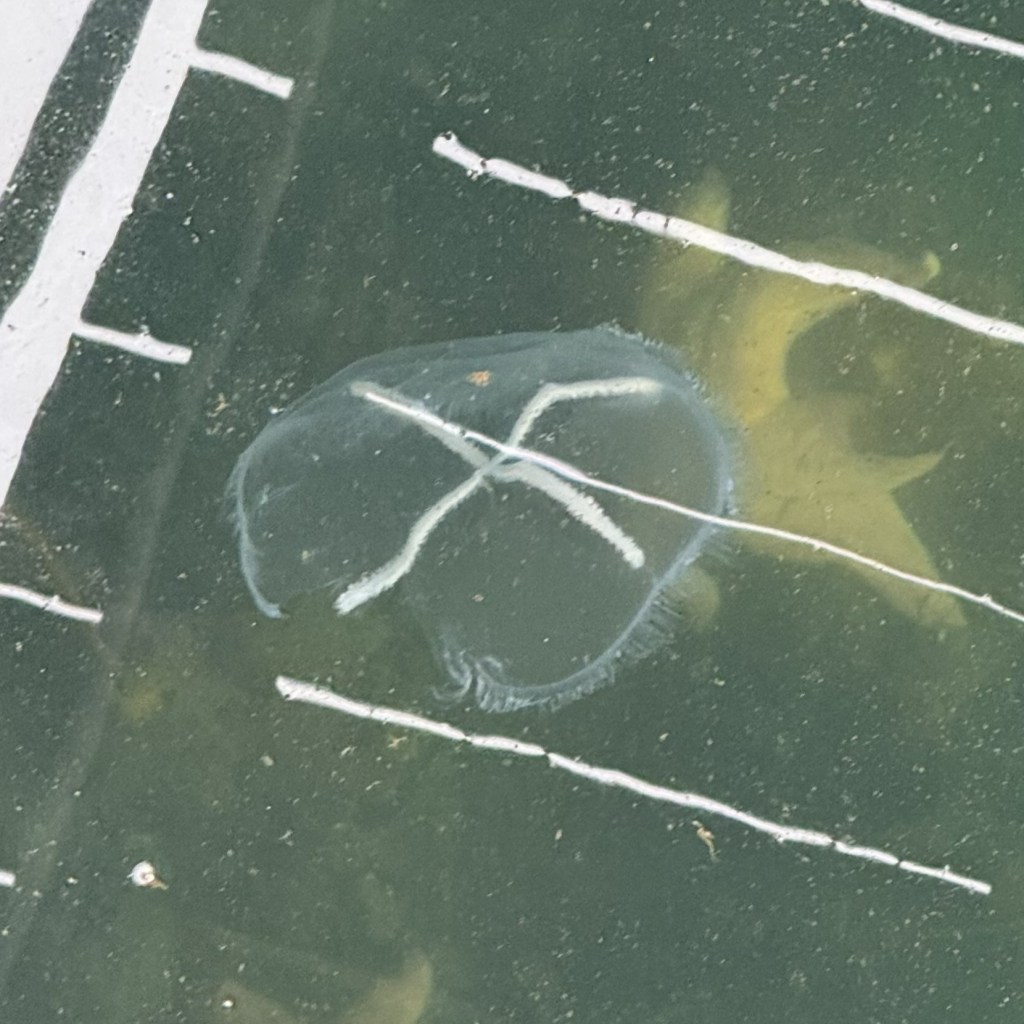
Staurostoma mertensii (White Cross Jelly)
Class: Hydrozoa
Location: Djúpivogur, Iceland
I wouldn’t blame you if you mistook this jellyfish for the classic Moon Jelly upon first glance. However, this “jellyfish” is actually a hydrozoan who spends most of its life sessile rather than benthic.
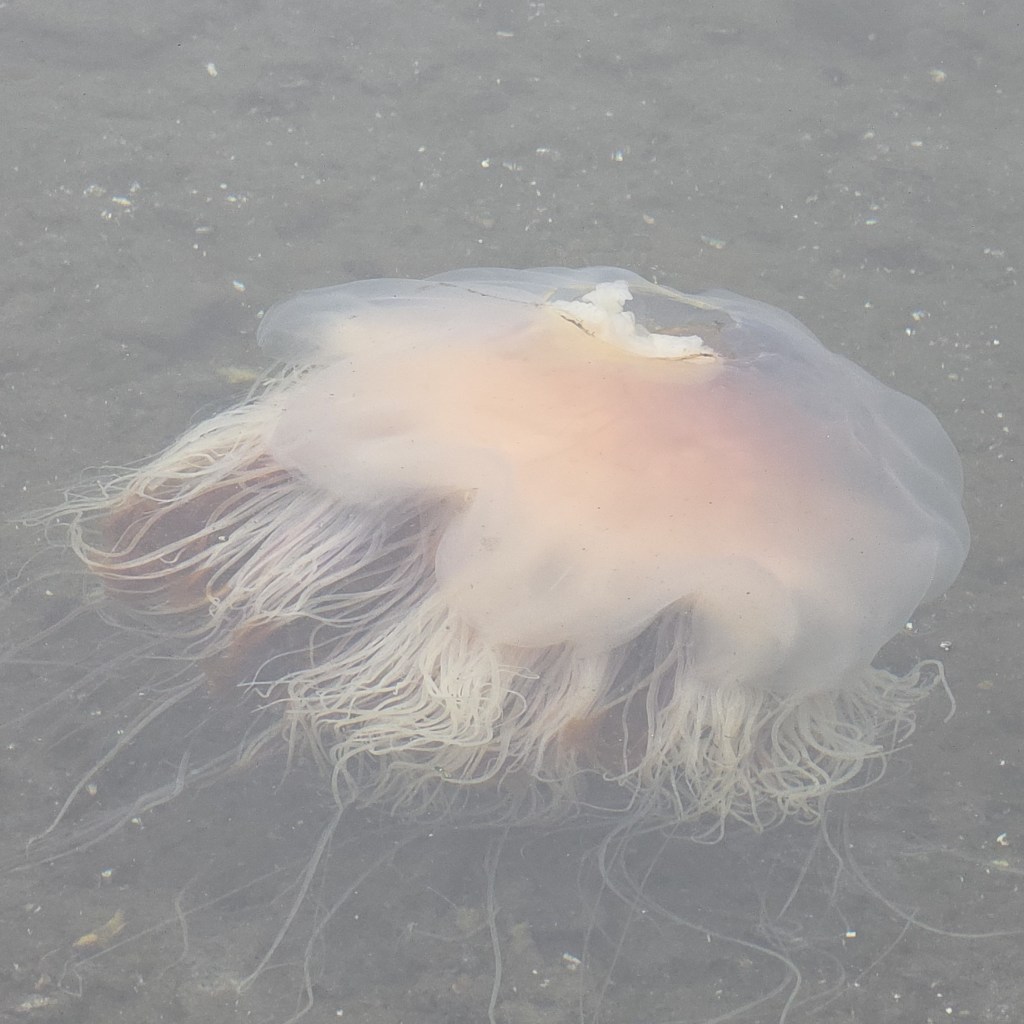
Cyanea capillata (lion’s mane jellyfish)
Class: Scyphozoa
Location: Djúpivogur, Iceland
The inaugural true jellyfish on my list was tragically found injured (notice the hole on its bell) but alive in a small-town Icelandic boat harbor. At full size, these jellies look like they can eat a diver.
Arthropoda
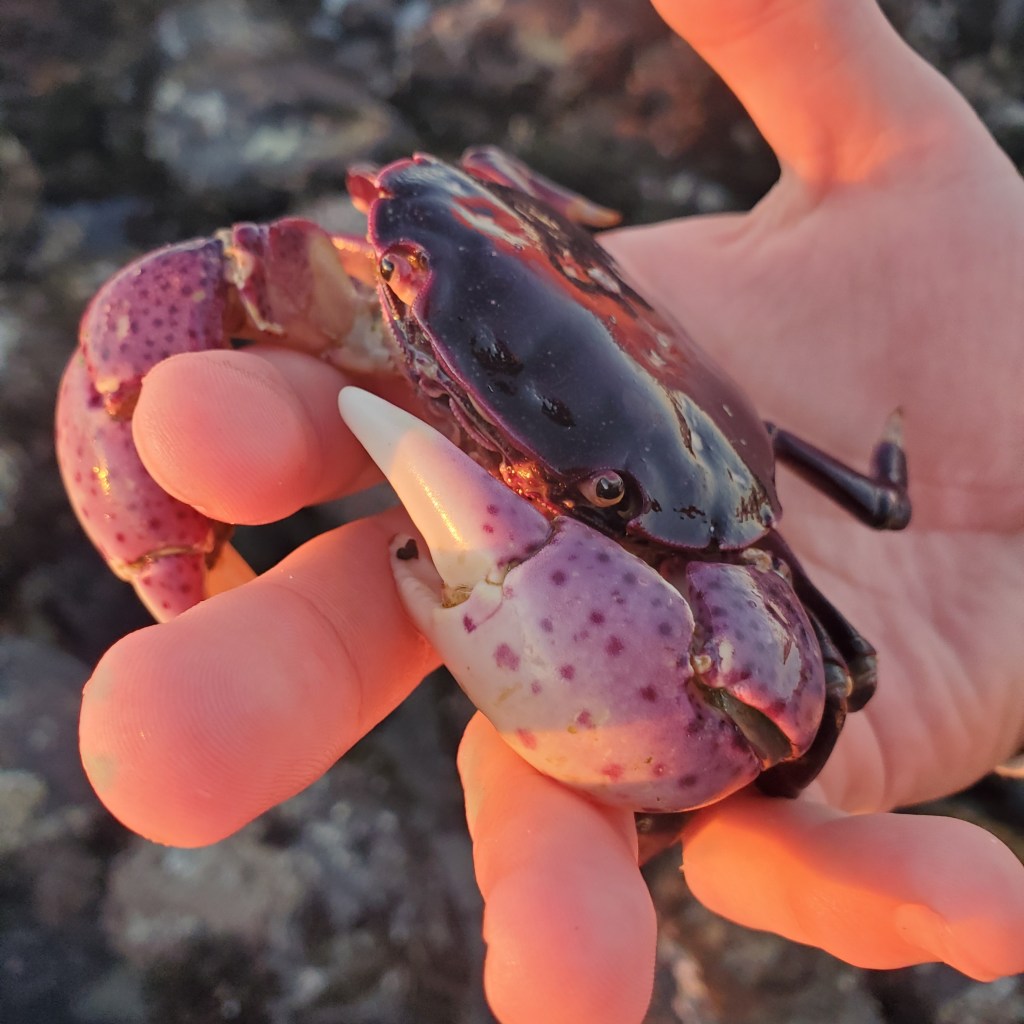
Hemigrapsus nudus (purple shore crab)
Class: Malacostraca
Location: Asilomar Beach, CA – collected off the rocky intertidal
One of the most elegant and surprisingly docile members of the rocky intertidal. The claws of males can be a vibrant porcelain purple-spotted white.
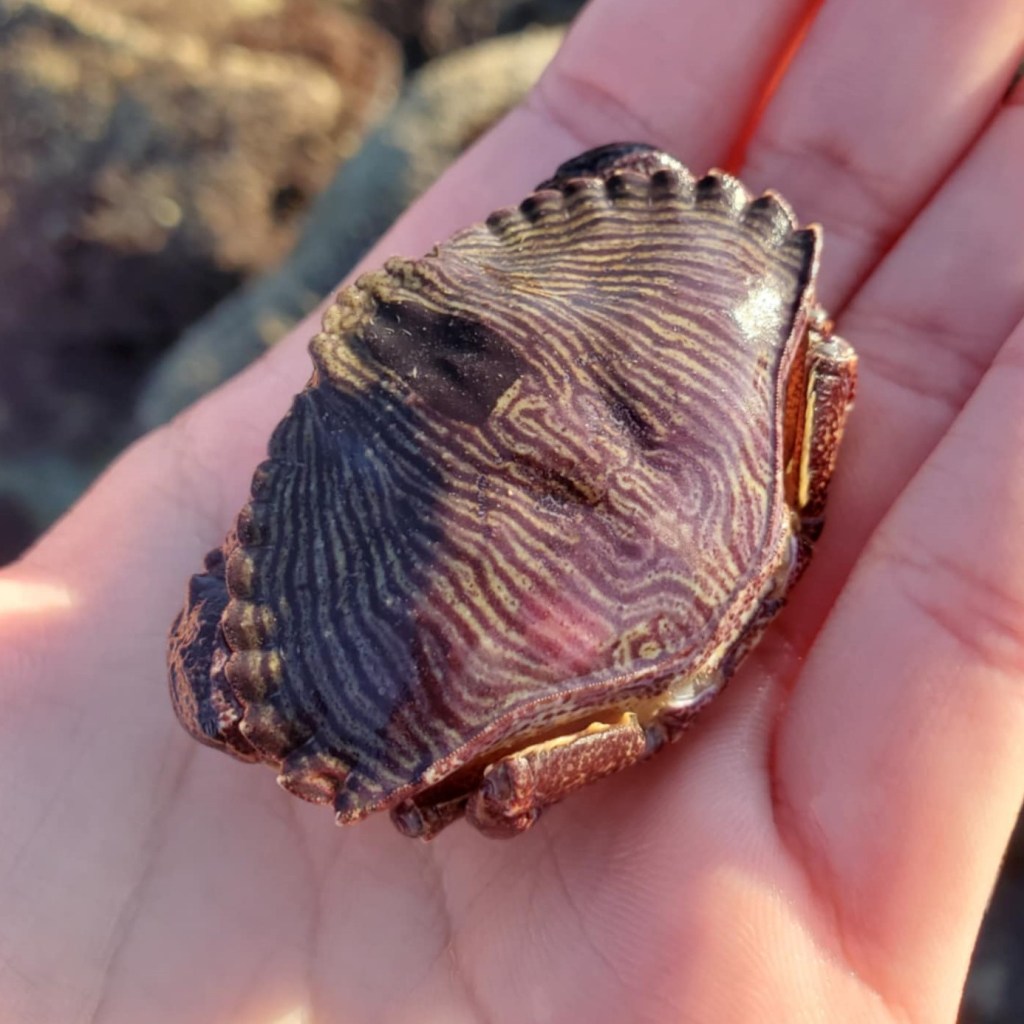
Cancer producta (red rock crab)
Class: Malacostraca
Location: Asilomar Beach, CA – collected off the rocky intertidal
A juvenile with a beautiful purple-striped carapace that will grow up to be a voracious and non-picky eater that sometimes finds its way onto dinner plates.
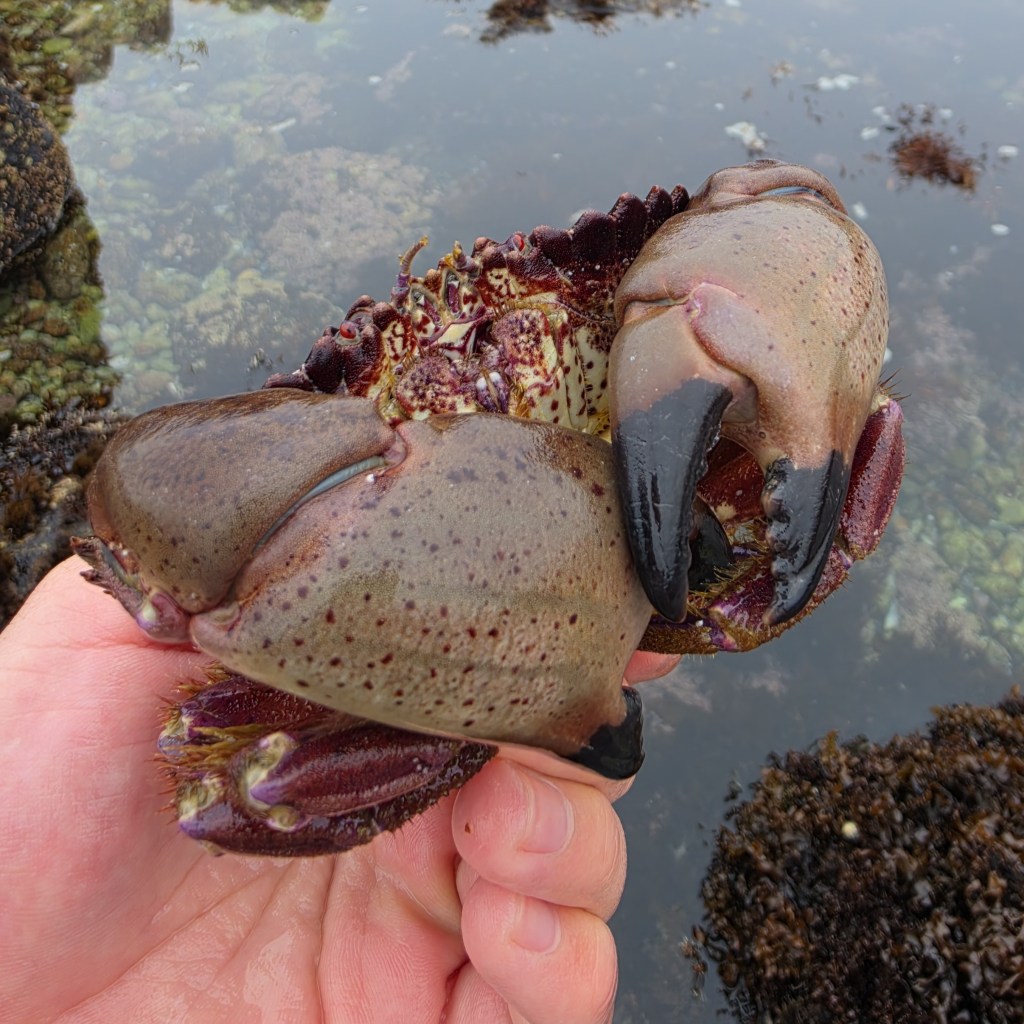
Romaleon antennarium (pacific rock crab)
Class: Malacostraca
Location: Asilomar Beach, CA
These crabs are perhaps the only crab along the California intertidal that can and WILL take your finger off. Just look at those absolute cannons.
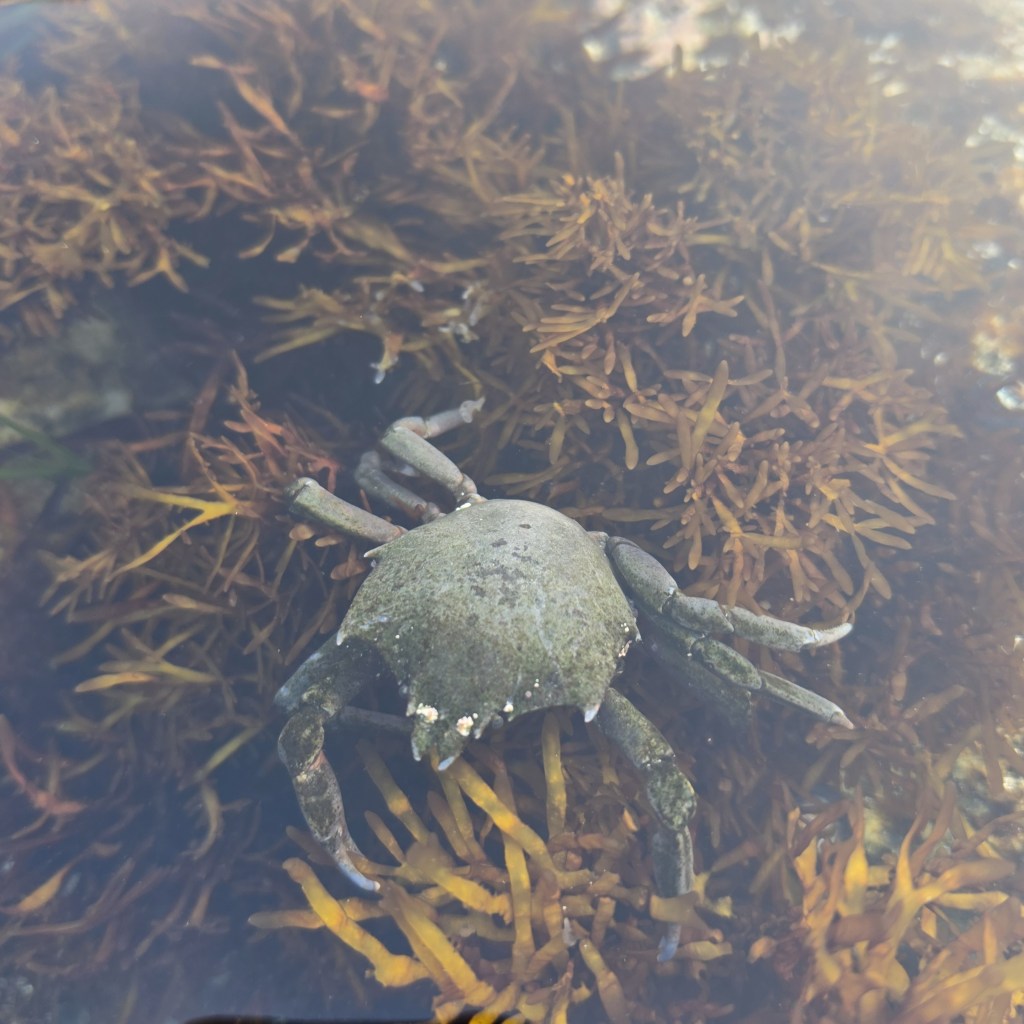
Pugettia producta (kelp crab)
Class: Malacostraca
Location: Asilomar Beach, CA – collected off the rocky intertidal
A large adult that keeps itself clean – a telling indicator of the species. They get their color from the kelp they eat, and when camouflaged, they are almost invisible.
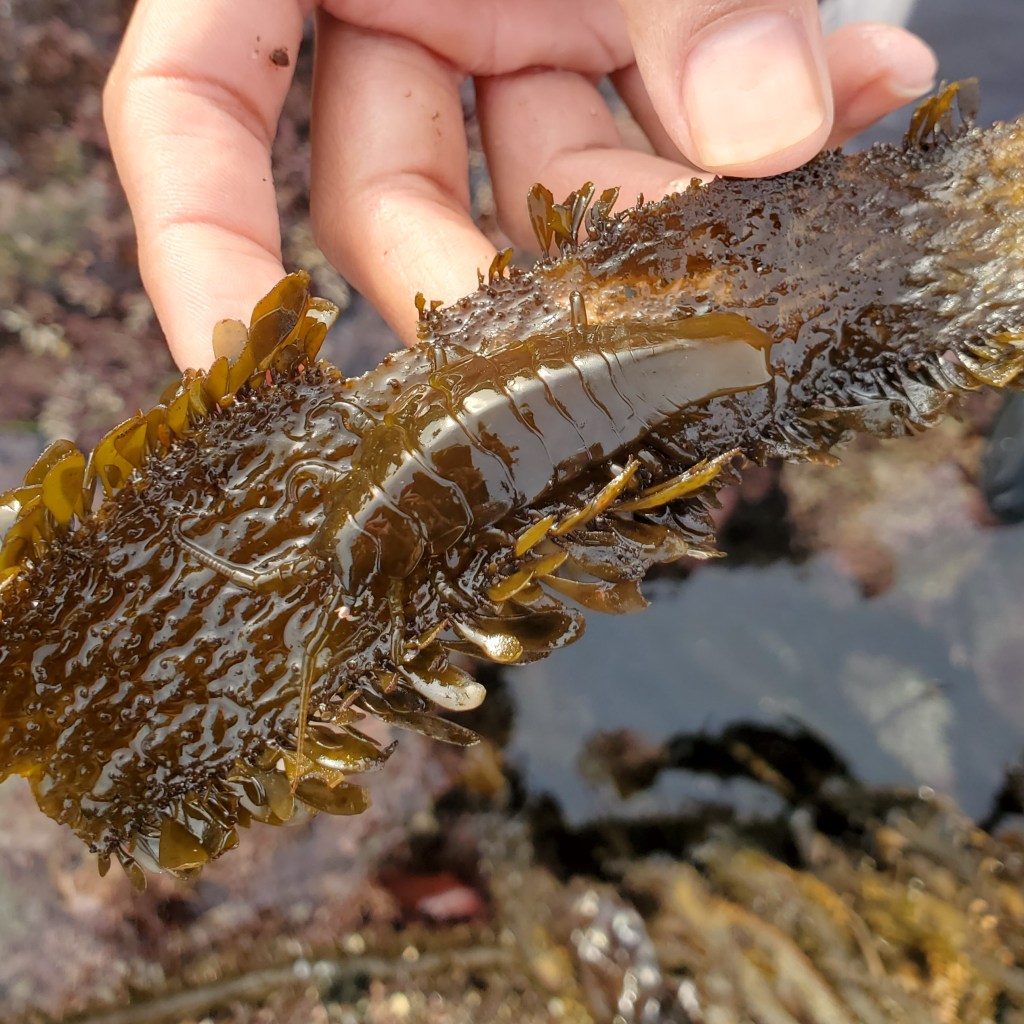
Pentidotea wosnesenskii (kelp isopod)
Class: Malacostraca
Location: Fanshell Beach, CA
Do you even see an animal here? This cousin of roly-polys gets its perfect camouflage from its diet.
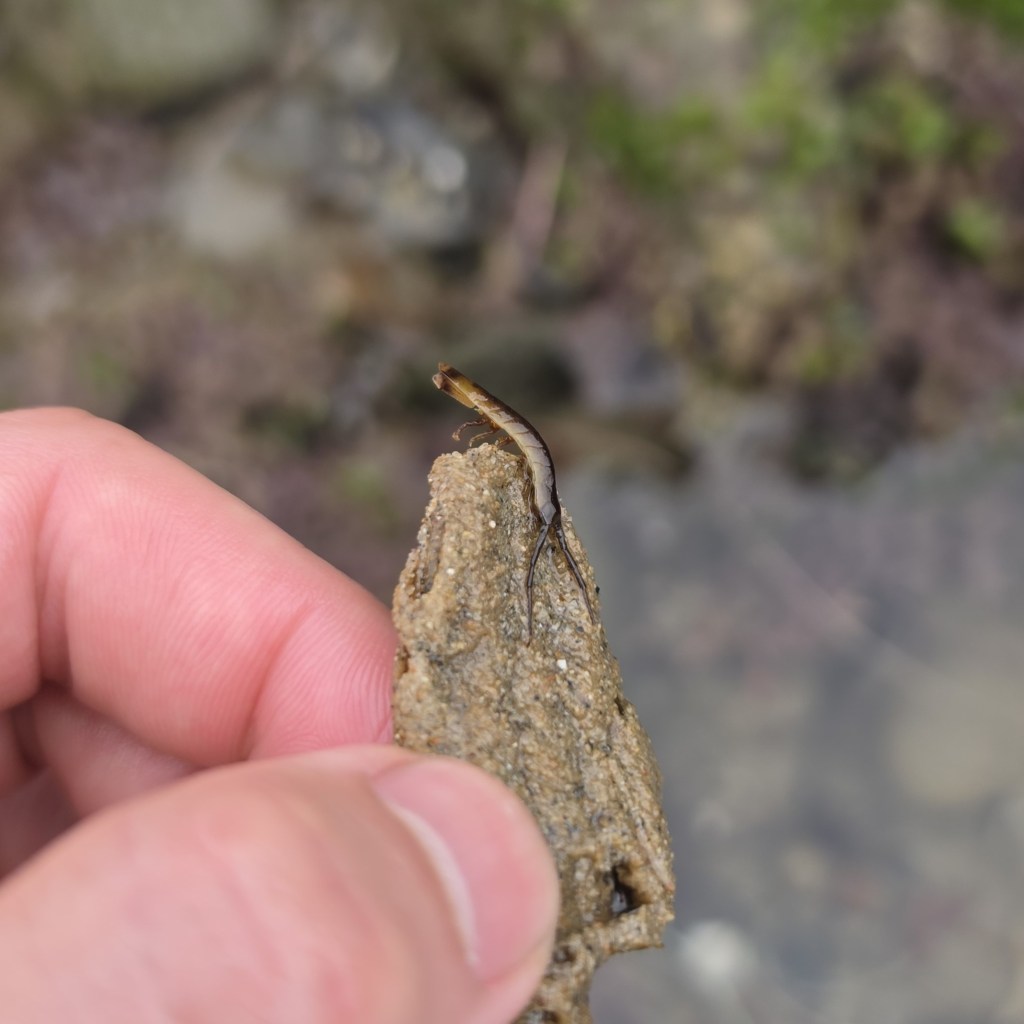
Pentidotea resecata (elongate isopod)
Class: Malacostraca
Location: Malibu, CA
This tiny, kelp-dwelling isopod is a very popular food item among fishes.
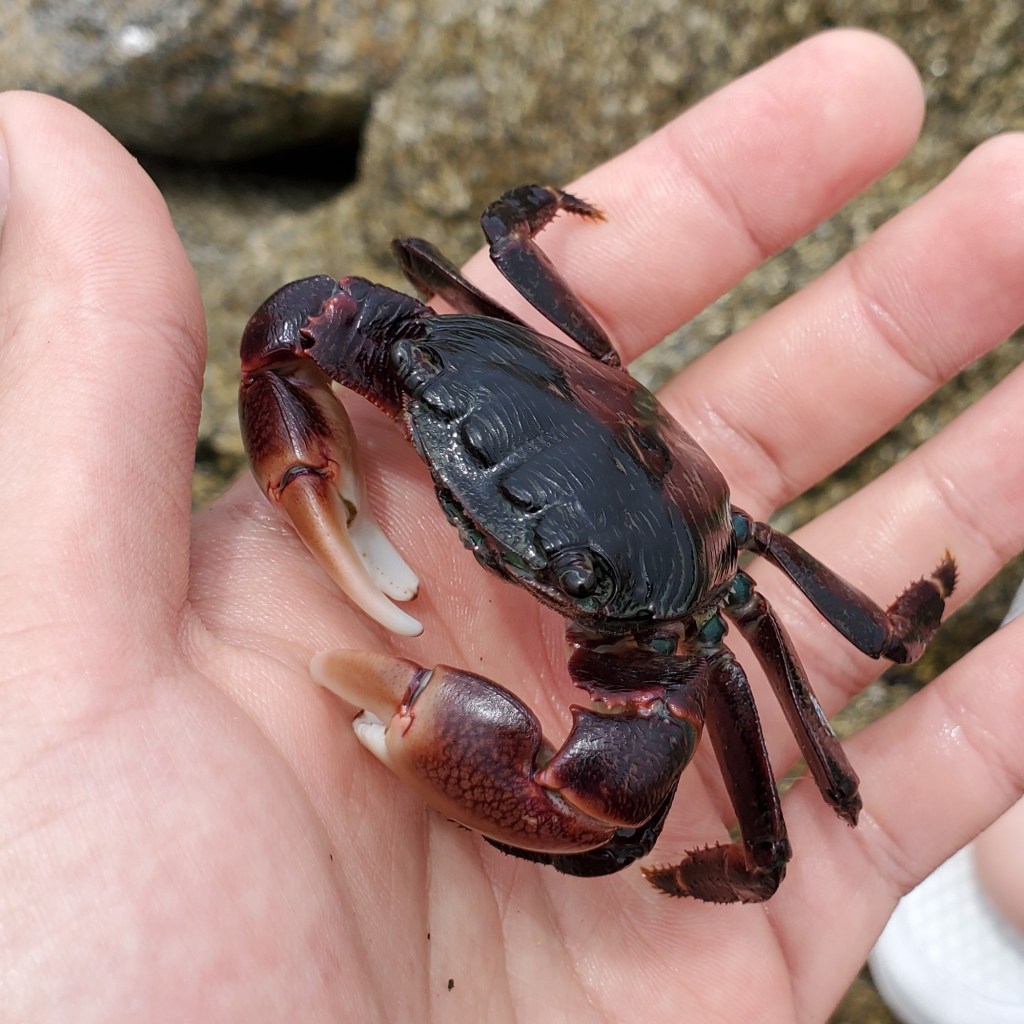
Pachygrapsus crassipes (green shore crab)
Class: Malacostraca
Location: Monterey, CA
Pugnacious and shy, these guys will certainly pinch back, especially when you inevitably reach into a crevice to dislodge them.
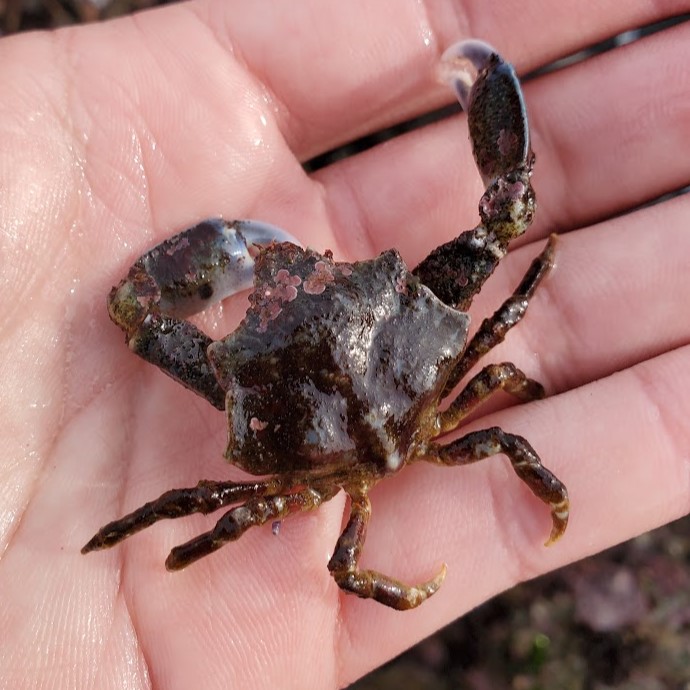
Pugettia foliata (foliate kelp crab)
Class: Malacostraca
Location: Fanshell Beach, CA
A spider-crab cousin of Pugettia producta that pays less attention to personal hygiene.
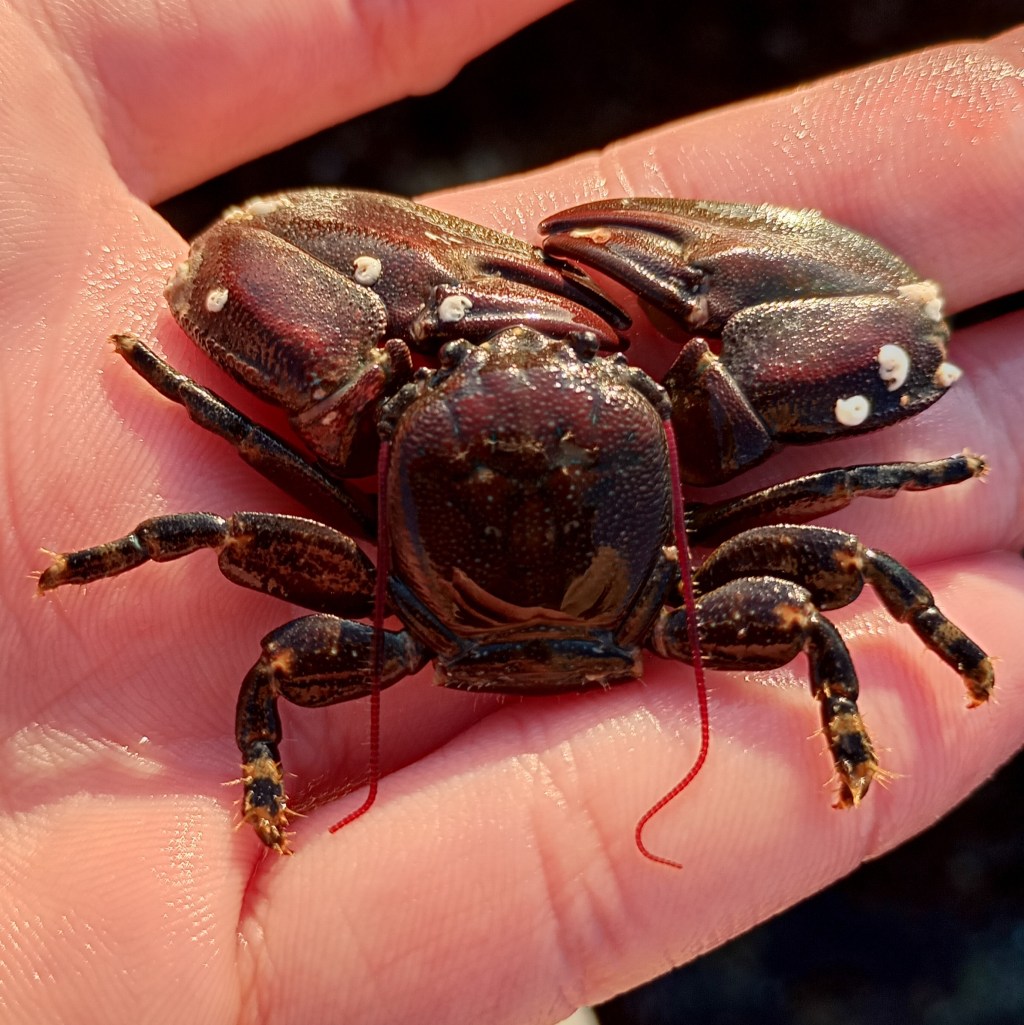
Petrolisthes cinctipes (porcelain crab)
Class: Malacostraca
Location: Fanshell Beach, CA
Found by the tens under even a single small rock, these crabs have a name befitting of their frailty. Some of the most ready autotomizers out there.
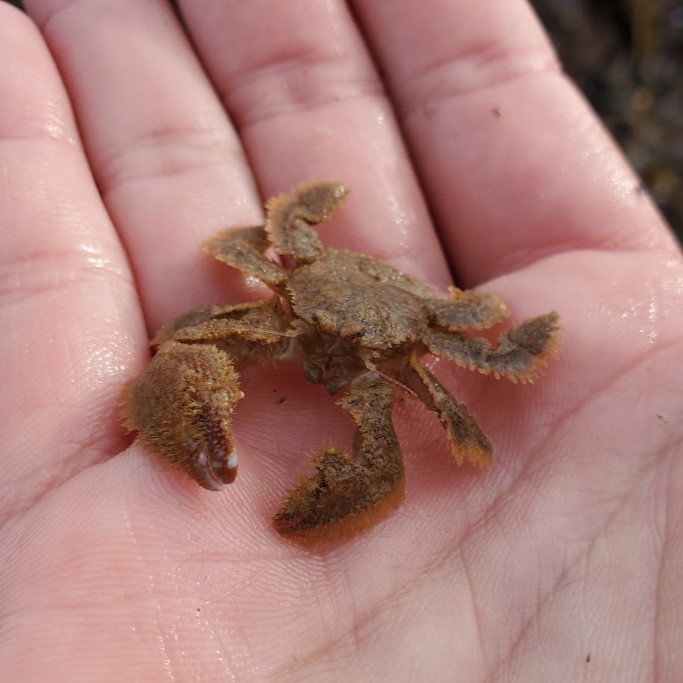
Hapalogaster cavicauda (furry crab)
Class: Malacostraca
Location: Fanshell Beach, CA
An 8-limbed teddy bear so impossible invisible when just chilling with its limbs tucked in on the sandy floor.
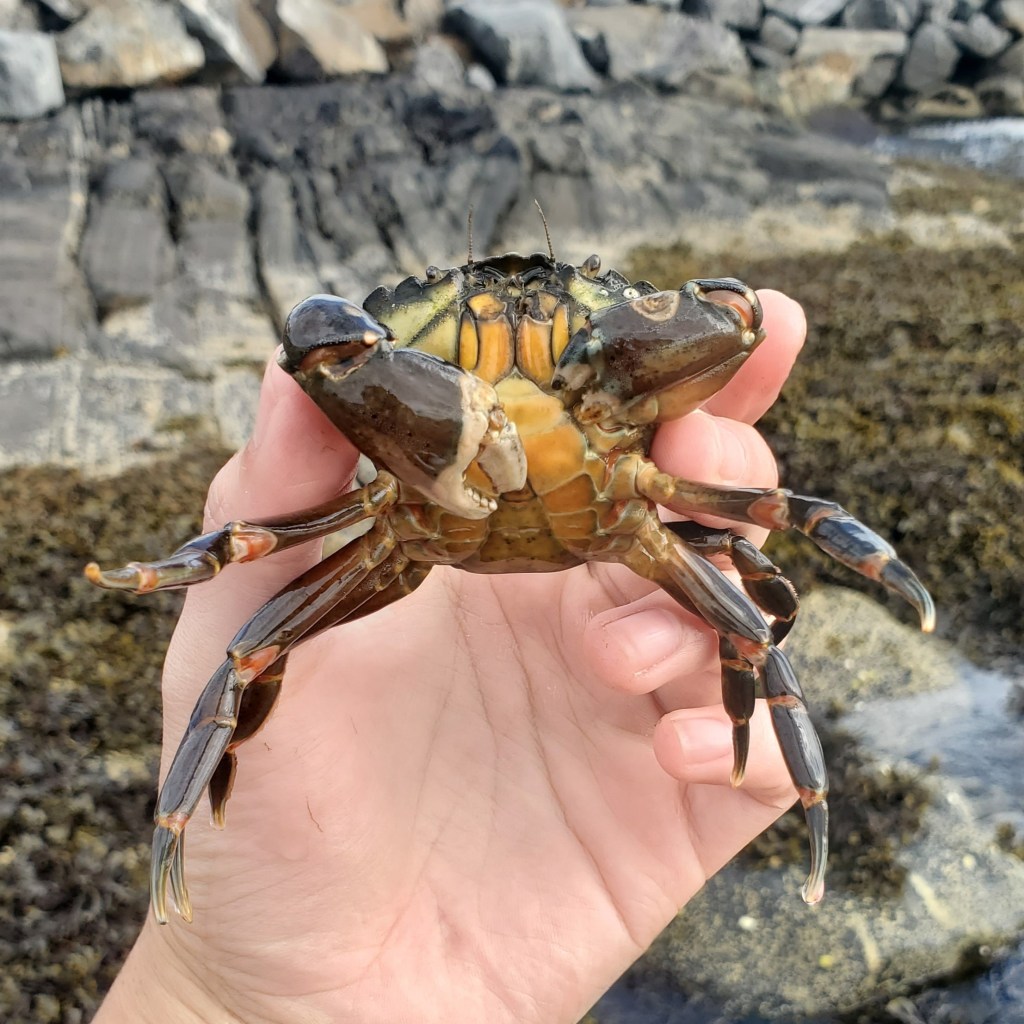
Carcinus maenus (menace crab)
Class: Malacostraca
Location: Ålesund, Norway – Sea/Fjord estuary
A name befitting of a nuisance, this crab picked up along the Norwegian fjords is one of the world’s 100 most invasive species.
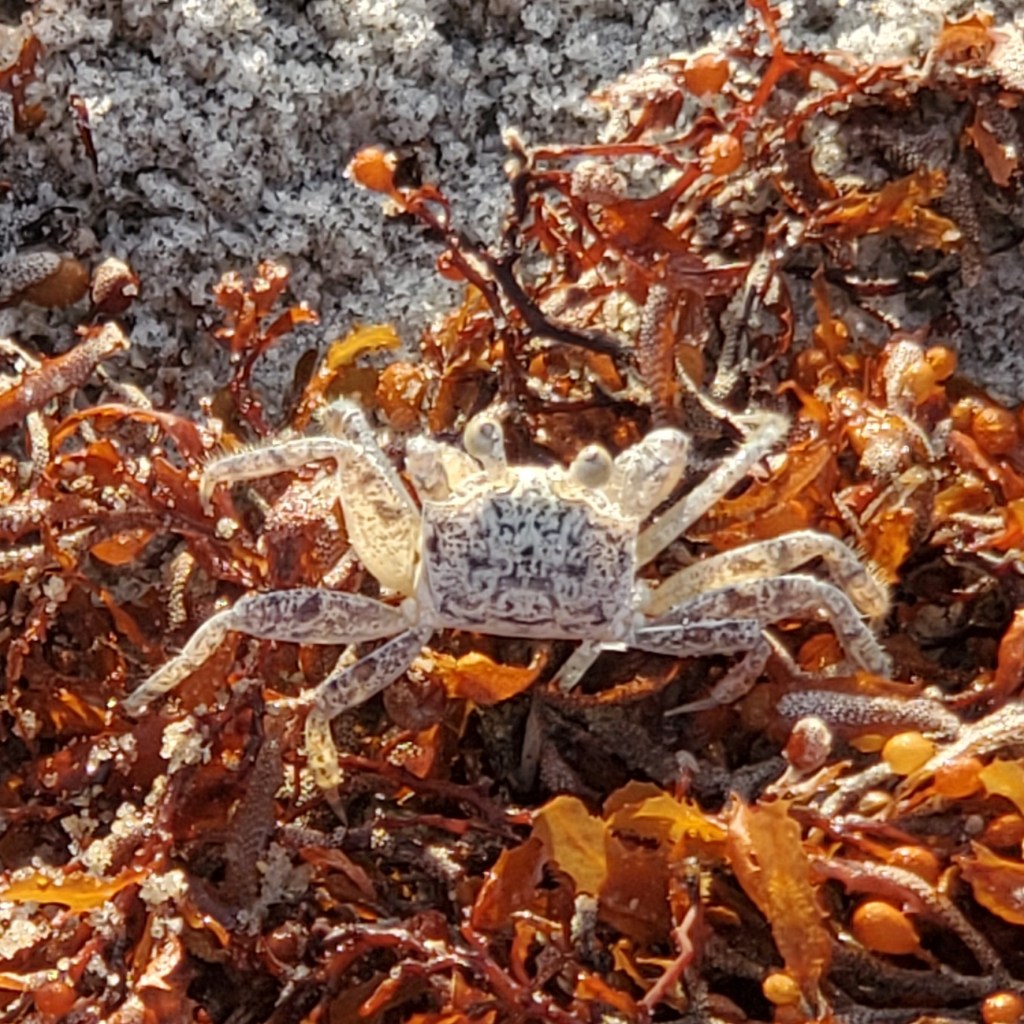
Ocypode quadrata (atlantic ghost crab)
Class: Malacostraca
Location: Cape Canaveral, FL – sandy shores
One of the cutest crabs in existence. These stalk-eyed streakers dart from seaweed patch to seaweed patch on the sandy shores.
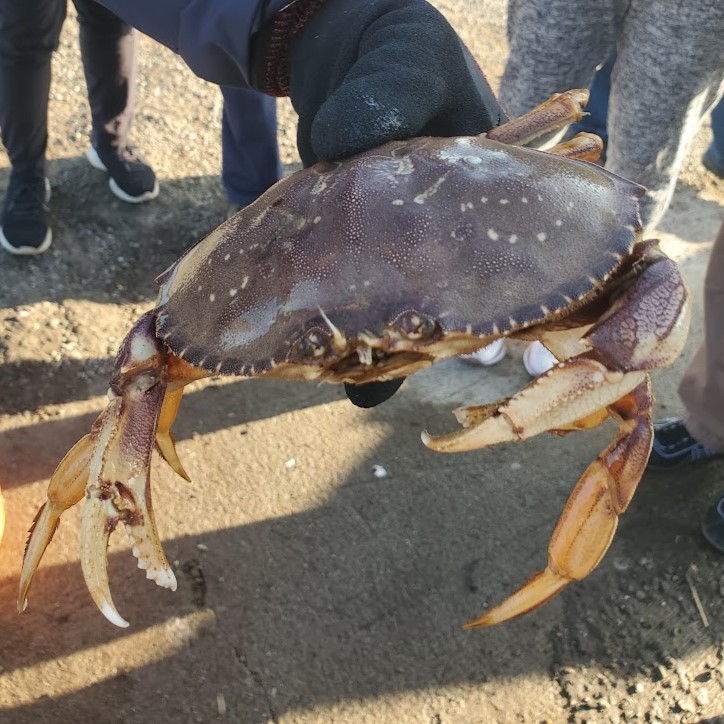
Metacarcinus magister (Dungeness crab)
Class: Malacostraca
Location: Torpedo Wharf, CA
Our favorite crab (to eat) has arrived.
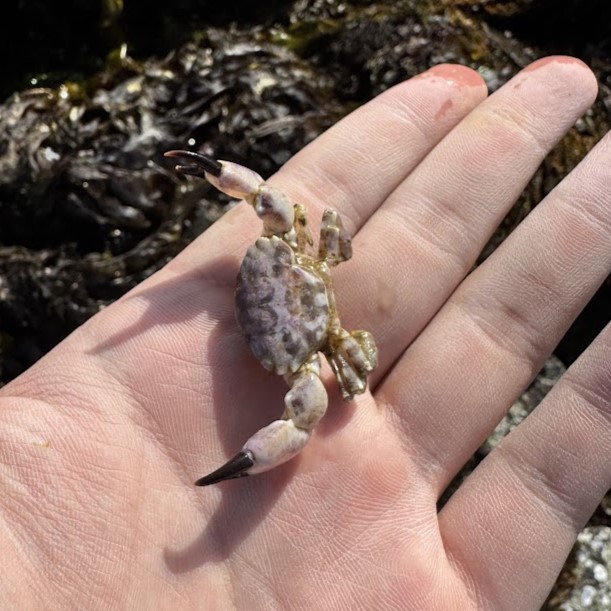
Lophopanopeus bellus (Black Clawed Crab)
Class: Malacostraca
Location: Fanshell Beach, CA
This crab can have a widely variable carapace color, but the tips of its claws stay consistently black, as if it’s been holding a marshmallow over a bonfire for too long.
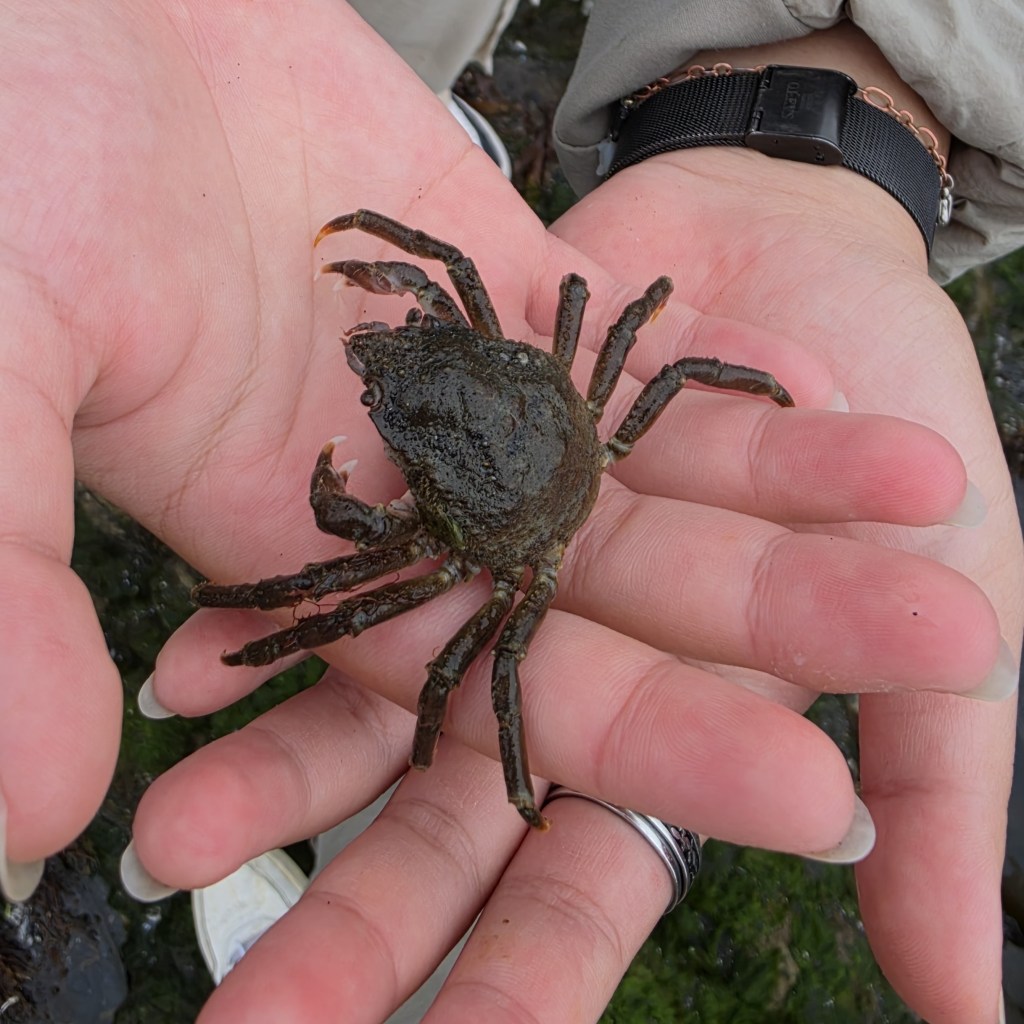
Hyas coarctatus (toad crab)
Class: Malacostraca
Location: Djúpivogur, Iceland
We were hard pressed to find any non-sessile creatures in the frigid Icelandic tide pools except for this toad crab. I find toads highly unsavory, so I find this crab (whose carapace indeed looks quite toad-like) unsavory as well.
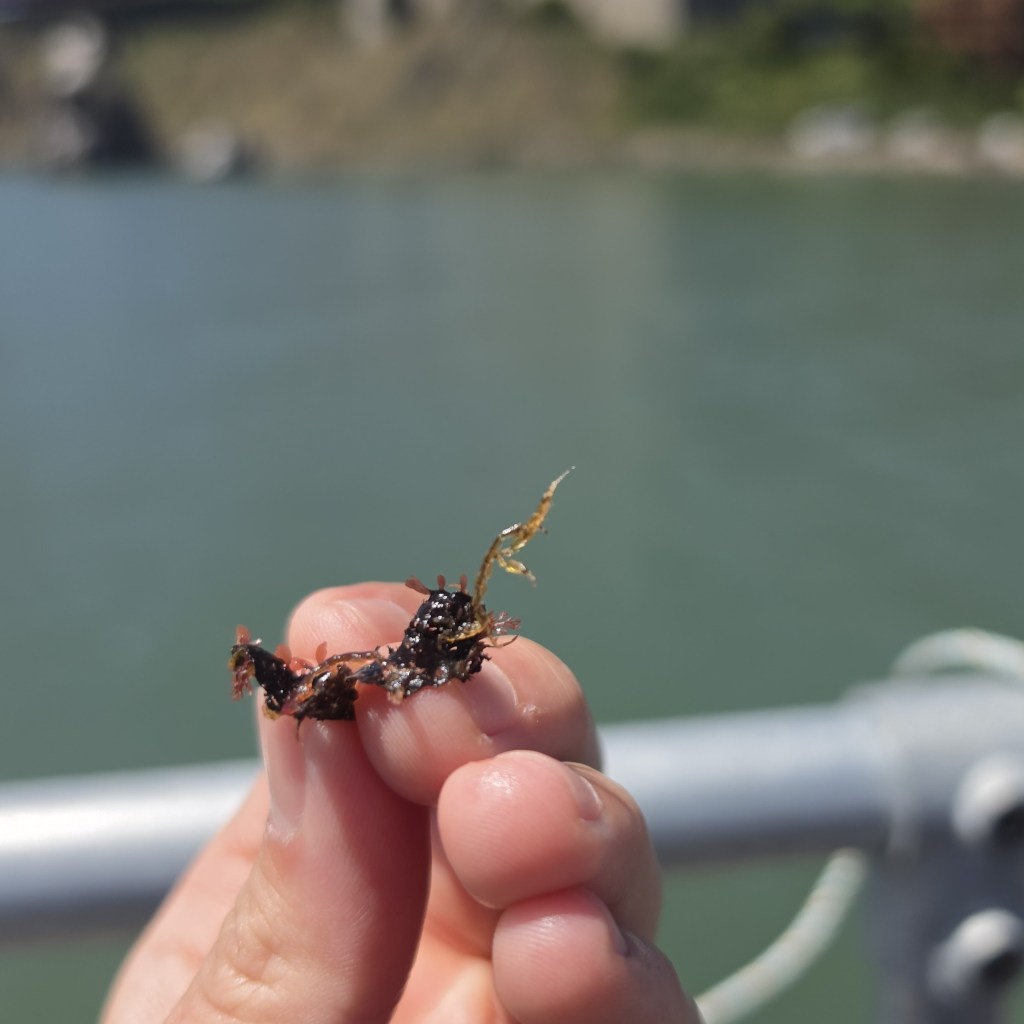
Caprellidae (skeleton shrimp)
Class: Malacostraca
Location: Fort Baker Pier, CA
Sorry for the poor image, but these things are TINY. We reeled this up while crabbing and there were 5 of these tiny things flailing on this single piece of kelp.
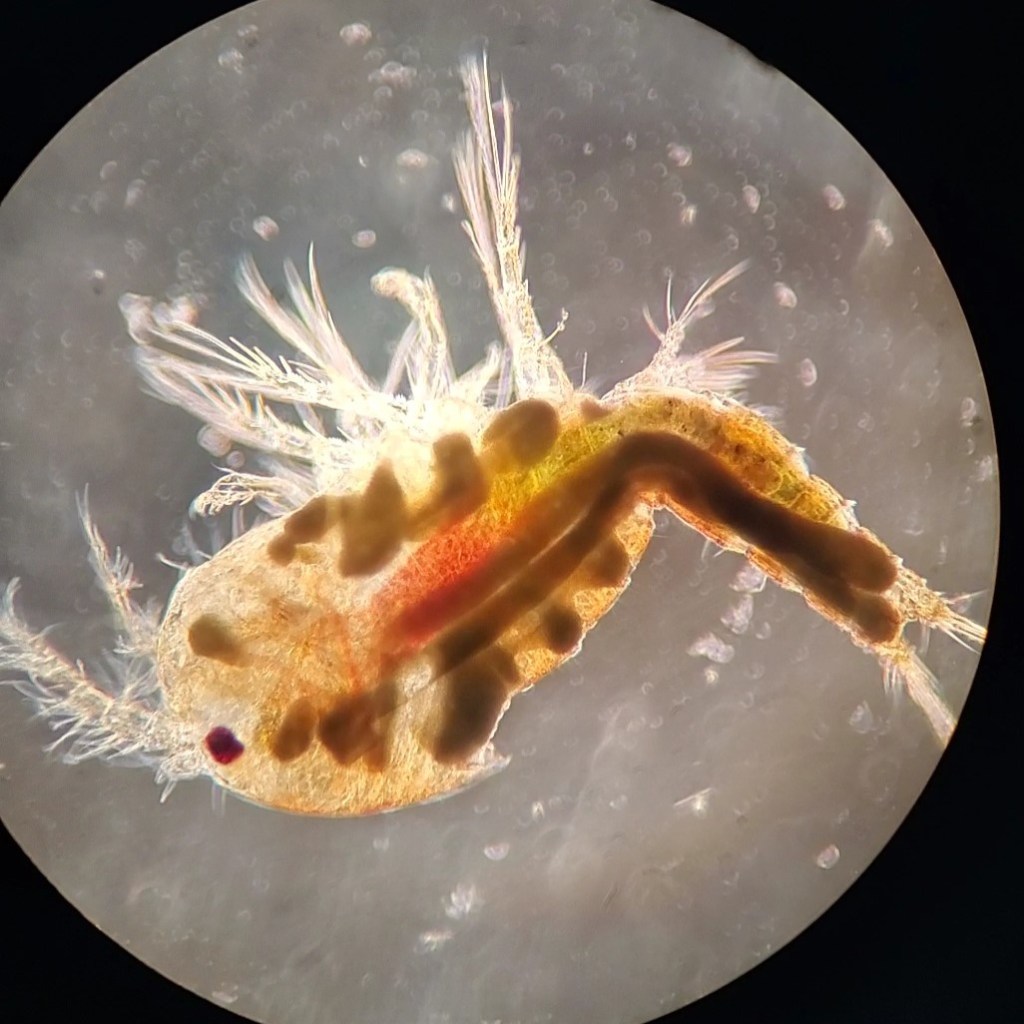
Tigriopus – species unspecified
Class: Hexanauplia
Location: water sampled from Hopkins Marine Station
These tiny arthropods are so small they can be considered zooplankton, nourishing countless other intertidal species.
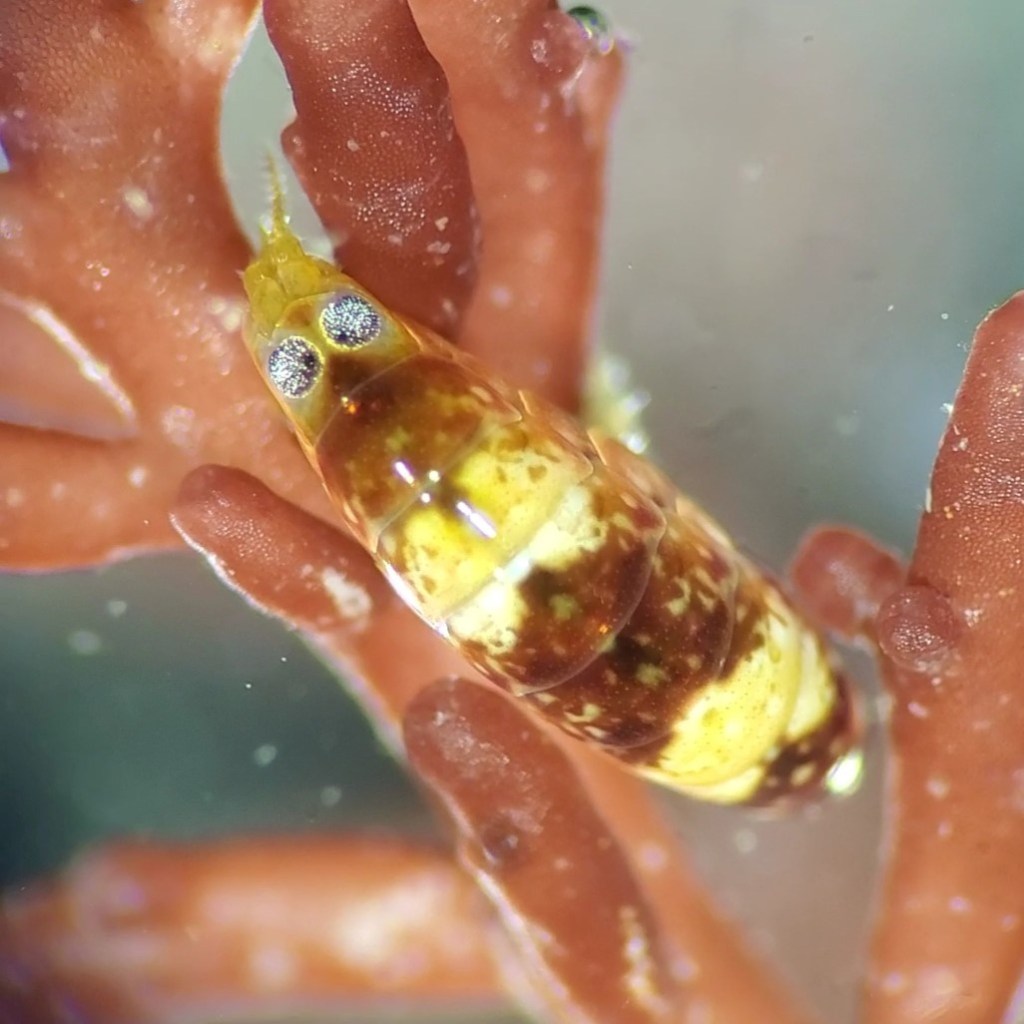
Amphipod – species unspecified
Class: Malacostraca
Location: water sampled from Hopkins Marine Station
Small, but visible, this shrimp-cousin was seen darting around red algae, desperately trying to find a place to hide.
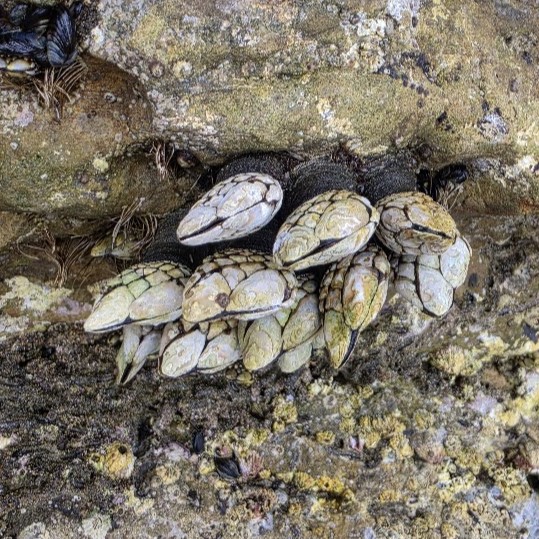
Pollicipes pollicipes (gooseneck barnacles)
Class: Thecostraca
Location: Malibu, CA
Why do these barnacles look so different from what we’re familiar with? These barnacles are flexible ✨.
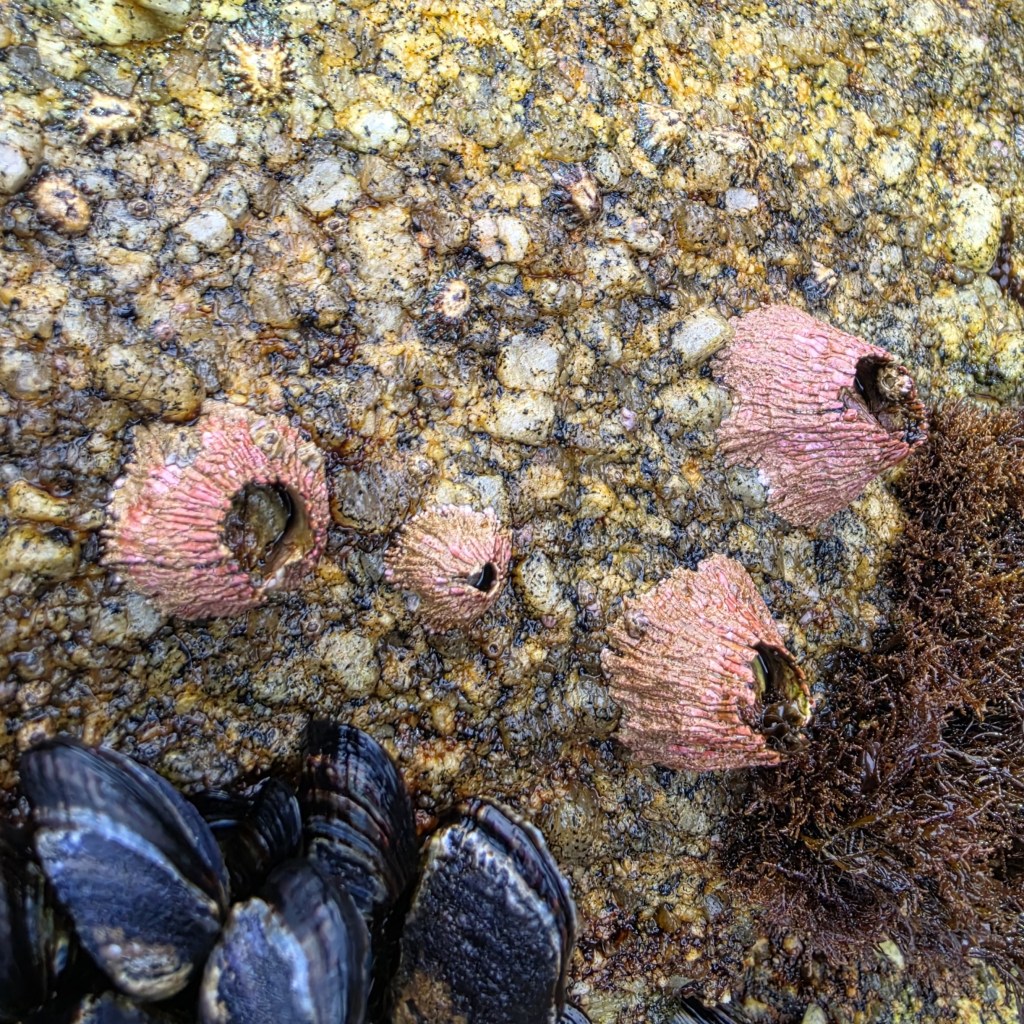
Tetraclita rufescens (Red acorn barnacle)
Class: Thecostraca
Location: Asilomar, CA
These red barnacles are close relatives of the classic white acorn barnacles. They are, however, much larger and tend to be more solitary.
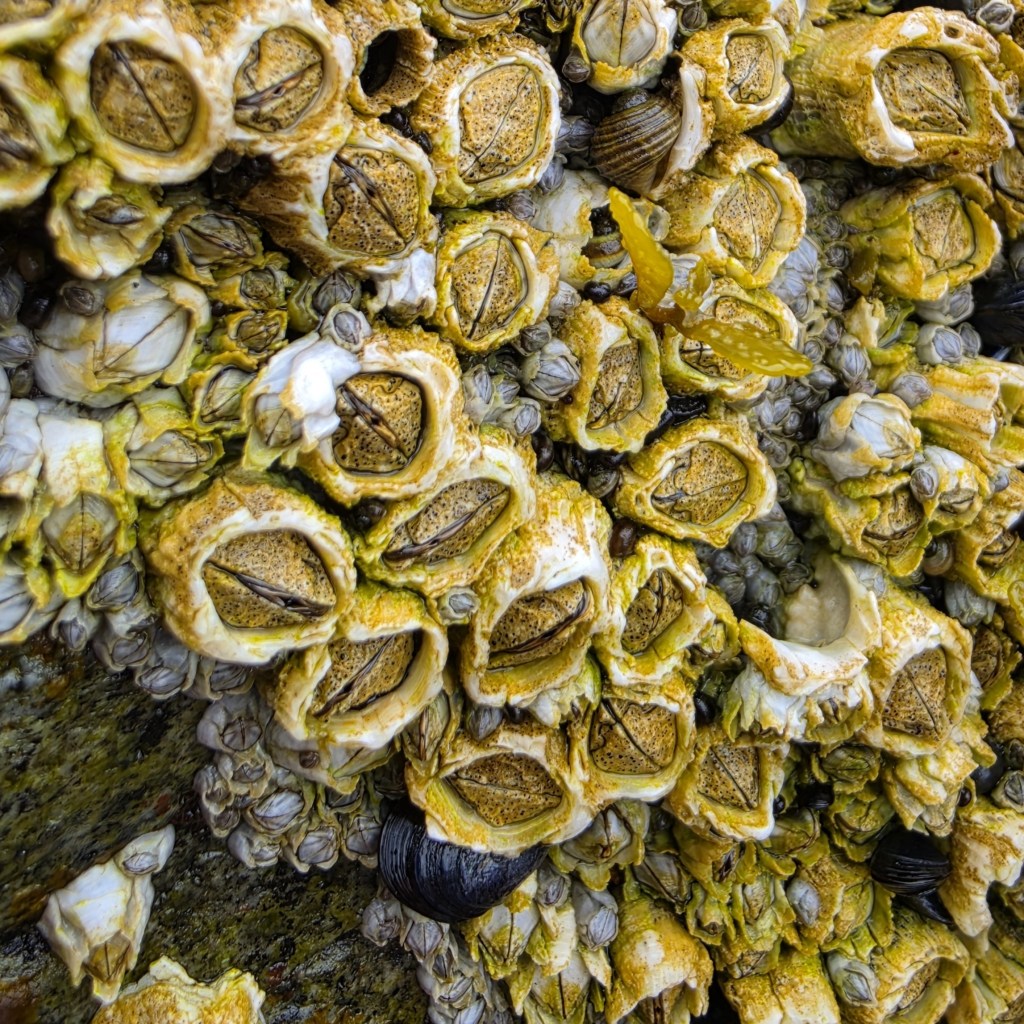
Semibalanus balanoides (Northern Rock barnacle)
Class: Thecostraca
Location: Djúpivogur, Iceland
These common barnacles are actually very widespread in the northern hemisphere, but particularly thrive in the north Atlantic. They are smaller than the Balanus glandula, yet have a relatively larger operculum-to-mantle size ratio.
Mollusca
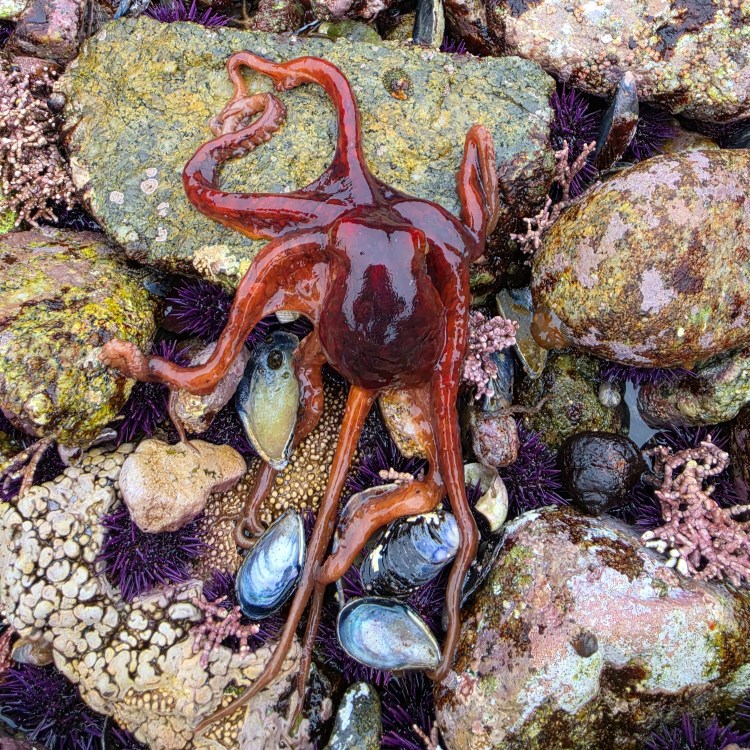
Octopus rubescens (East Pacific Red Octopus)
Class: Cephalopoda
Location: Fanshell Beach
The first of the elusive cephalopod class registered to this list! I came across this beauty between 6-7 AM at the crack of dawn just crawling between pools. What a serendipitous sight to see. My magnum opus find to date.
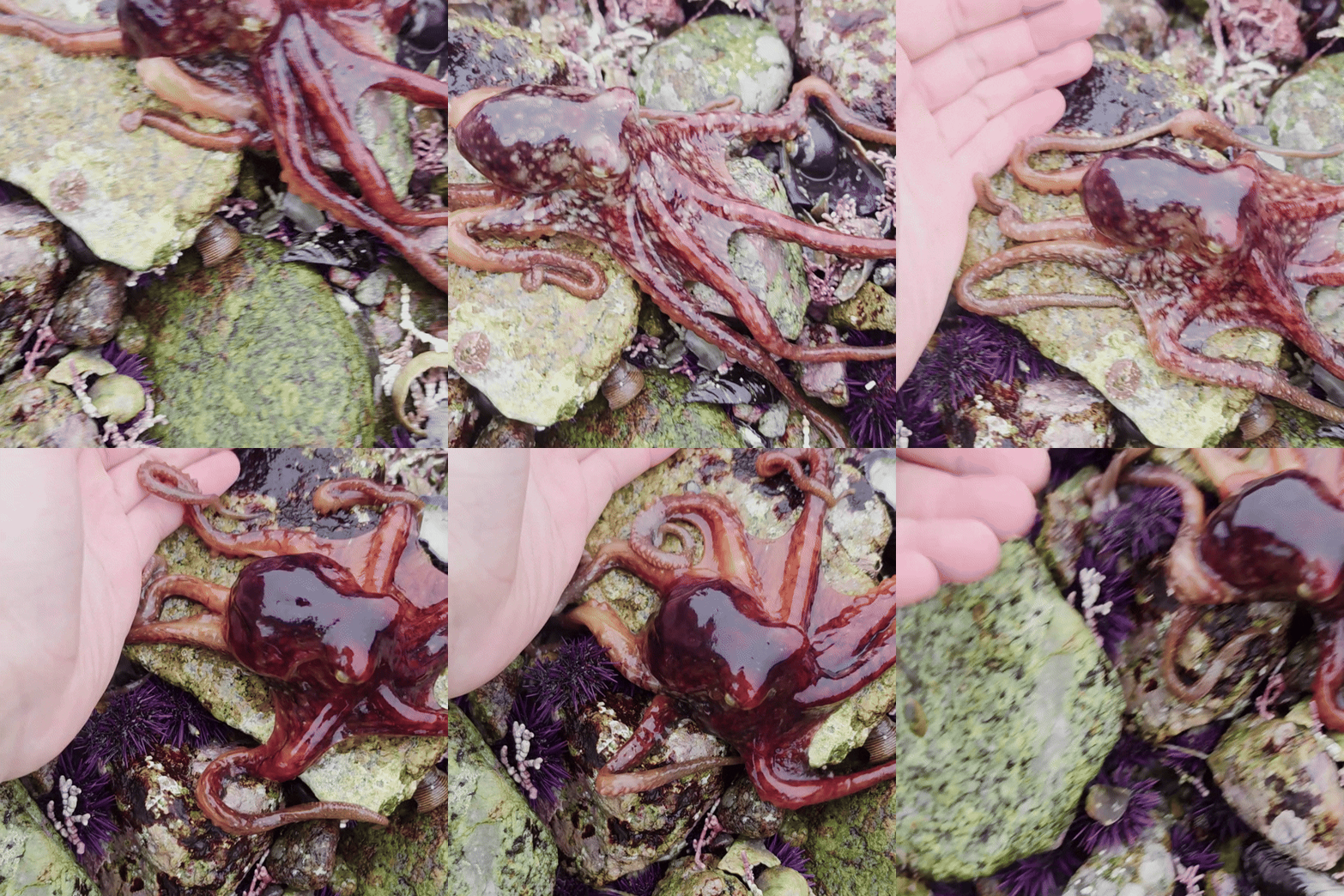
Octopus rubescens (East Pacific Red Octopus) – extra media
Same octopus as before, this time in GIF form to appreciate the color change.
For all my media of Oscar (and his little bro):
https://photos.app.goo.gl/DB7KuytqNpWrHEcw7
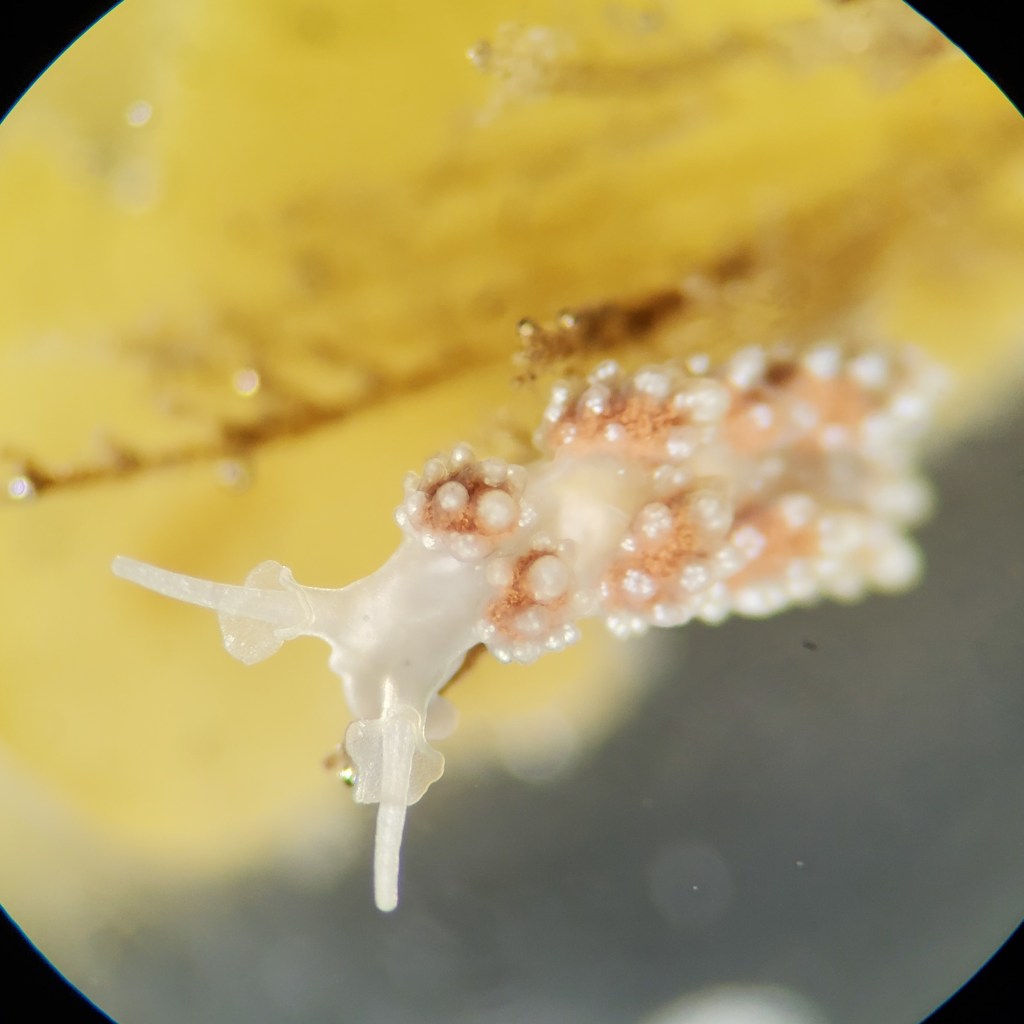
Doto varaderoensis (Doto nudibranch)
Class: Gastropoda
Location: Monterey, CA – collected off a dive
These pearly sea slugs have some of the most stunning dorsal cerata in the family. They greedily indulge on hydroids – tiny stationary jellyfish.
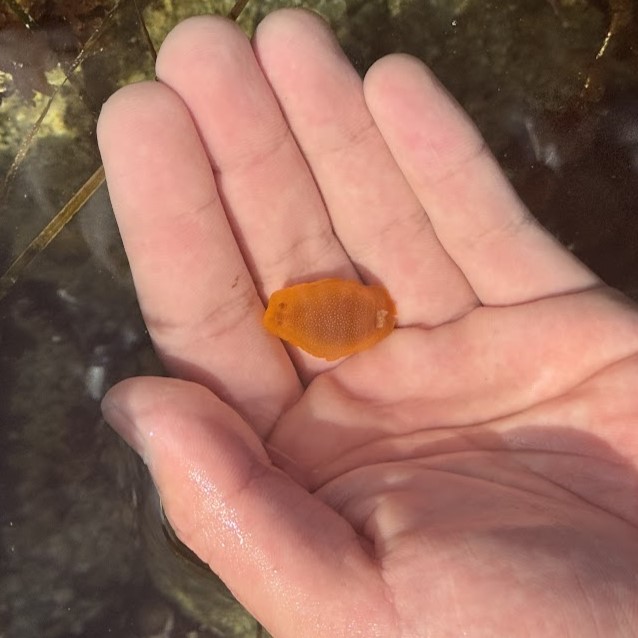
Rostanga pulchra (Red sponge nudibranch)
Class: Gastropoda
Location: Fanshell Beach, CA
The vibrant orange color of this sea slug is due to its main diet of the red encrusting sponge.
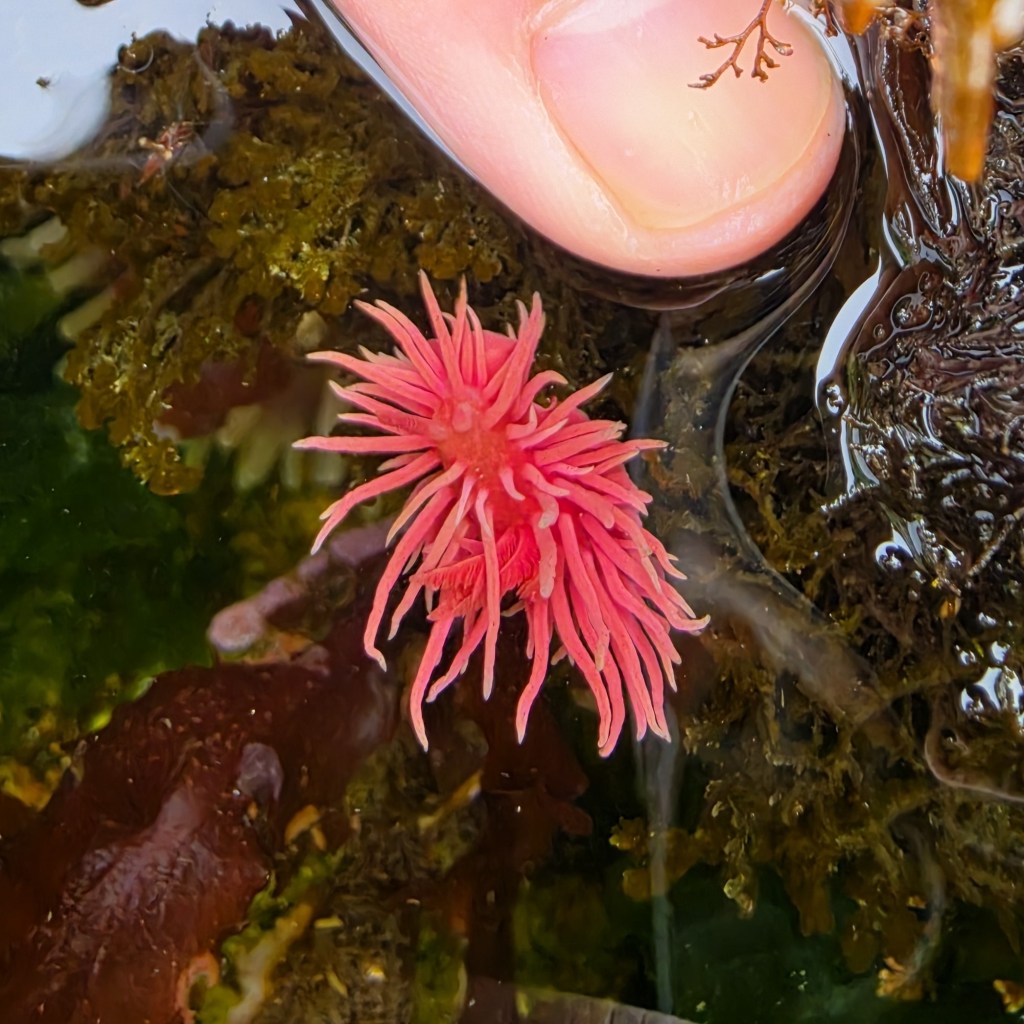
Ceratodoris rosacea (Hopkins red nudibranch)
Class: Gastropoda
Location: Asilomar Beach, CA – collected off the rocky intertidal
A rare but stunning sight in the intertidal. This predator gets its vibrant color from the bryozoan colonies it eats. Long, tubular, and pink-tinted cerata can make this nudibranch appear like an anemone to the uninitiated.
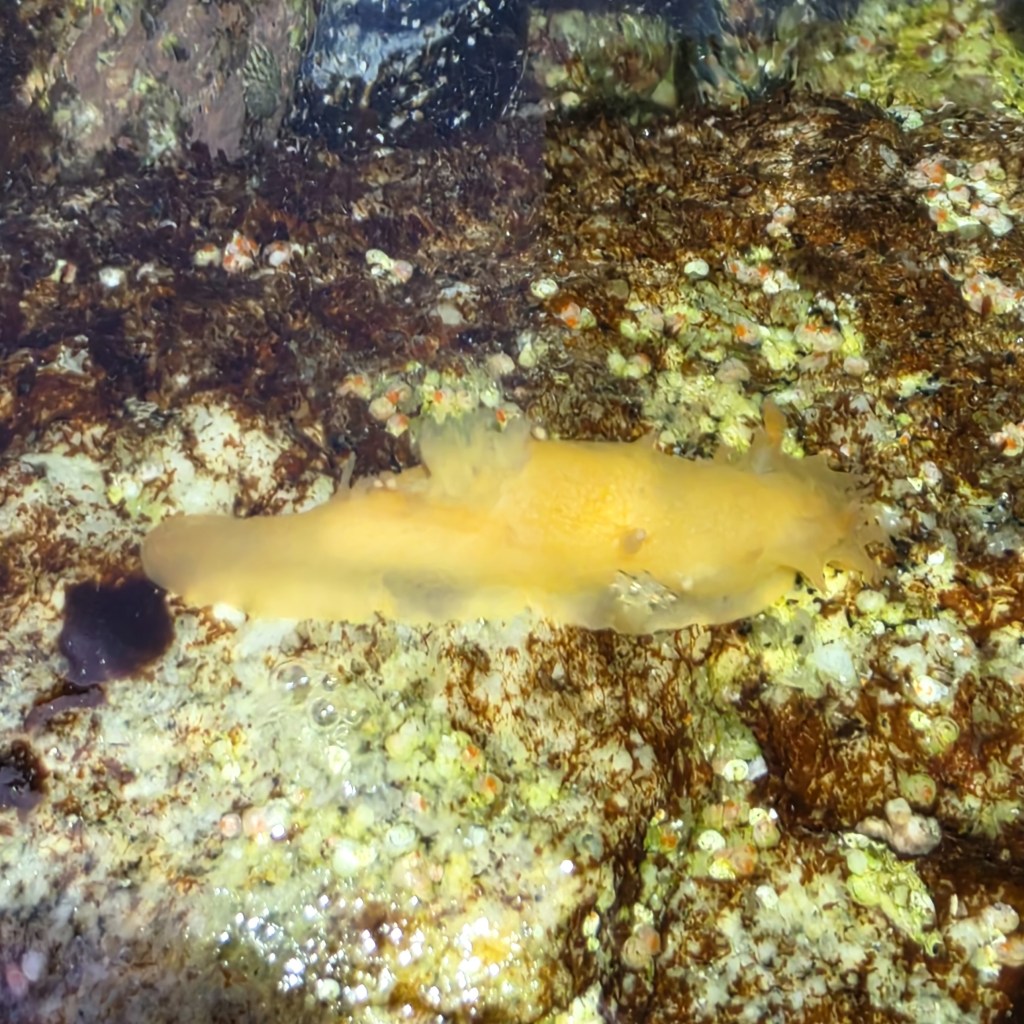
Triopha maculata (Spotted Triopha)
Class: Gastropoda
Location: Asilomar Beach, CA
A rare find in the Monterey area. This one was found at early sunrise hours.
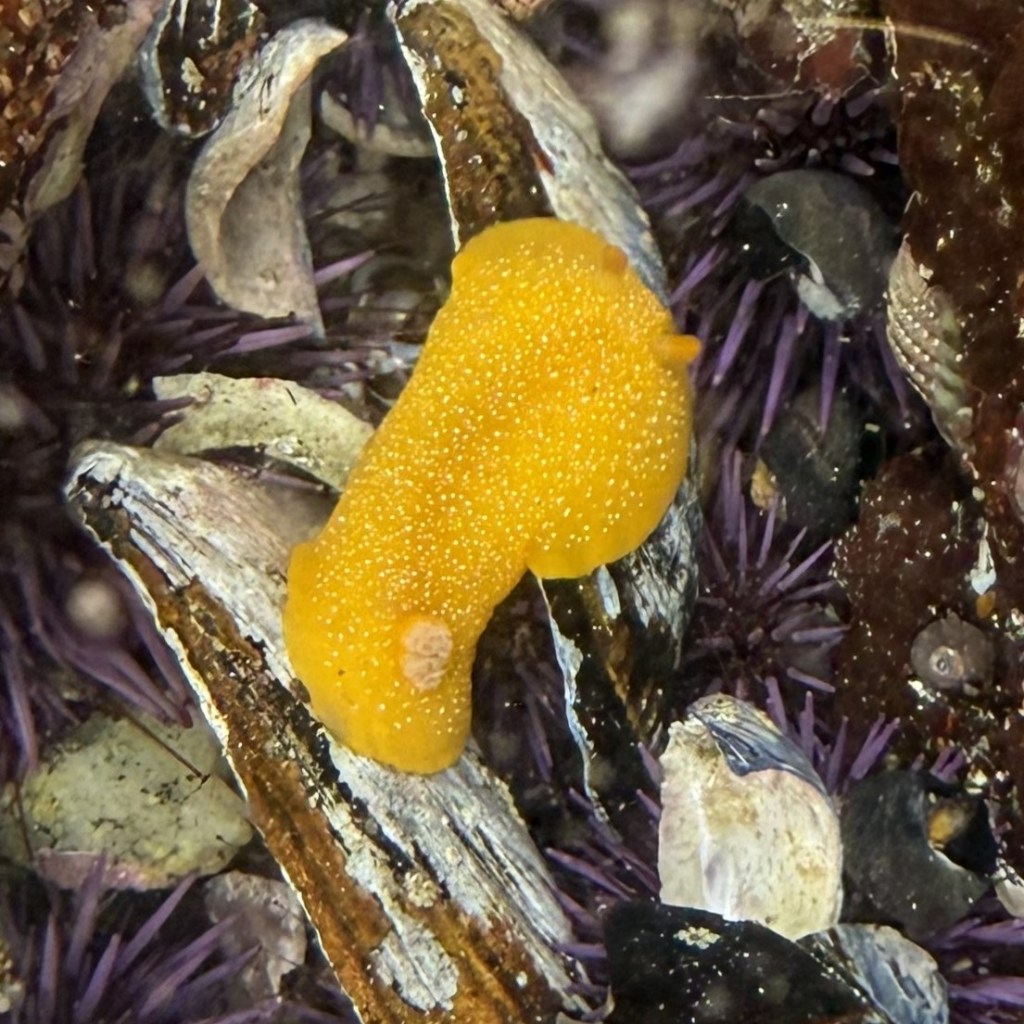
Doriopsilla albopunctata (white-spotted sea goddess)
Class: Gastropoda
Location: Asilomar Beach, CA
These dorid nudibranchs are hypothesized to get their color from yellow sponges they eat. They were found in many numbers on a late-spring low tide.
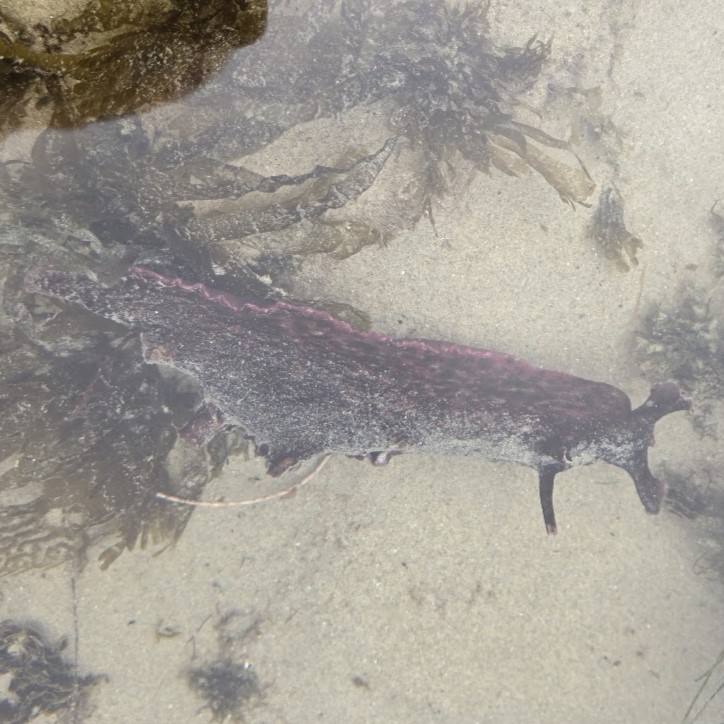
Aplysia californica (California sea hare)
Class: Gastropoda
Location: Malibu, CA
These are relatively enormous relatives of sea slugs roughly the size of a small squash. When scared, they are able to “ink” as an octopus might.
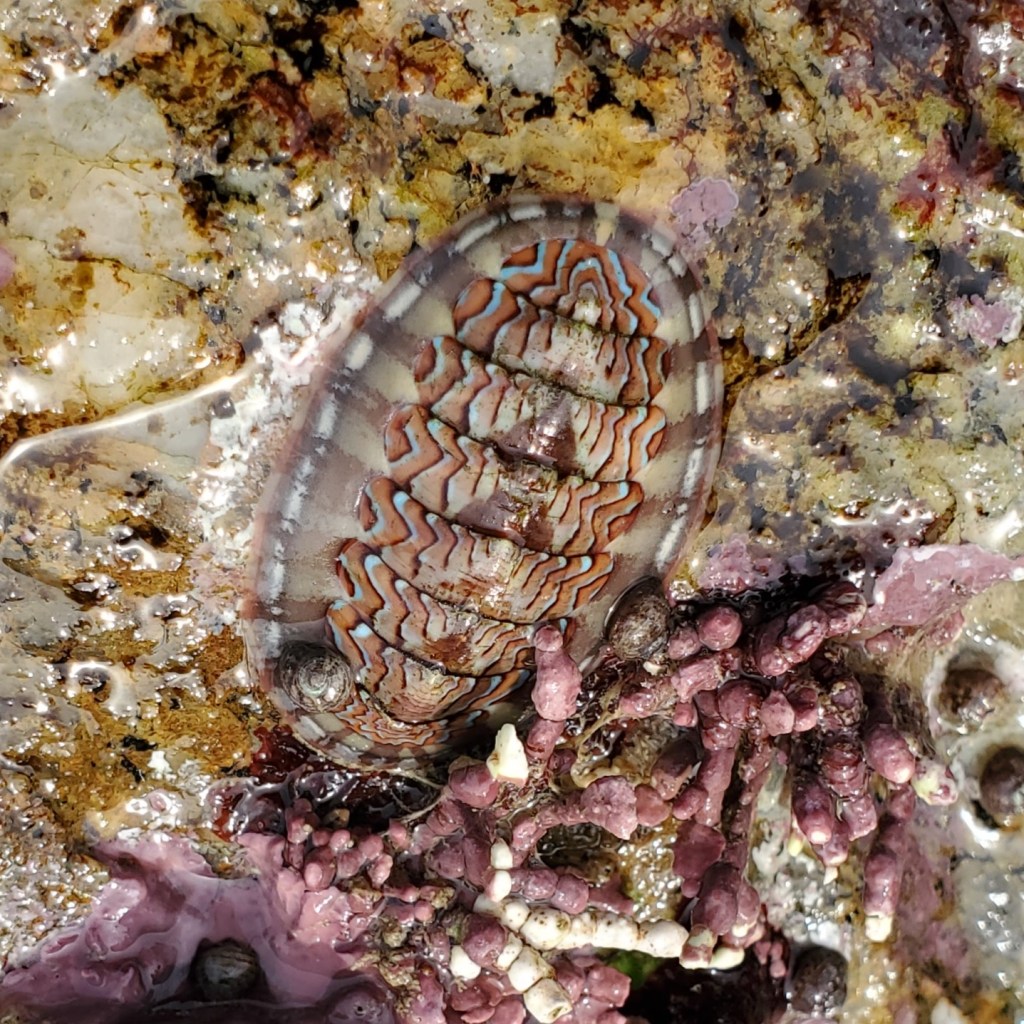
Tonicella lineata (lined chiton)
Class: Polyplacophora
Location: Fanshell Beach, CA
Though on the smaller end of spectrum for chiton, they make up for it by being stunning. All molluscs have a mouth and “teeth”, but it’s harder to believe in this case…
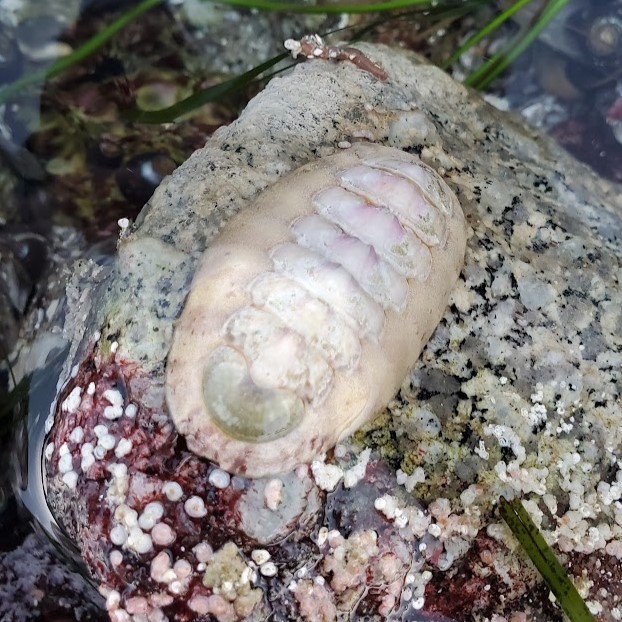
Stenoplax heathiana (Heath’s chiton)
Class: Polyplacophora
Location: Asilomar, CA
I almost thought this was albinism when I first saw this chiton. Fittingly, they are scared of sunlight.
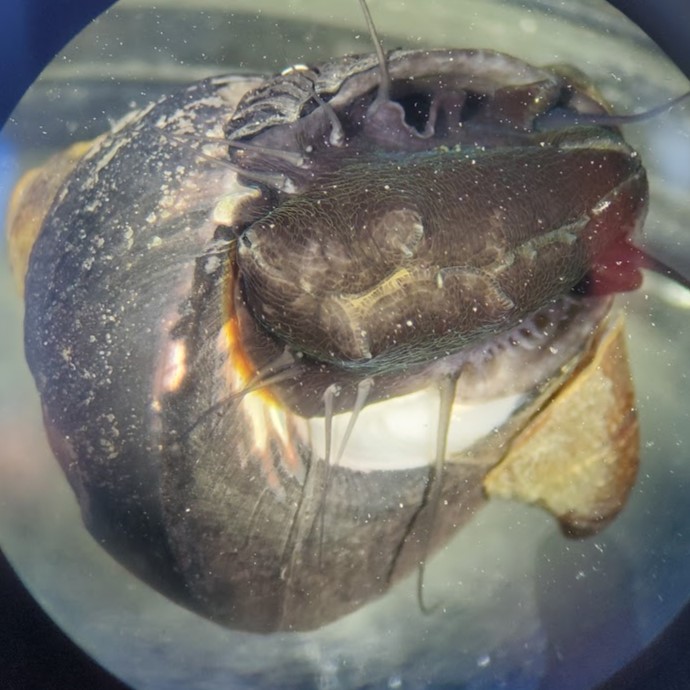
Tegula funebralis (black tegula)
Class: Gastropoda
Location: Hopkins Marine Station, CA
Probably the single MOST common organism on the high intertidal along the California coast. This snail has a sneaky limpet growing on it too.
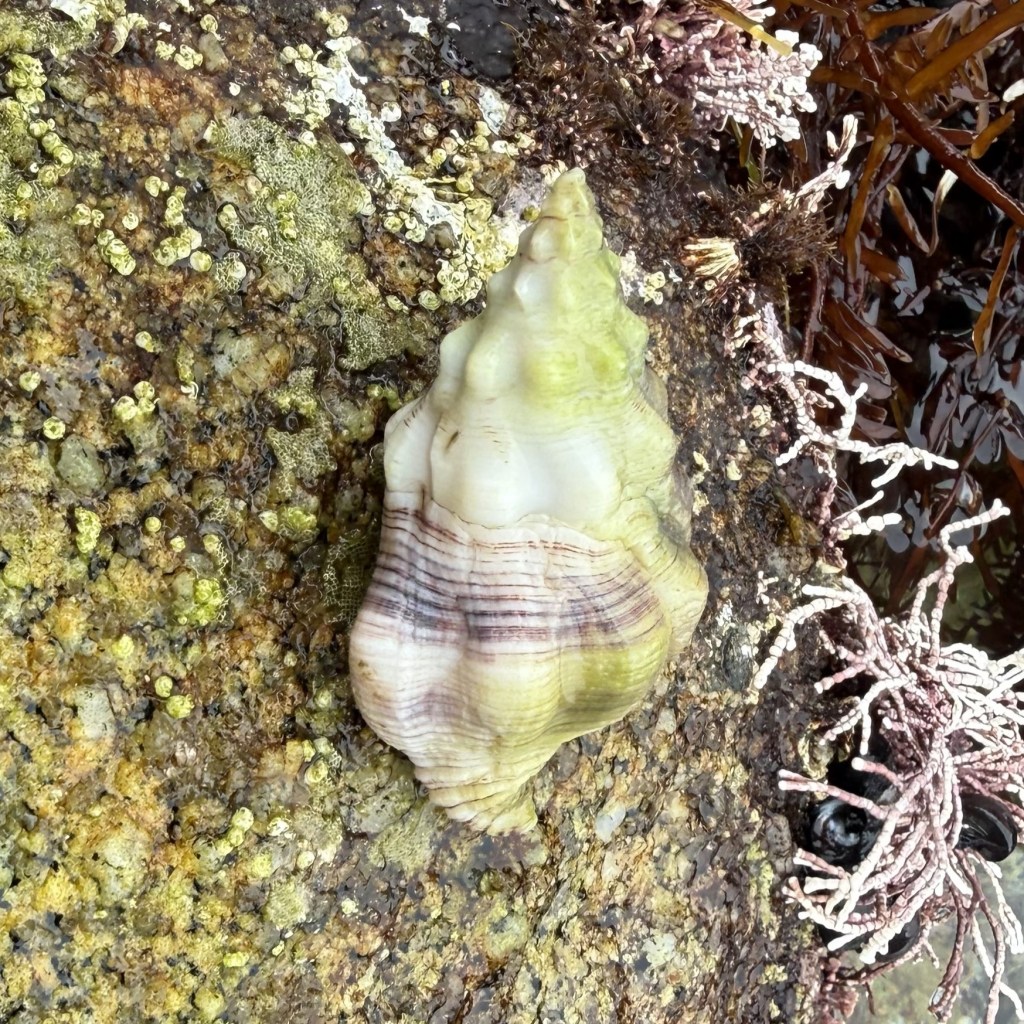
Kelletia kelletii (Kellet’s whelk)
Class: Gastropoda
Location: Asilomar, CA
Other snails HATE to see these whelks coming. This 5-cm monster of a gastropod is definitely the neighborhood bully, answering only to sea stars and otters.
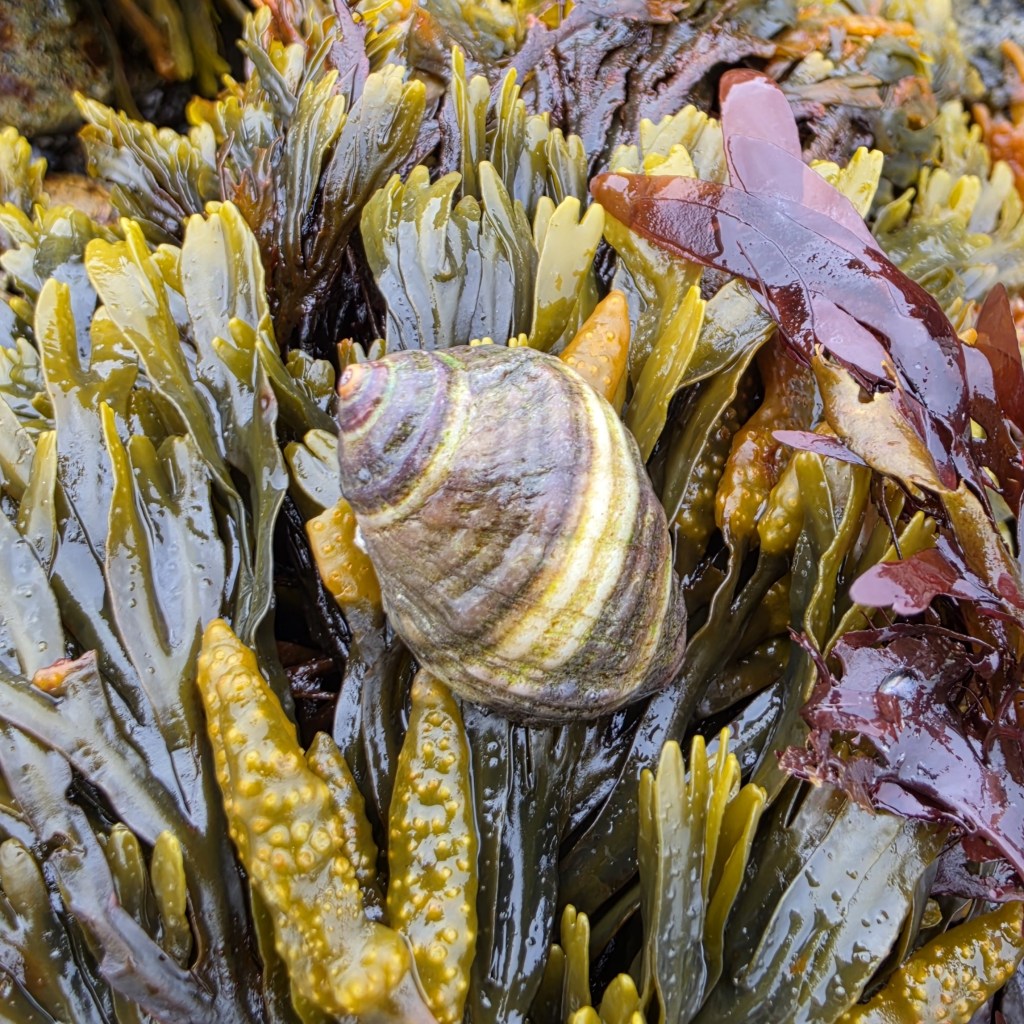
Nucella lapillus (Dog whelk)
Class: Gastropoda
Location: Djúpivogur, Iceland
This predatory whelk rules the Icelandic tide pools, preying on their smaller Littorina cousins… that is when there are no sea stars around.
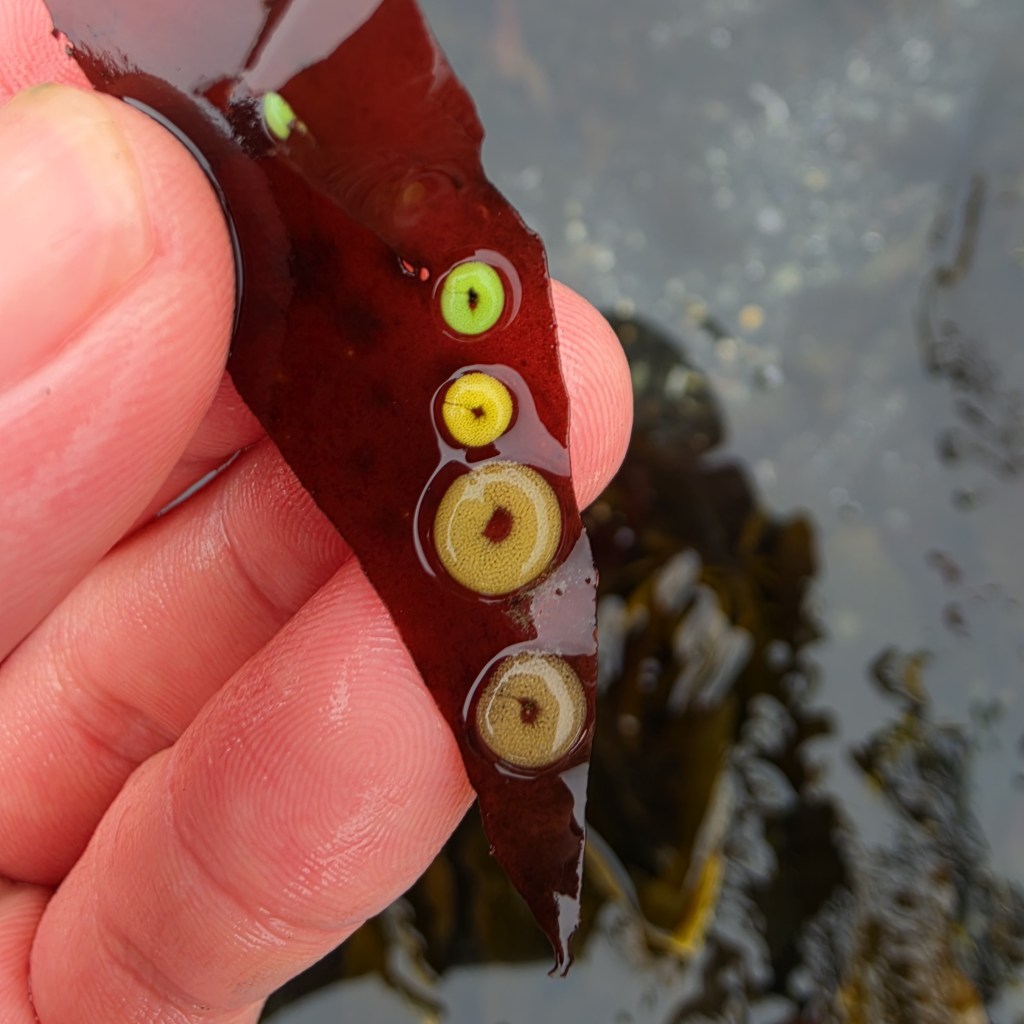
Lacuna vincta eggs (Northern lacuna)
Class: Gastropoda
Location: Djúpivogur, Iceland
This is the first species where I (suspect to) have found the eggs for but not a mature adult. These neon-cheerio-looking eggs caught my eye much more than anything else in the Icelandic tide pools.
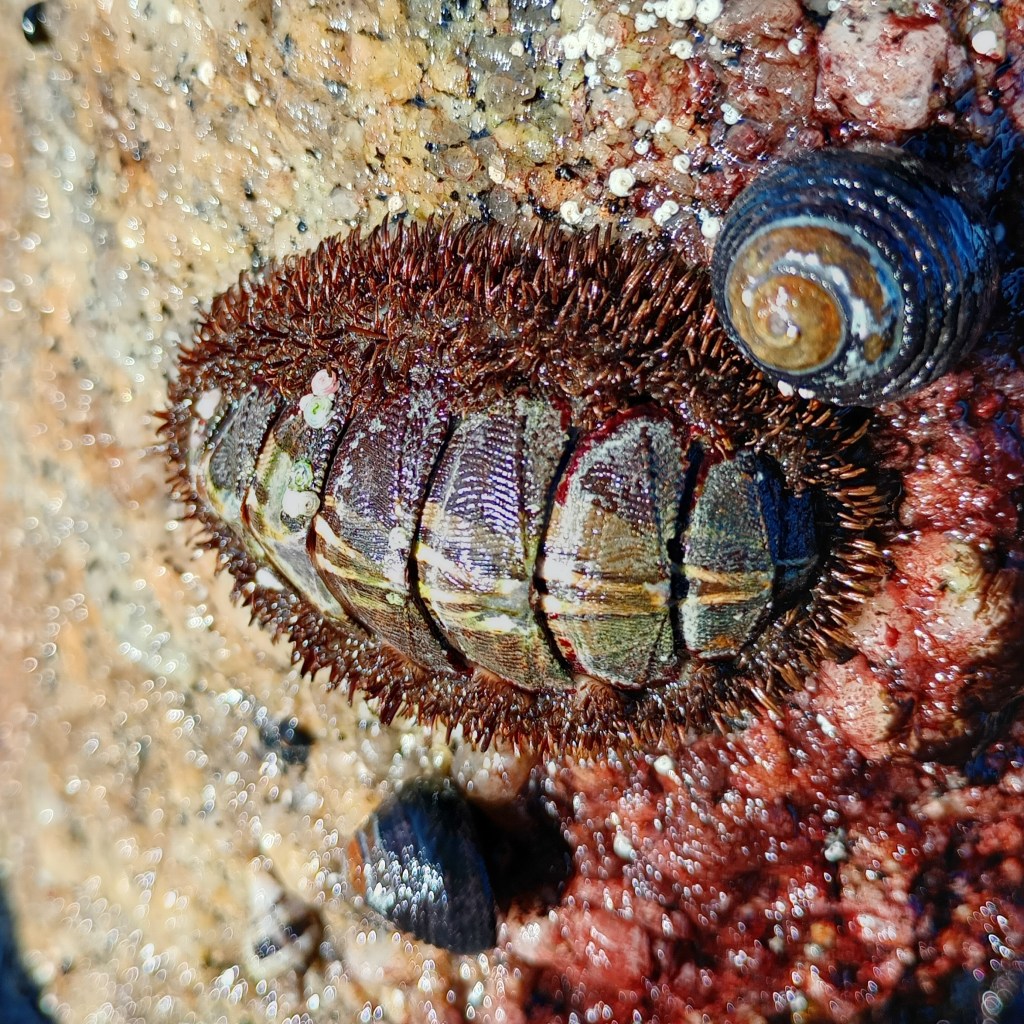
Mopalia muscosa (mossy chiton)
Class: Polyplacophora
Location: Asilomar, CA
A chiton known for its girdle covered in scary-looking sclerites.
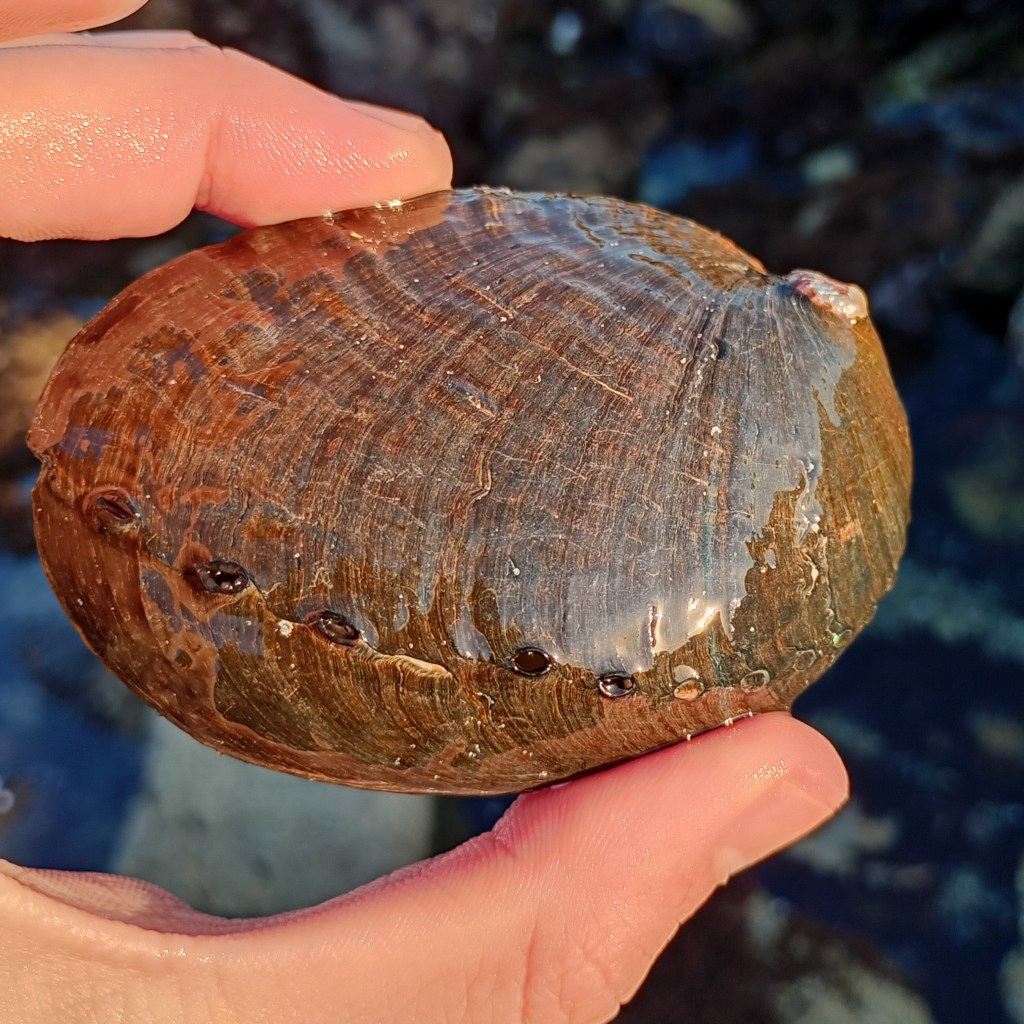
Haliotis rufescens (red abalone)
Class: Gastropoda
Location: Asilomar, CA
I grew up wondering what these crazy looking creatures were at the asian supermarket. The specimen I have in hand is alive, just shy!
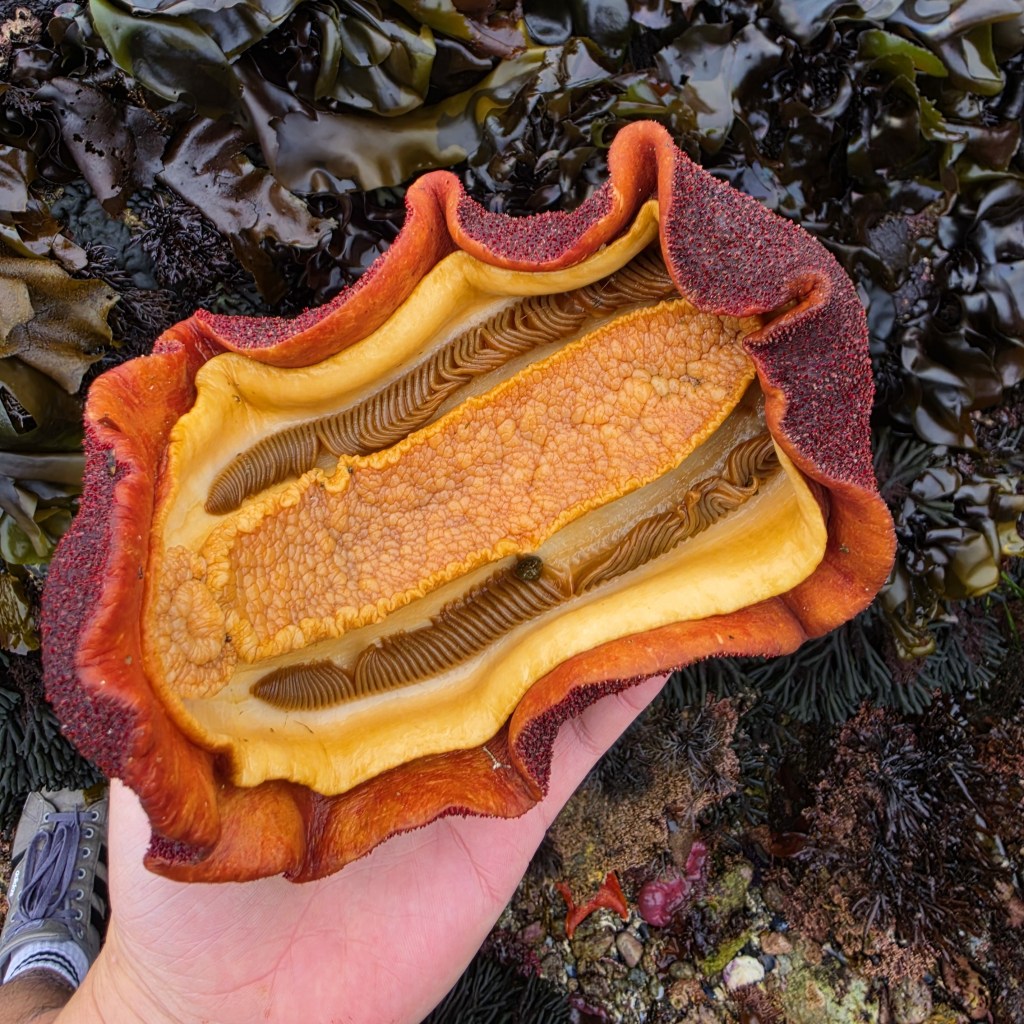
Cryptochiton stelleri (gumboot chiton)
Class: Polyplacophora
Location: Fanshell Beach
These are the largest (and honestly ugliest) species of chiton in the world! Hard to believe these absolute units get big off of a vegetarian diet.
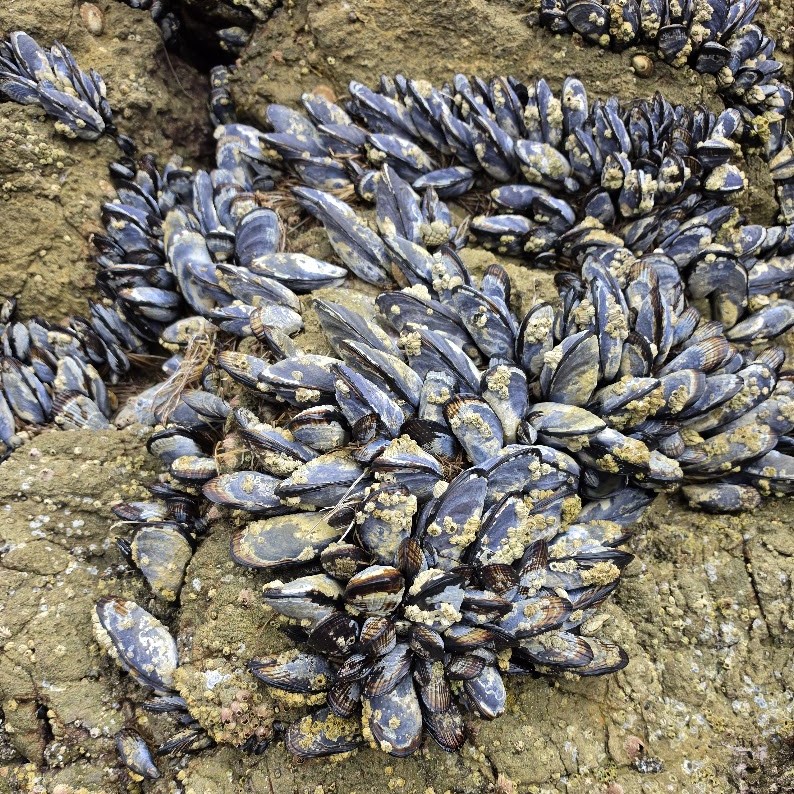
Mytilus californianus (California mussel)
Class: Bivalvia
Location: Malibu, CA
One of the most noticeable animals on any intertidal zone without even needing to get wet. Don’t harvest them though, they are more often inedible than not throughout the year.
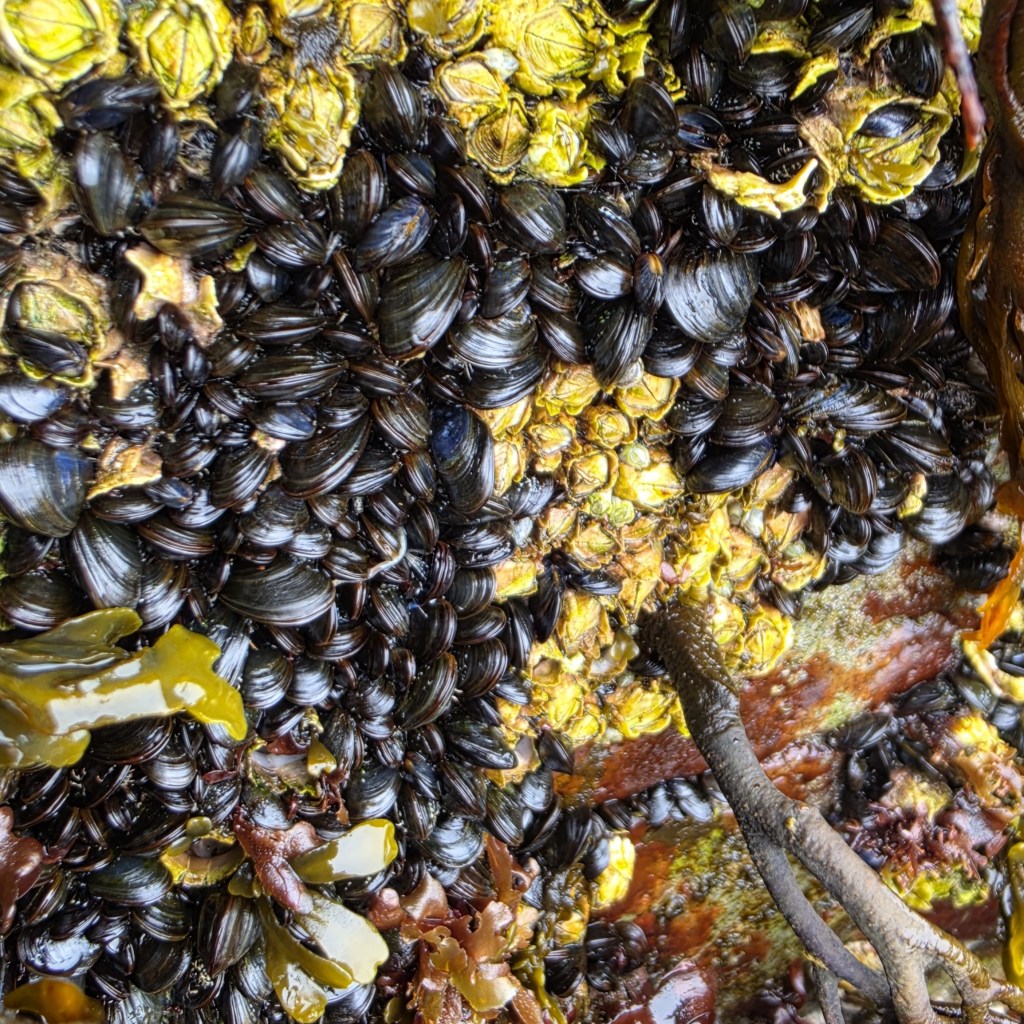
Mytilus edulis (Blue mussel)
Class: Bivalvia
Location: Djúpivogur, Iceland
These are some of the smallest mussels I have ever seen in the wild. It is possible they are merely juveniles. However, their petite size is consistent with the shrinking size of organisms in more frigid waters.
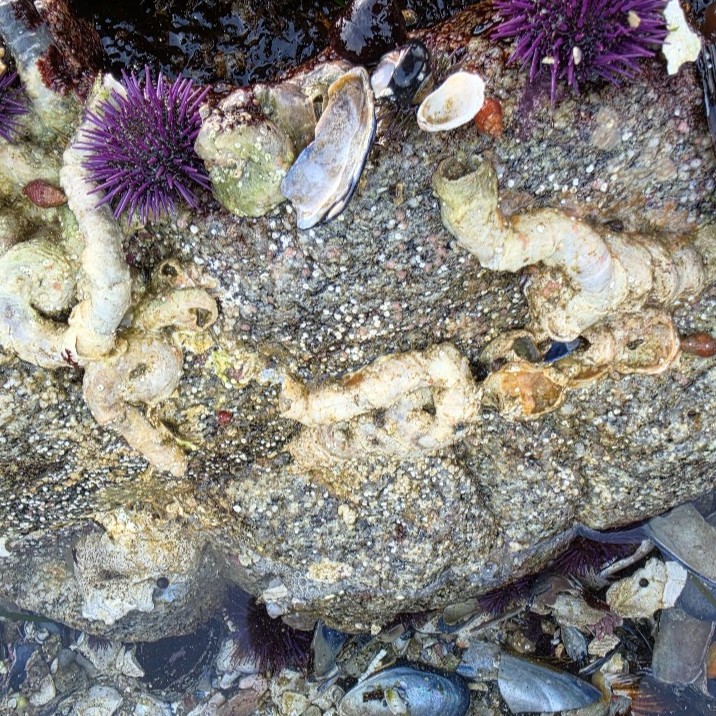
Thylacodes squamigerus (scaled worm snail)
Class: Gastropoda
Location: Asilomar, CA
These are a peculiar variant of snails that gave up locomotion and decided to stay put. They secrete nets of mucus to capture floating food.
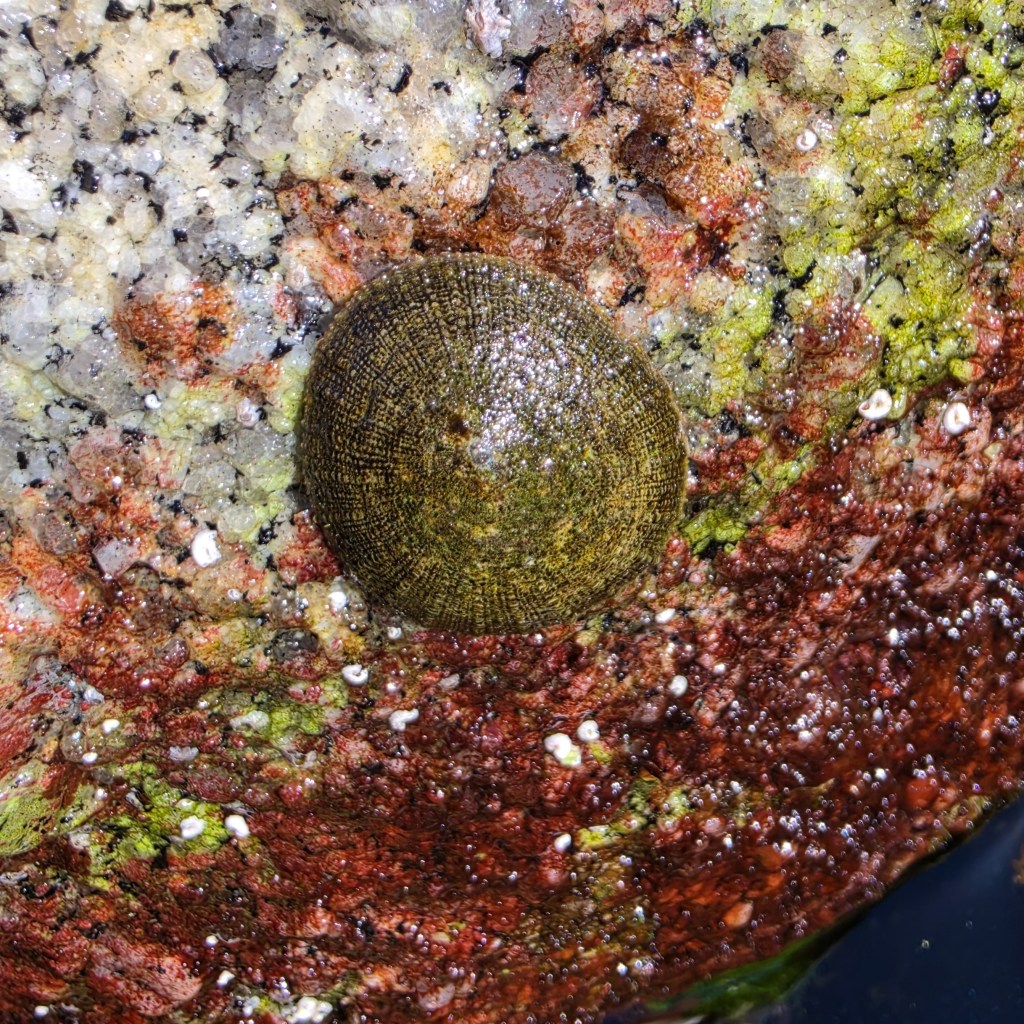
Lottia persona (mask limpet)
Class: Gastropoda
Location: Asilomar, CA
A patellogastropod like L. persona is a “true limpet”. True limpets lack that volcano-like opening on the top of the shell, implying a unique circulatory system.
Echinodermata
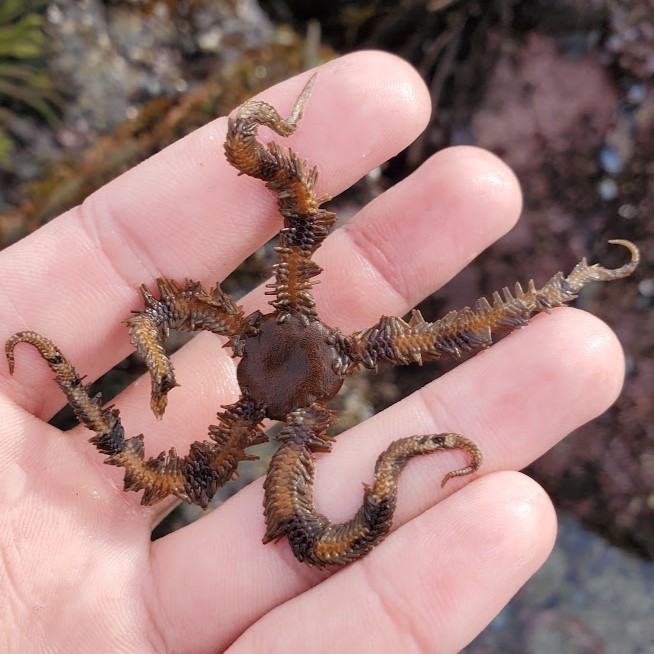
Ophionereis annulata (banded brittle star)
Class: Ophiuroidea
Location: Fanshell Beach, CA
These brittle stars move unlike any traditional sea star you have ever seen. They often scuttle across the floor with the speed and mechanics of a 5-armed octopus.
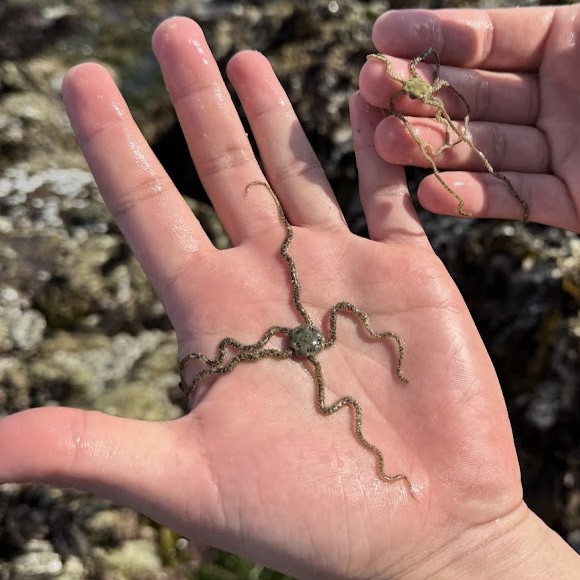
Amphiodia occidentalis (long-armed brittle star)
Class: Ophiuroidea
Location: Fanshell Beach, CA
These brittle stars hide under rocks where they usually live blissfully feeding in the sand. When they do venture out, it usually costs them an arm and a leg.
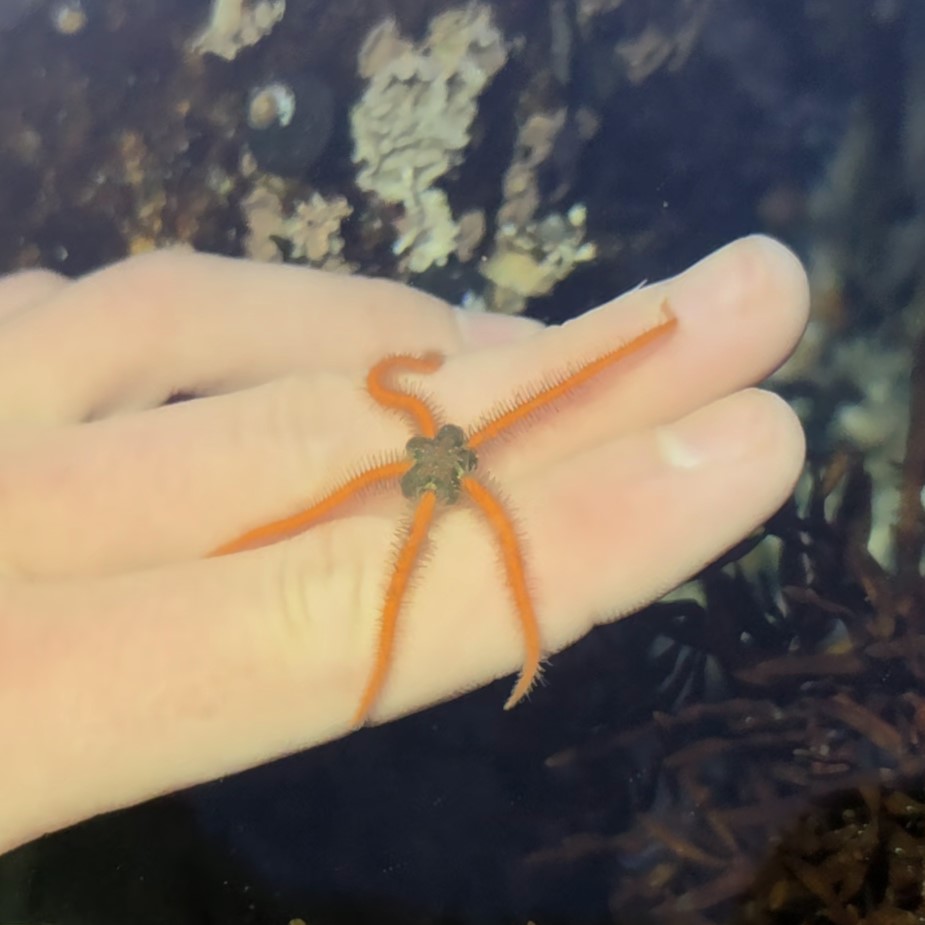
Ophiothrix spiculata (spiny brittle star)
Class: Ophiuroidea
Location: Asilmoar, CA
These brittle stars are characterized by they extremely spiny arms. They are the only brittle star that I have felt significantly uncomfortable allowing to crawl over my hand.
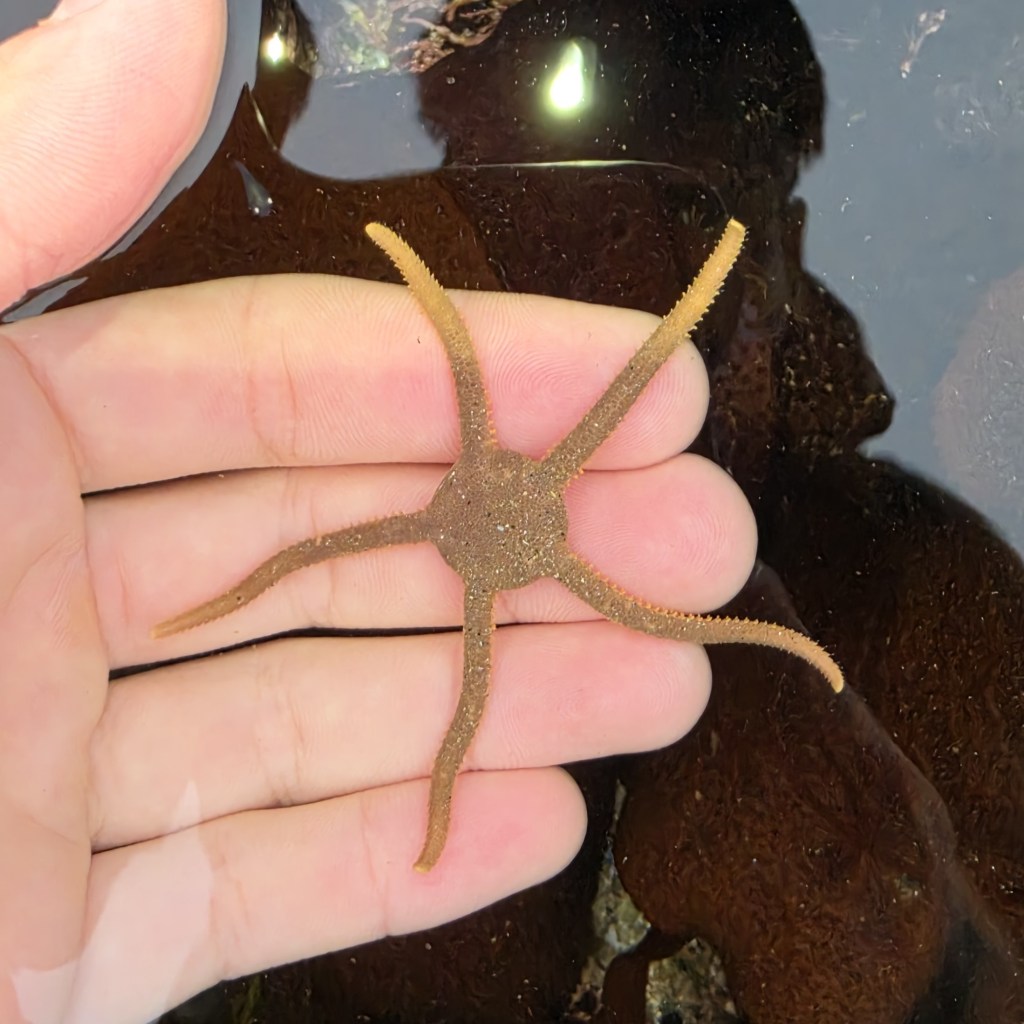
Ophioplocus esmarki (Esmark’s brittle star)
Class: Ophiuroidea
Location: Fanshell Beach
These brittle stars are known for having short stubby arms relative to a larger central disc size. This makes them one of the least mobile, offering a more relaxing holding experience. Probably the easiest of the class to draw.
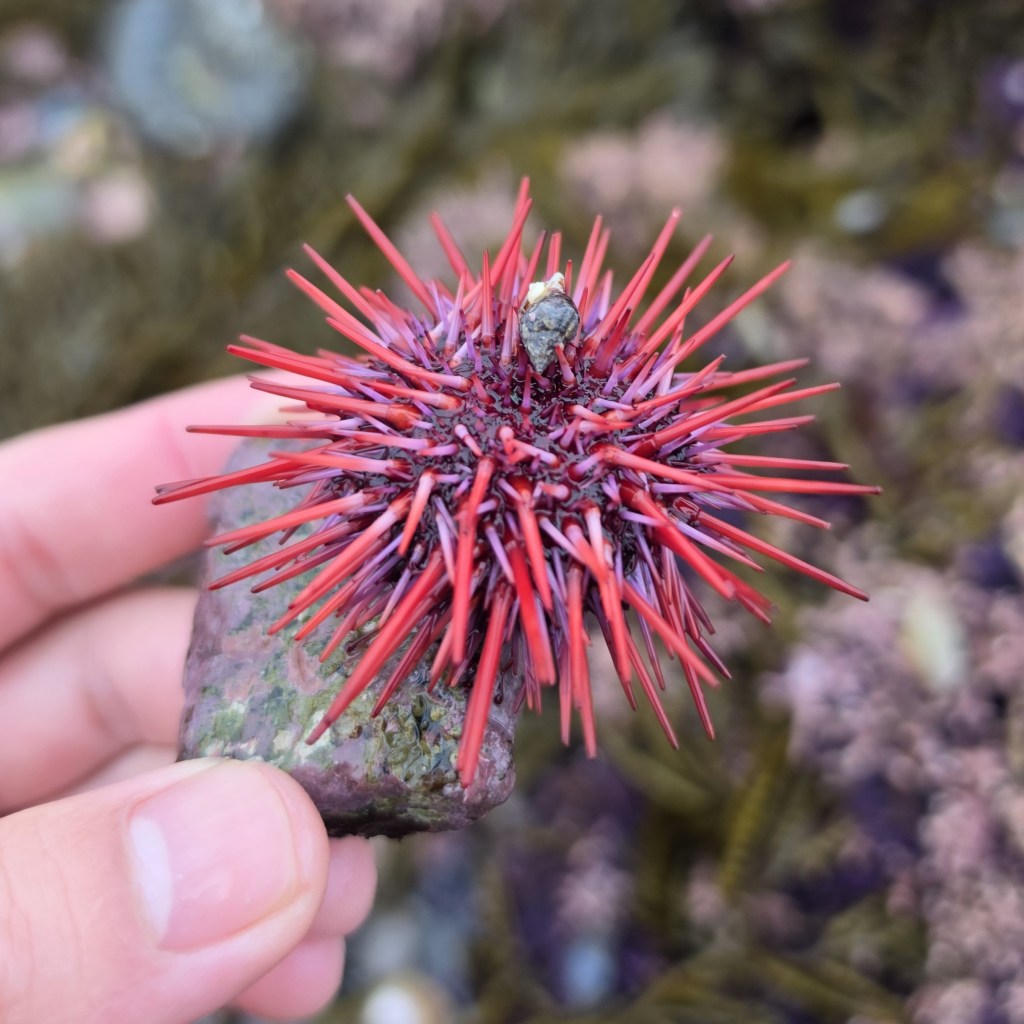
Mesocentrotus franciscanus (red sea urchin)
Class: Echinodea
Location: Fanshell Beach, CA
Amongst every 100 purple urchins (purpuratus), you may come across this red anomaly, which is an entirely different species.
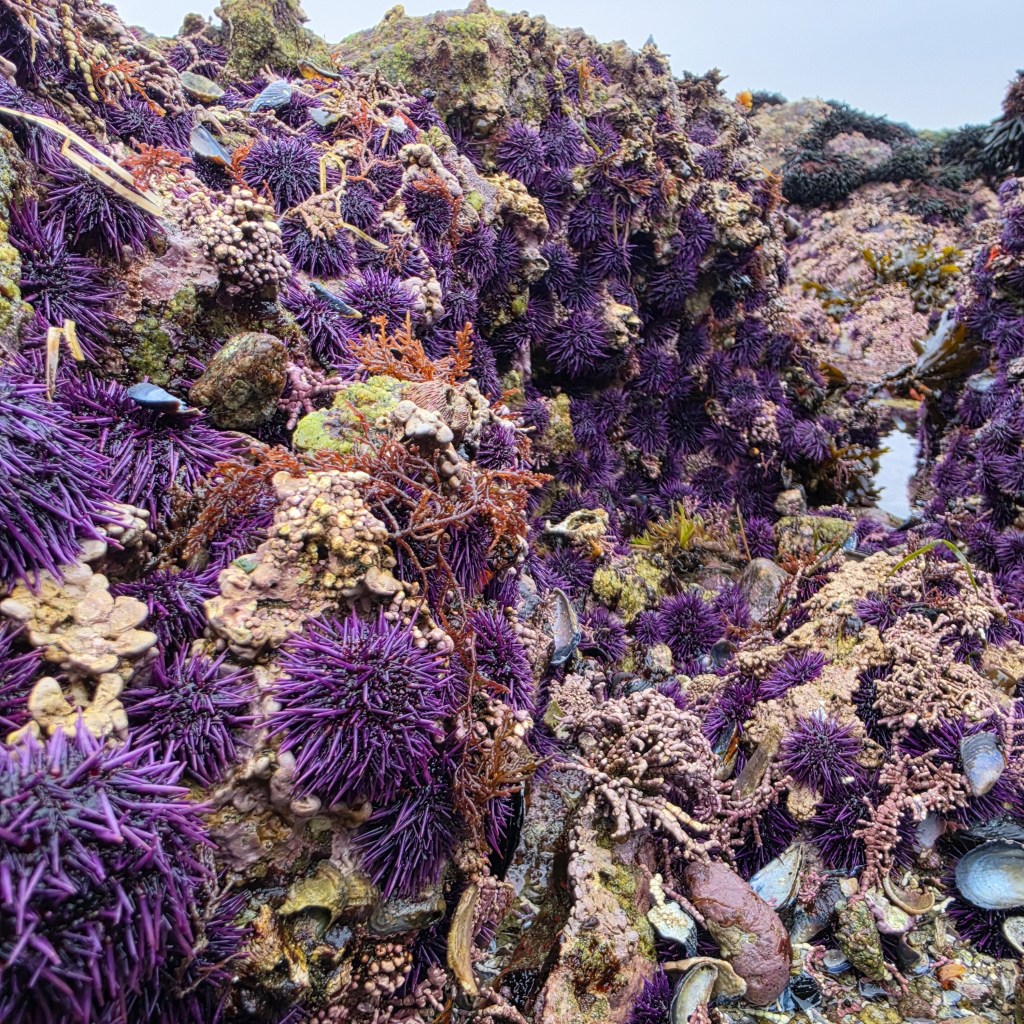
Strongylocentrotus purpuratus (purple sea urchin)
Class: Echinodea
Location: Asilomar, CA
A delicacy on the menu for sea otters and the japanese. Interestingly, humans only prefer the gonads. Voila the great wall of urchin.
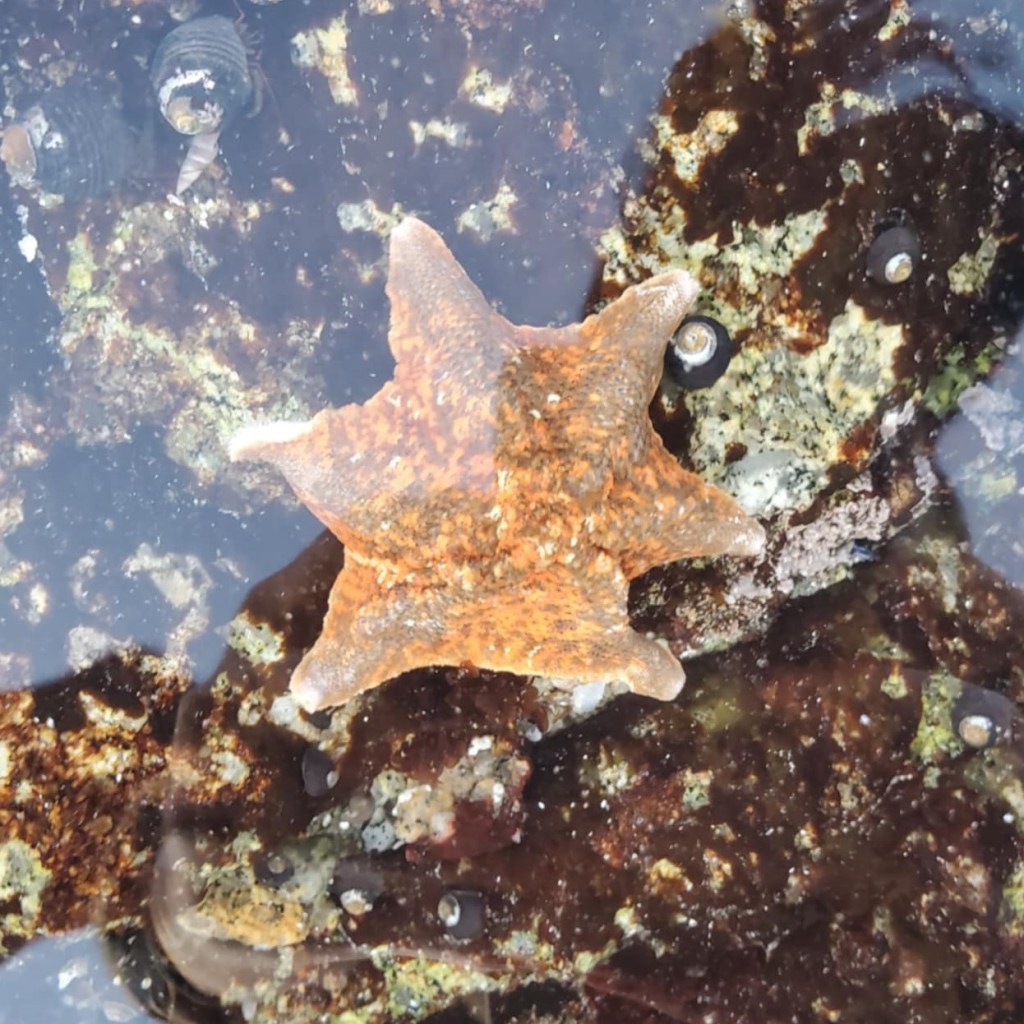
Patiria miniata (bat star)
Class: Asteroidea
Location: Hopkins Marine Station, CA
One of the most ICONIC intertidal inhabitants… but rarely seen with 6 arms. I have a theory that Patrick from Spongebob is named after this genus.
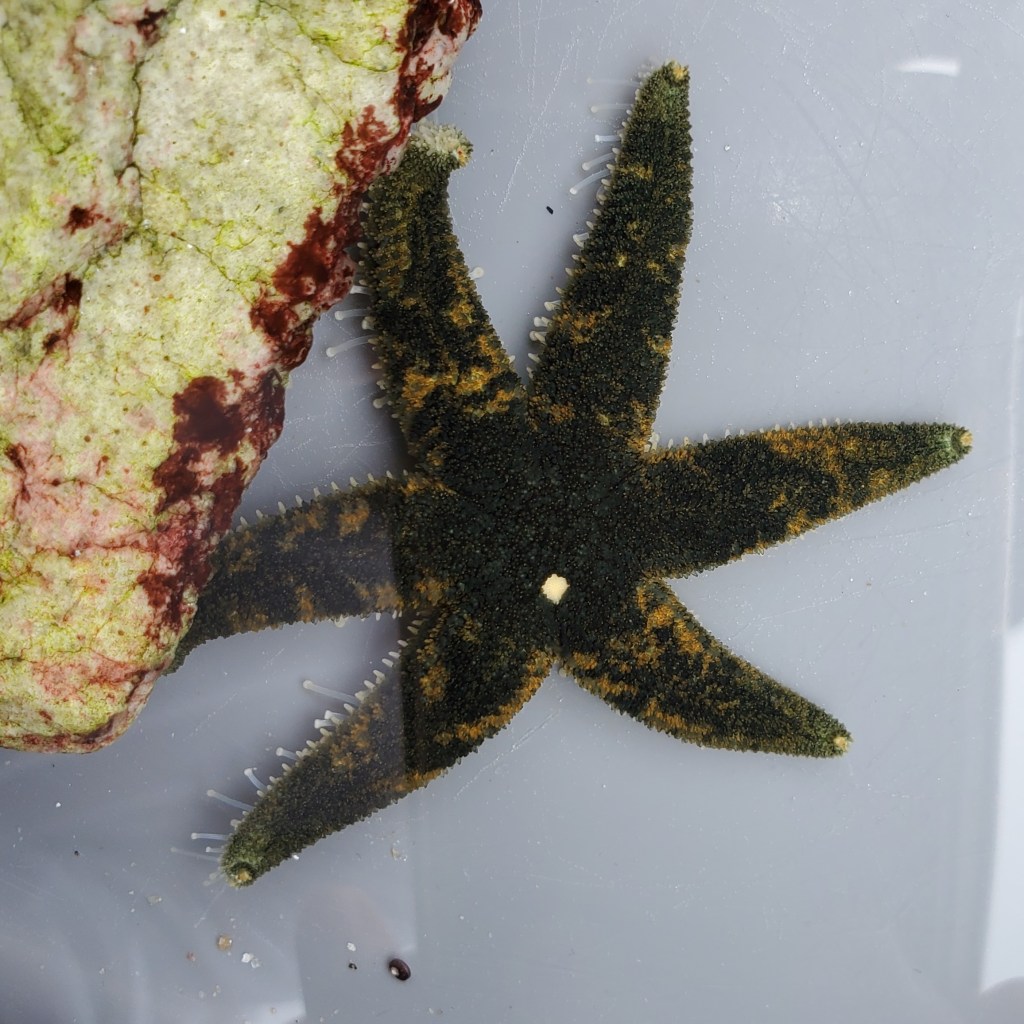
Leptasteria hexactis (6-rayed star)
Class: Asteroidea
Location: Santa Cruz, CA
A trend setting echinoderm who does not display the classic pentaradial symmetry. Can you spot the madreporite?
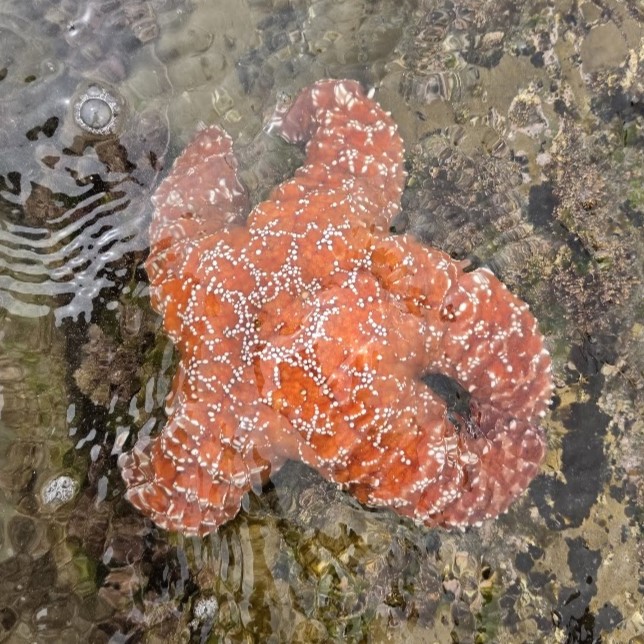
Pisaster ochraceus (Ochre sea star)
Class: Asteroidea
Location: Malibu, CA
These might very well be the largest predators you see in any intertidal zone. A dinner-plate-sized predator that devours mussels like chips.
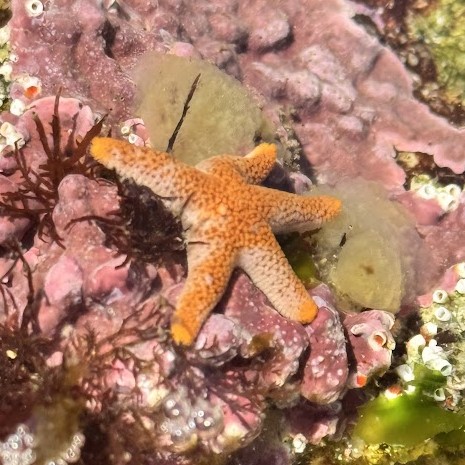
Henricia leviuscula (Pacific blood star)
Class: Asteroidea
Location: Fanshell Beach, CA
These long, slender members of Echinodermata choose to feed on sponges rather than the much more popular molluscs.
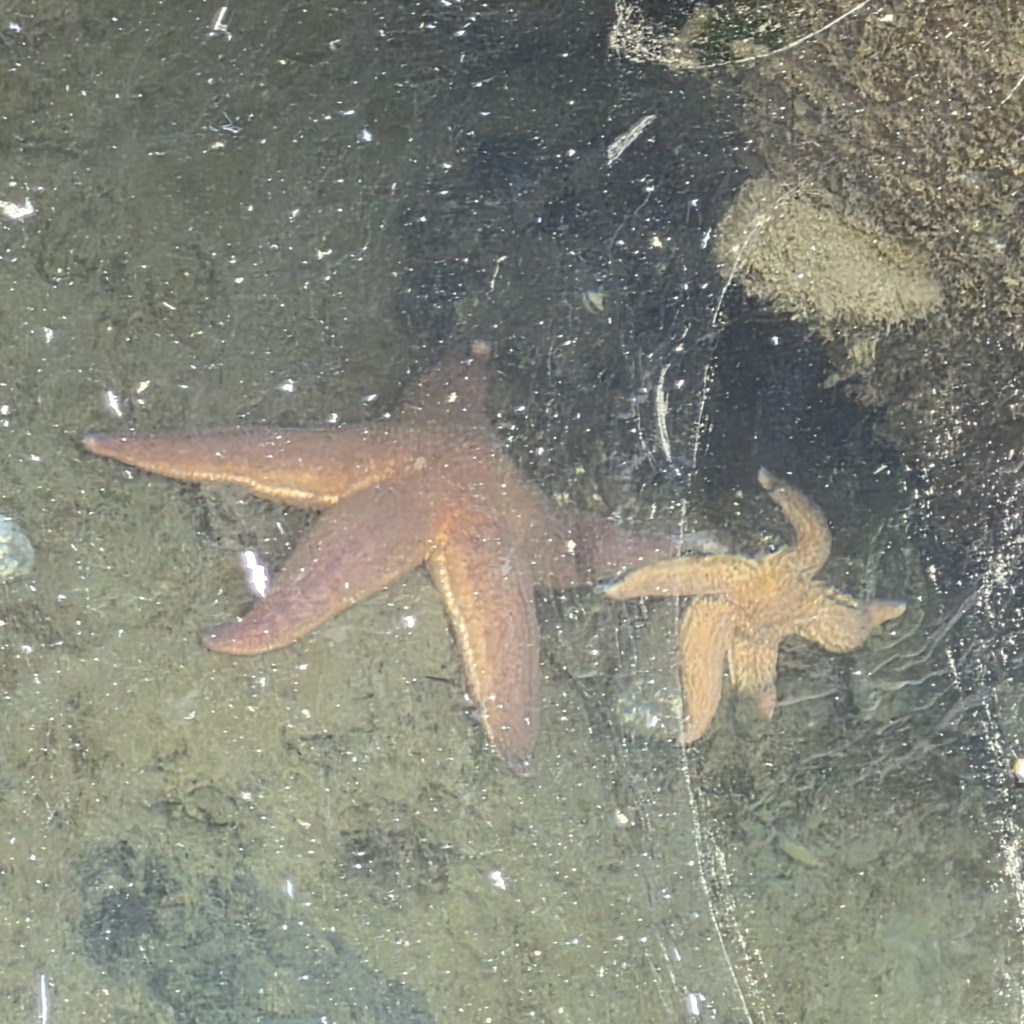
Asterias rubens (Common Sea Star)
Class: Asteroidea
Location: Icelandic Harbors
Apologies for the disgusting picture, there was a thin film of boat fuel in this harbor. This is the most common sea star found in the North Atlantic. The arctic specimens typically display much paler coloring than other Asteroids.
Platyhelminthes
Alloioplana californica (Large pacific flatworm)
Class: NA
Location: Asilomar Beach, CA – collected under rocks in deep intertidal
Is that sentient goo? These blobs breathe through diffusion, and have a single proliferating gut. Can you see a pearly pair of “eyes”?
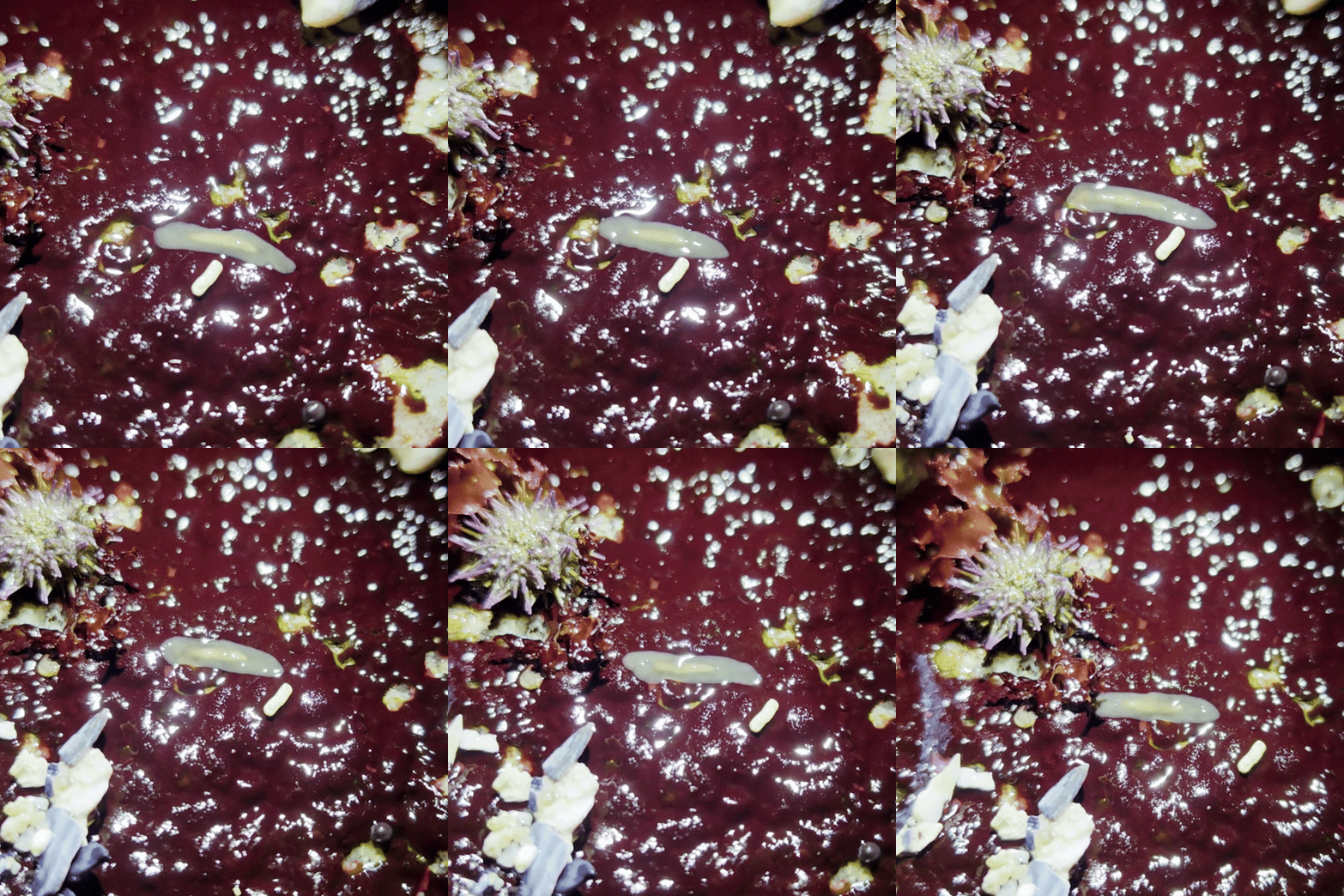
Notoplana acticola (generic pacific flatworm)
Class: NA
Location: Asilomar Beach, CA – collected under rocks in deep intertidal
This is the smaller and far more common of the two species of flatworms you will find on the pacific coast. Their method of locomotion is fascinating!
Bryozoa
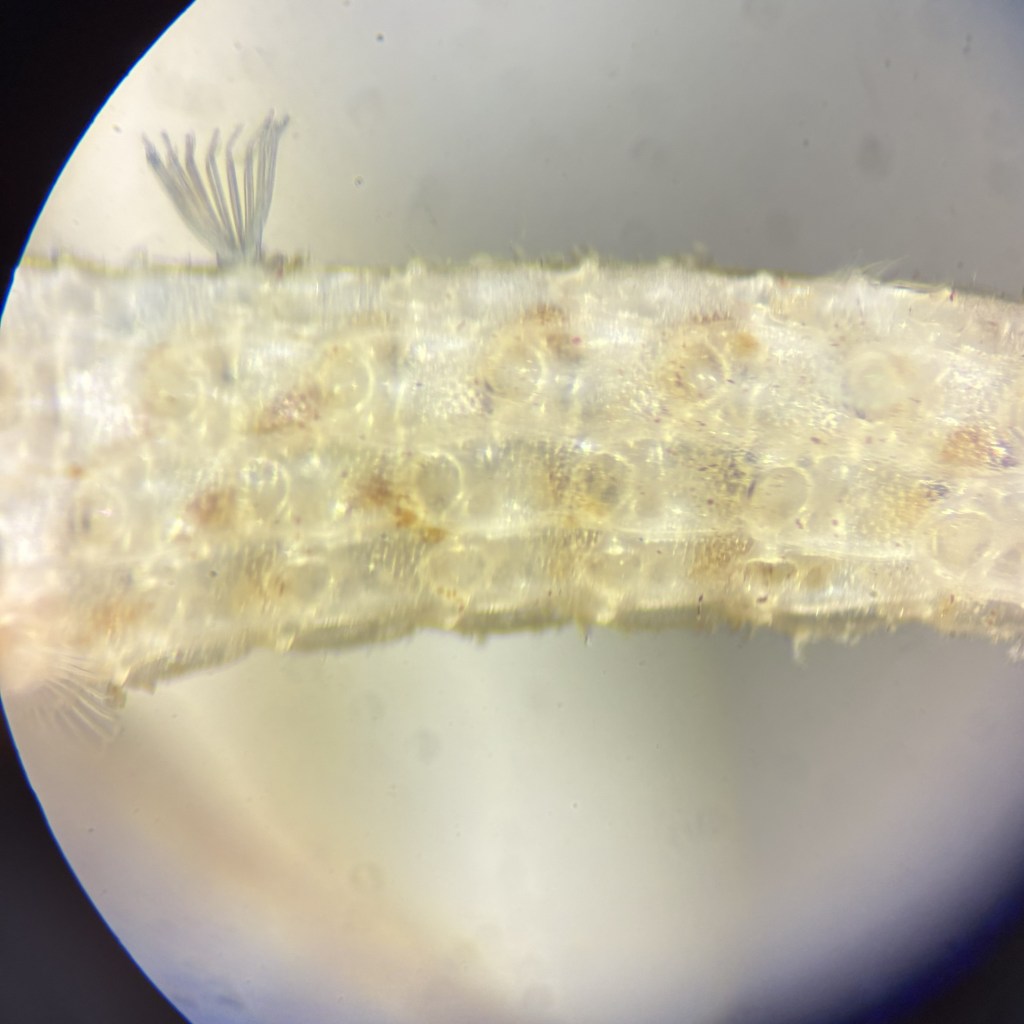
Membranipora membranacea (Lacy crust bryozoan)
Class: Gymnolaemata
Location: Monterey, CA – collected off a coastal dive
These colonial lophophores are “loosely” similar to shell-less barnacles that settle over kelp leaves, giving them a white, lacy appearance.
Annelida
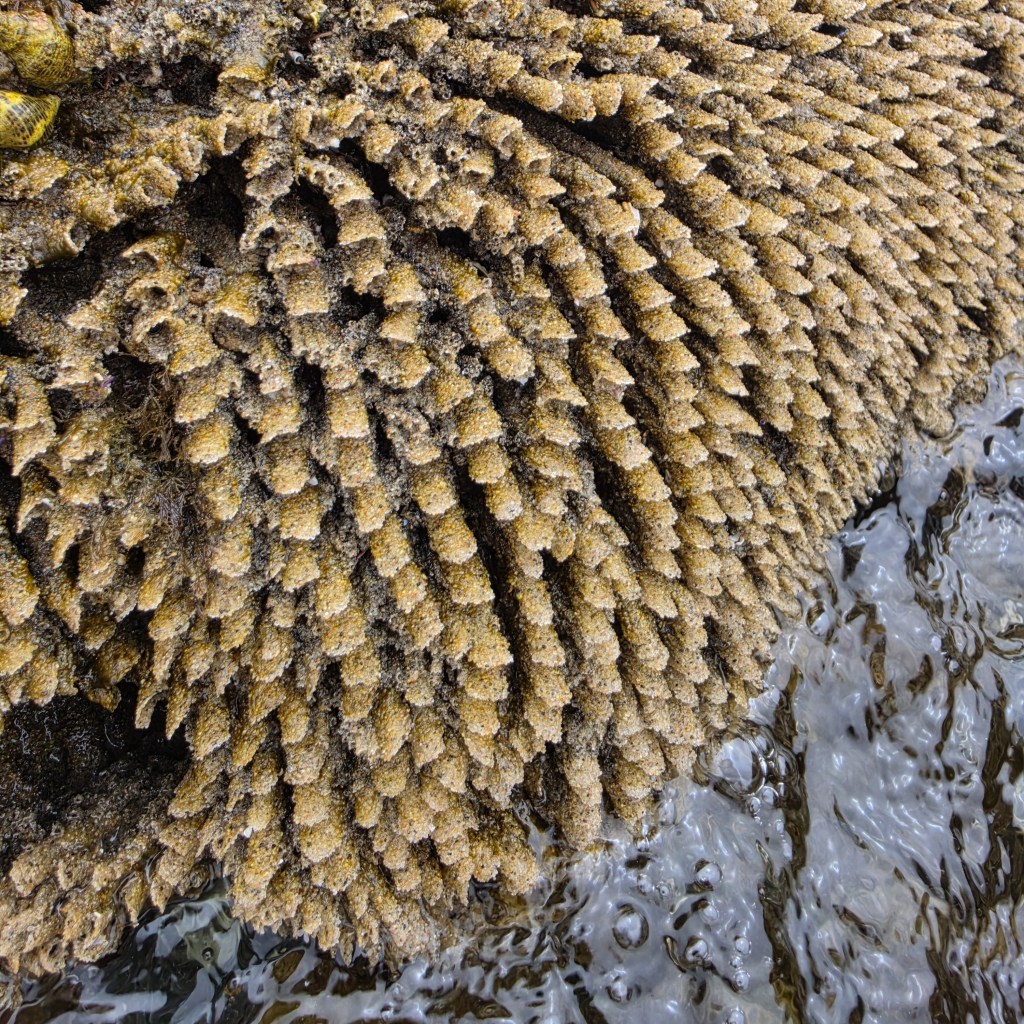
Phragmatopoma californica – (sand castle worm)
Class: Polychaeta
Location: Malibu, CA
I dare you to put your hand over these tubes for a few minutes and see what happens XD.
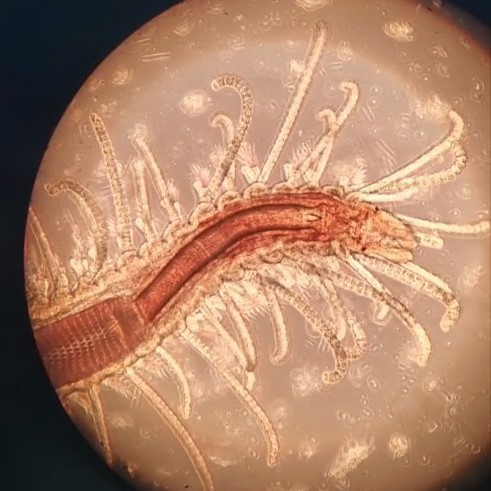
Syllidae – species unspecified
Class: Polychaeta
Location: collected on a coastal dive on Monterey
A hidden worm wonder that burrows about kelp roots and would go unappreciated if not for a microscope.
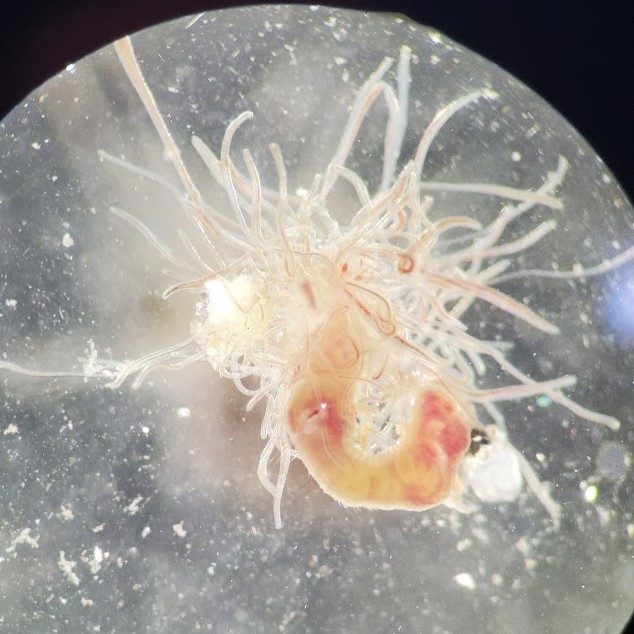
Terrebellidae – species unspecified
Class: Polychaeta
Location: collected on a coastal dive on Monterey
These burrowing worms filter sand for food and dead animal particles. They are known for their almost anemone-like tentacles that help them feed.
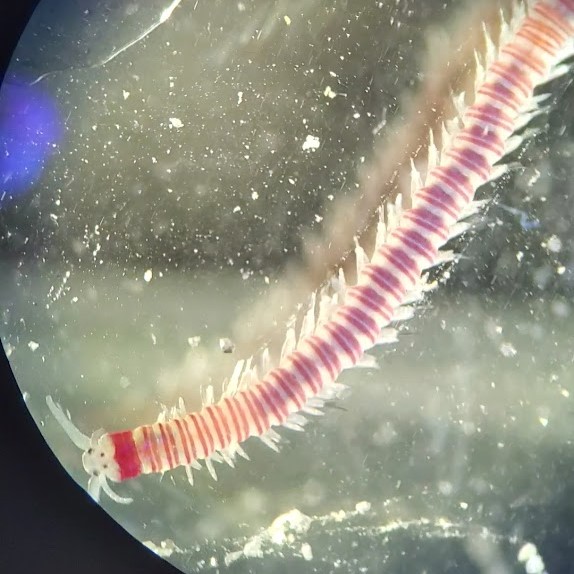
Dorvillea moniloceras (candy cane worm)
Class: Polychaeta
Location: collected on a coastal dive on Monterey
Resembling something straight out of Santa’s nightmares, this worm hates light, going into a snake-like fleeing panic when under the microscope.
Hemichordata
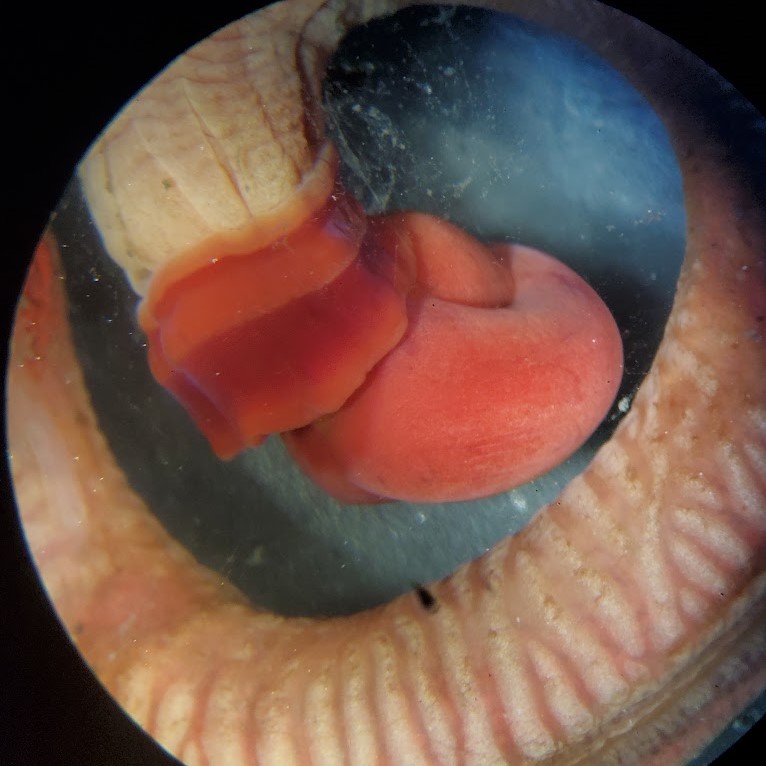
Schizocardium californicum (acorn worm)
Class: Enteropneusta
Location: collected on a coastal dive on Monterey
These phallic beasts are actually our closest cousin outside of our own phylum of Chordata. They sift through sand and leave poop-like strands of filtered sand.
Chordata
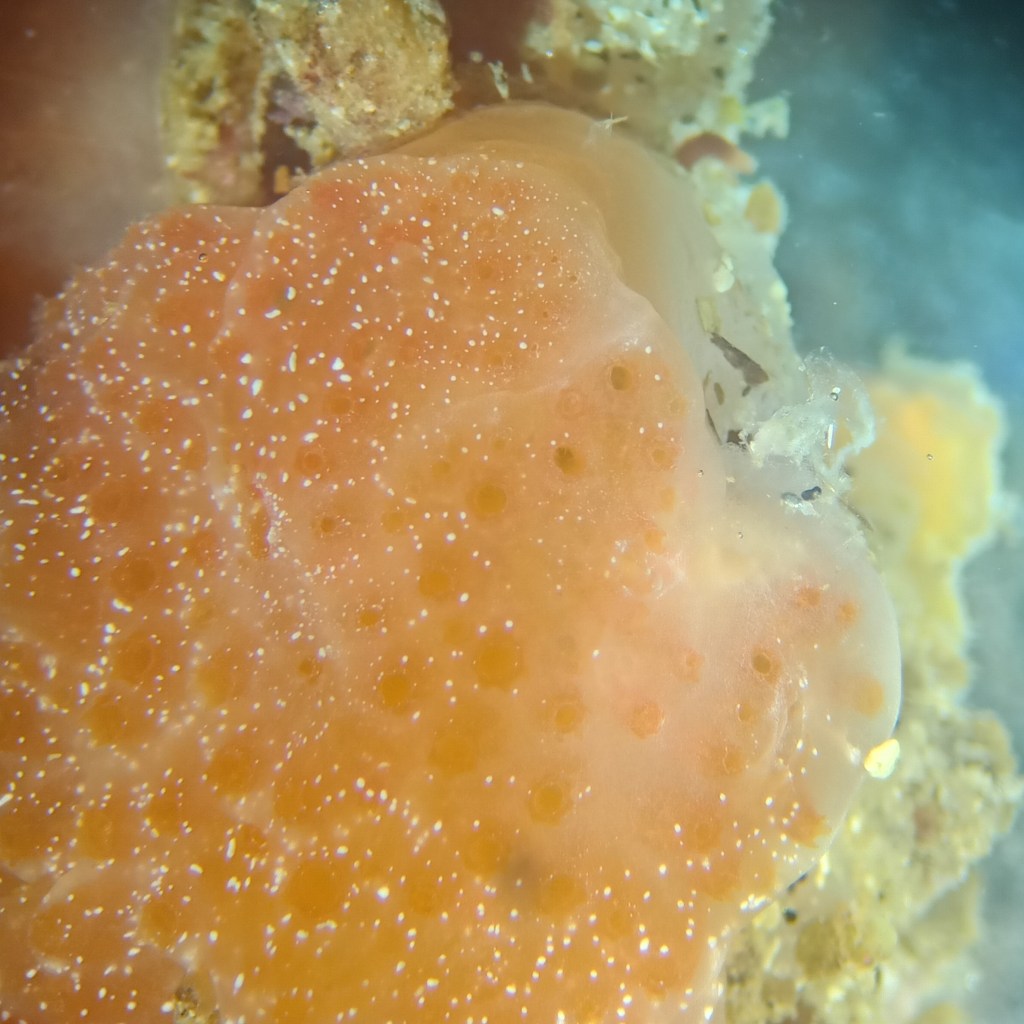
Aplidium solidum (colonial sea pork)
Class: Ascidiacea
Location: Monterey, CA – collected off a dive
What are these things doing in the phylum that includes vertebrates? I recommend doing your own research on what makes this amorphous water-squirting blob closer cousins to us than ANY of the animals above.
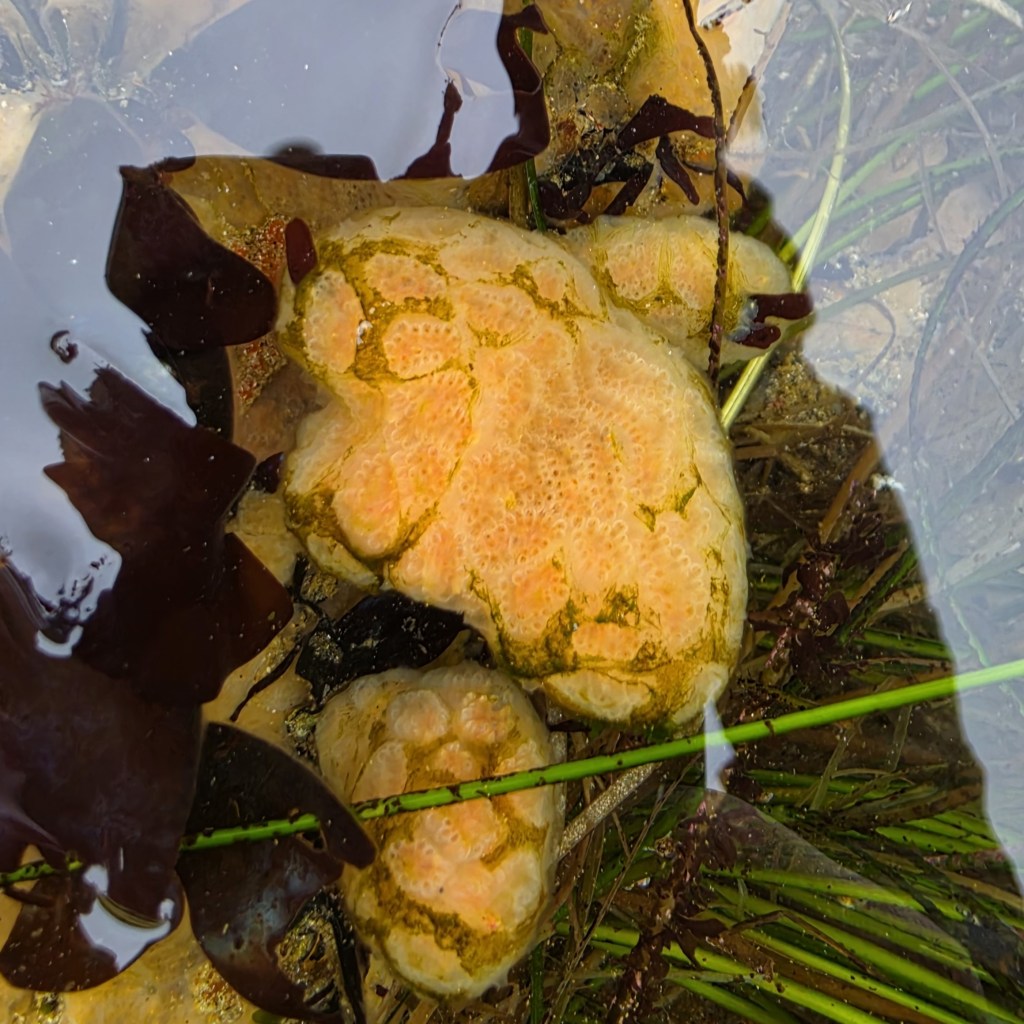
Botryllus schlosseri (chain tunicate)
Class: Ascidiacea
Location: Fanshell Beach
A slightly invasive species of ascidian that covers rocks, kelp, and occasionally even boat propellers.
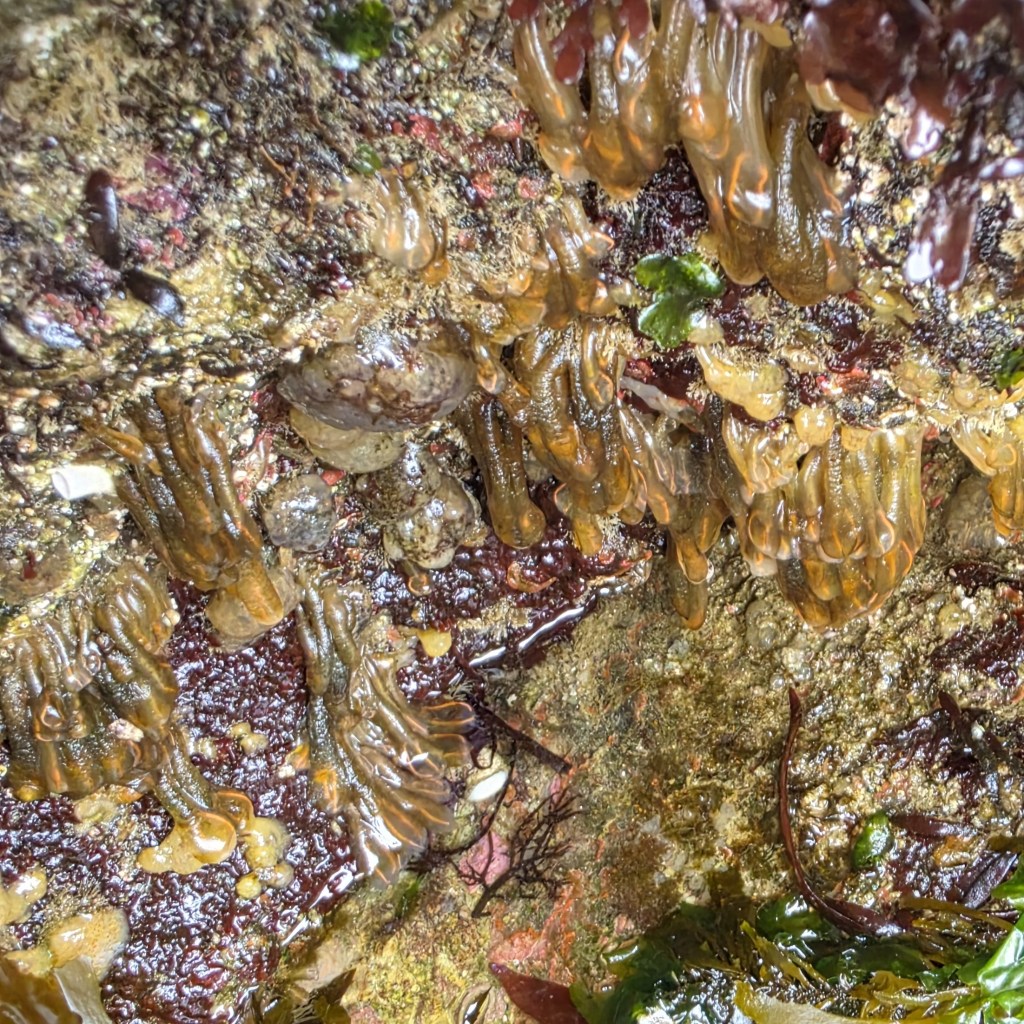
Clavelina huntsmani (light bulb tunicate)
Class: Ascidiacea
Location: Fanshell Beach
Hanging off the underside of large boulders in the low intertidal, the beauty of these sea squirts is lost when not submerged. Underwater, they truly look like a small field of incandescent light bulbs swaying in the current.
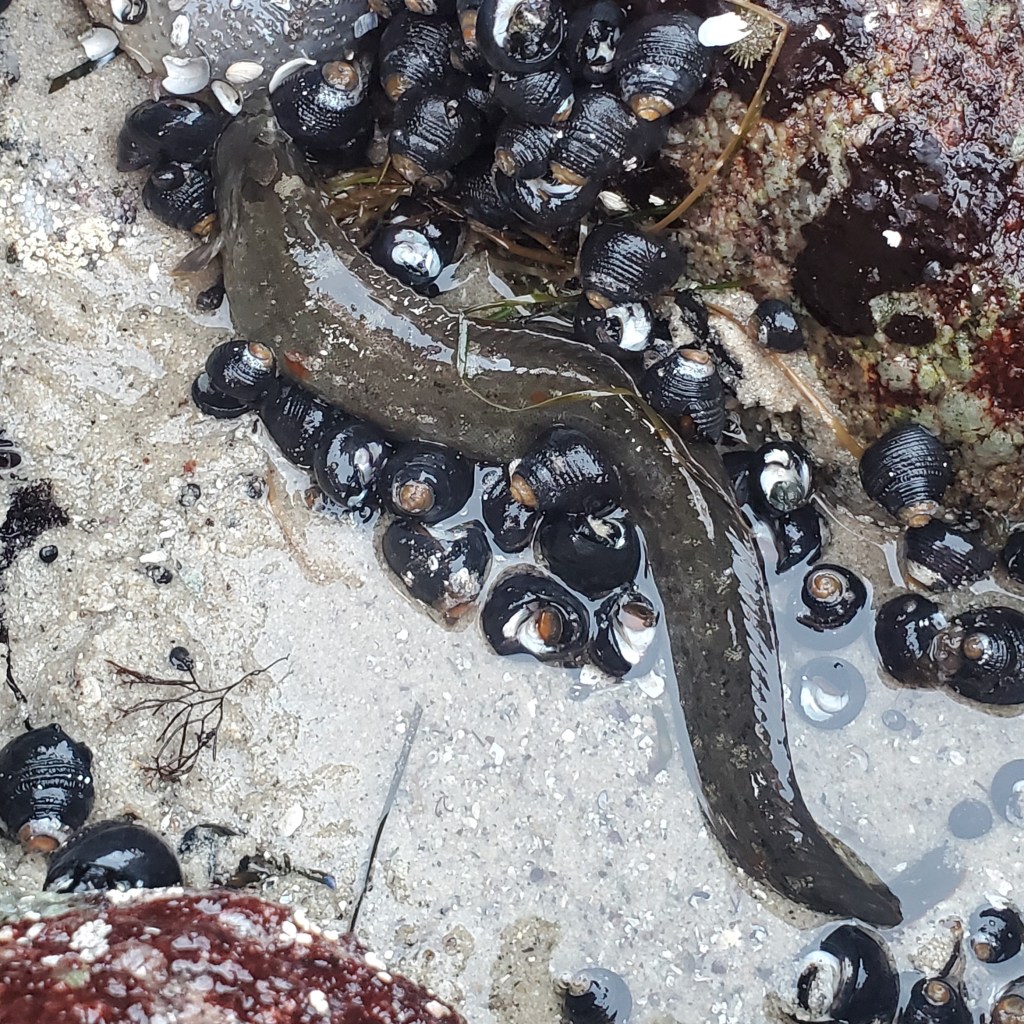
Xiphister mucosus (rock eel)
Class: Teleostei
Location: Asilomar, CA
I hate eels and pricklebacks with a passion. They are erratic little jumpscares under each rock. My heart almost leapt out of my chest when I found this one at almost 1 foot long.
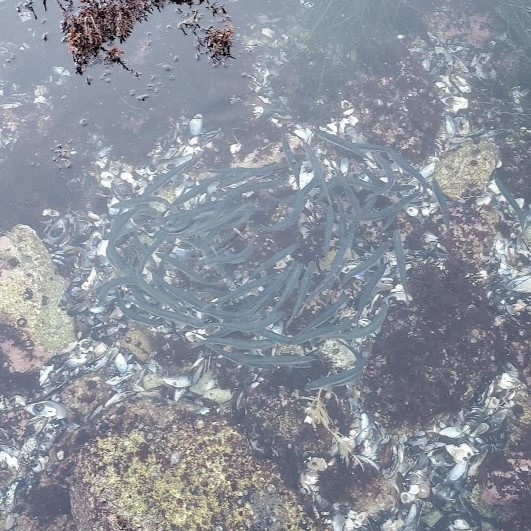
Engraulis mordax (northern anchovies)
Class: Teleostei
Location: Hopkins Marine Station, CA
It’s an extremely rare and rather sad sight to see a school of anchovies stranded in a tide pool. In their panic, they often batter themselves to death trying to swim out of the pool.
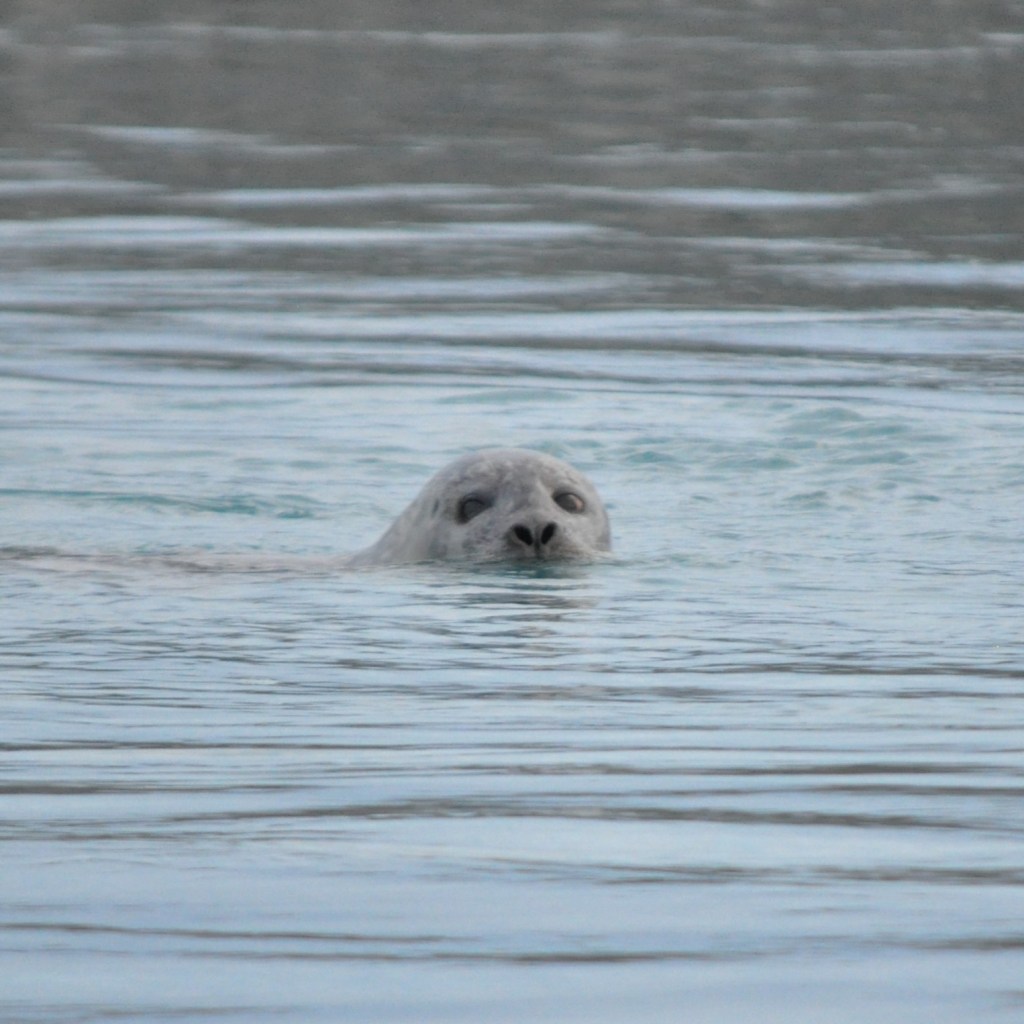
Halichoerus grypus (Atlantic Grey Seal)
Class: Mammalia
Location: Jökulsárlón, Iceland
The inaugural mammal on my almanac. These sea puppies are actually renowned for having a more horse-like face.
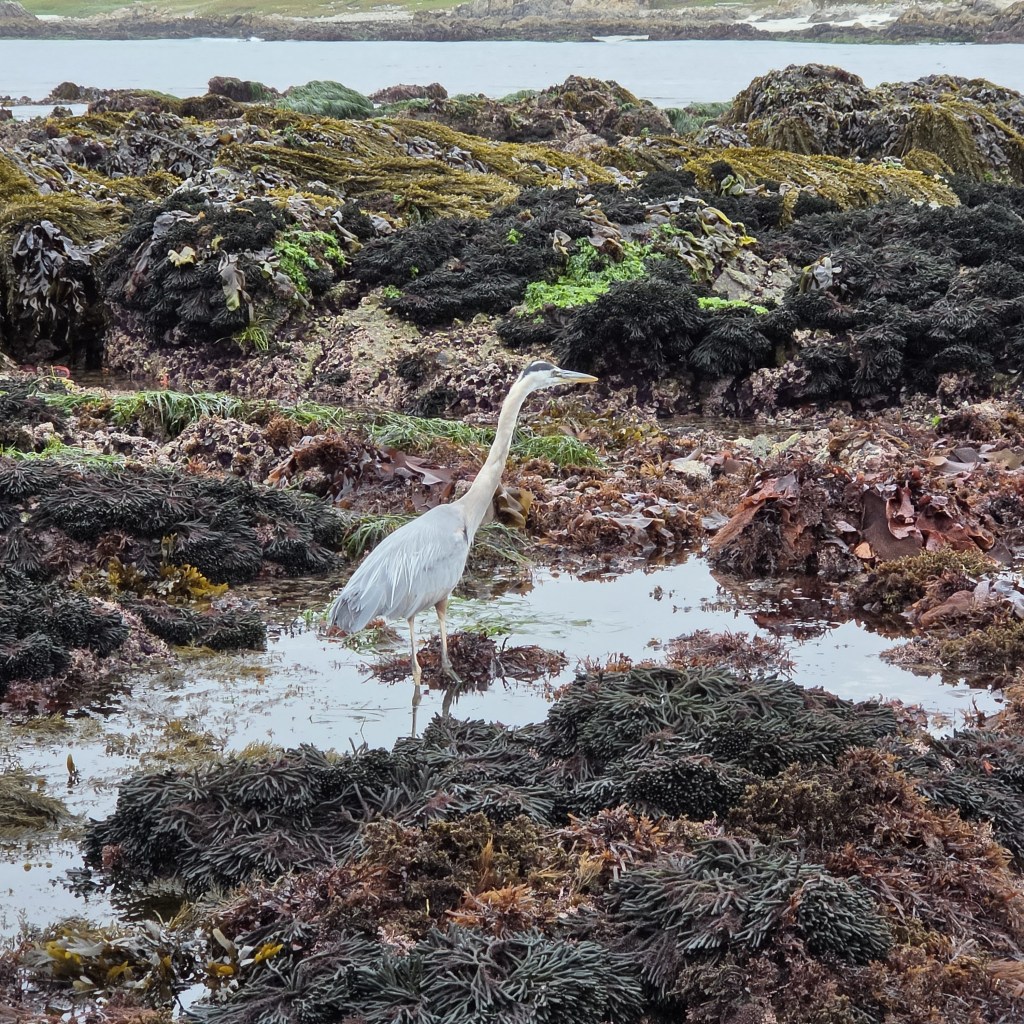
Ardea herodias (Great Blue Heron)
Class: Aves
Location: Fanshell Beach
The first bird, and strictly non-aquatic member of this list. I watched this one snatch a small fish out of the pool with pinpoint precision. Maybe one day, I get into bird watching.
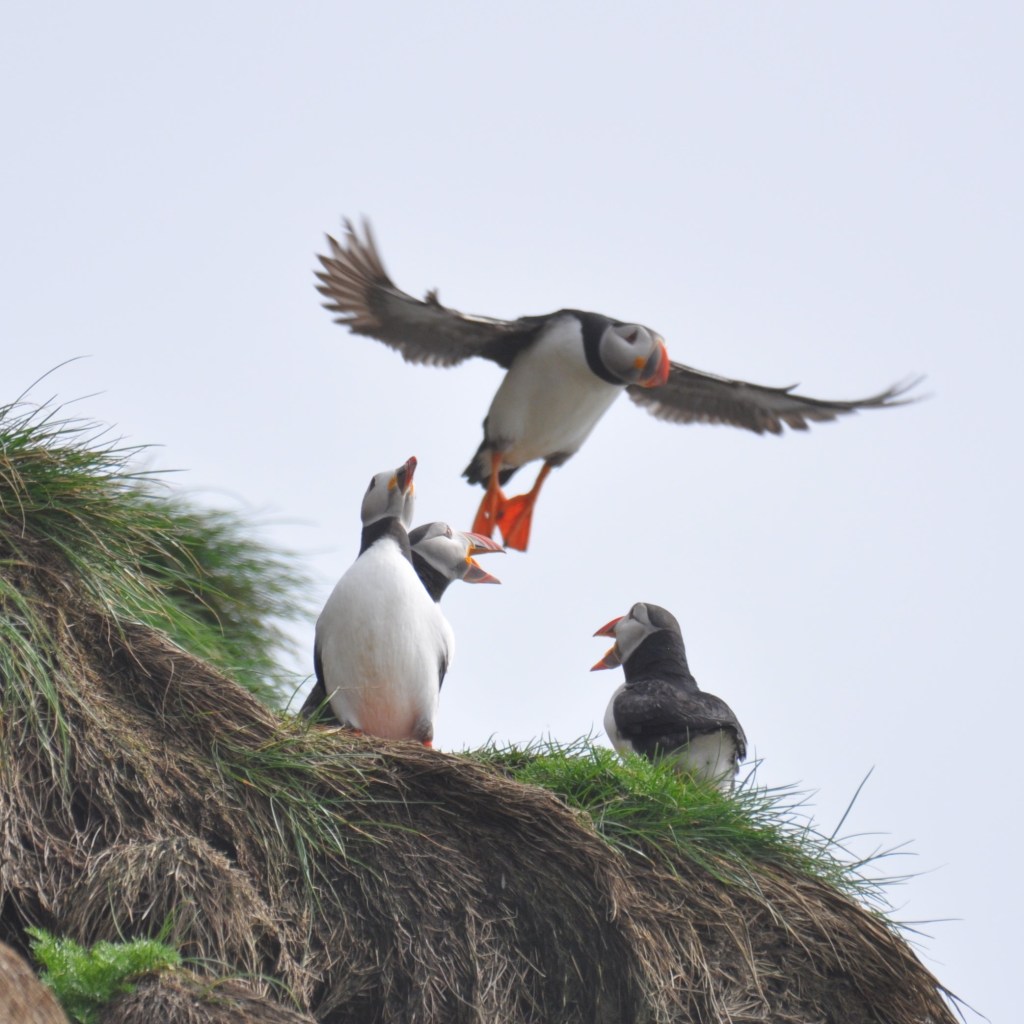
Fratercula arctica (Puffin)
Class: Aves
Location: Vik, Iceland
These tiny birds (not penguins!) were spotted by the hundreds on the sea-misted basalt column cliffs of Vik. They were much smaller than I expected them to be, and it’s a complete miracle how they manage to fly.

