
Introduction to Continuum Mechanics Pretty figures backed by painful math “This is wrinkling my brain” – Troy Barnes. I had so much difficulty with this course that I ended up taking it over the course of two semesters. For any previous doubts I had about the field of mechanical engineering lacking in computational challenge, thisContinueContinue reading “ME 185”
Author Archives: slin1923
EE C128
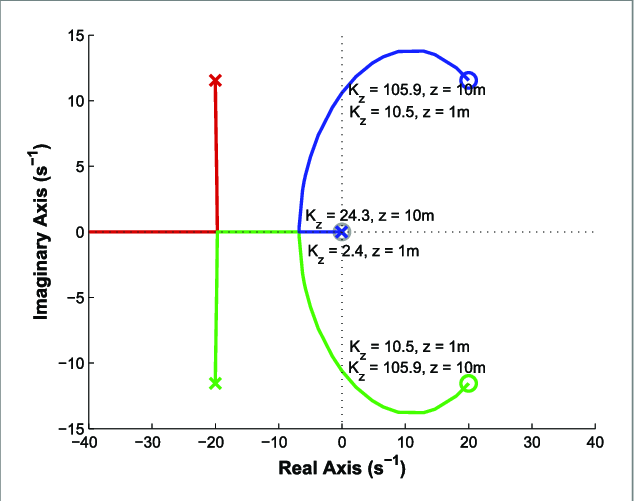
Roots and Poles galore. If you have no idea what these are, this is La-place to learn about them.
ME 102B

You know what really grinds my gears…?
Magnetic Levitation
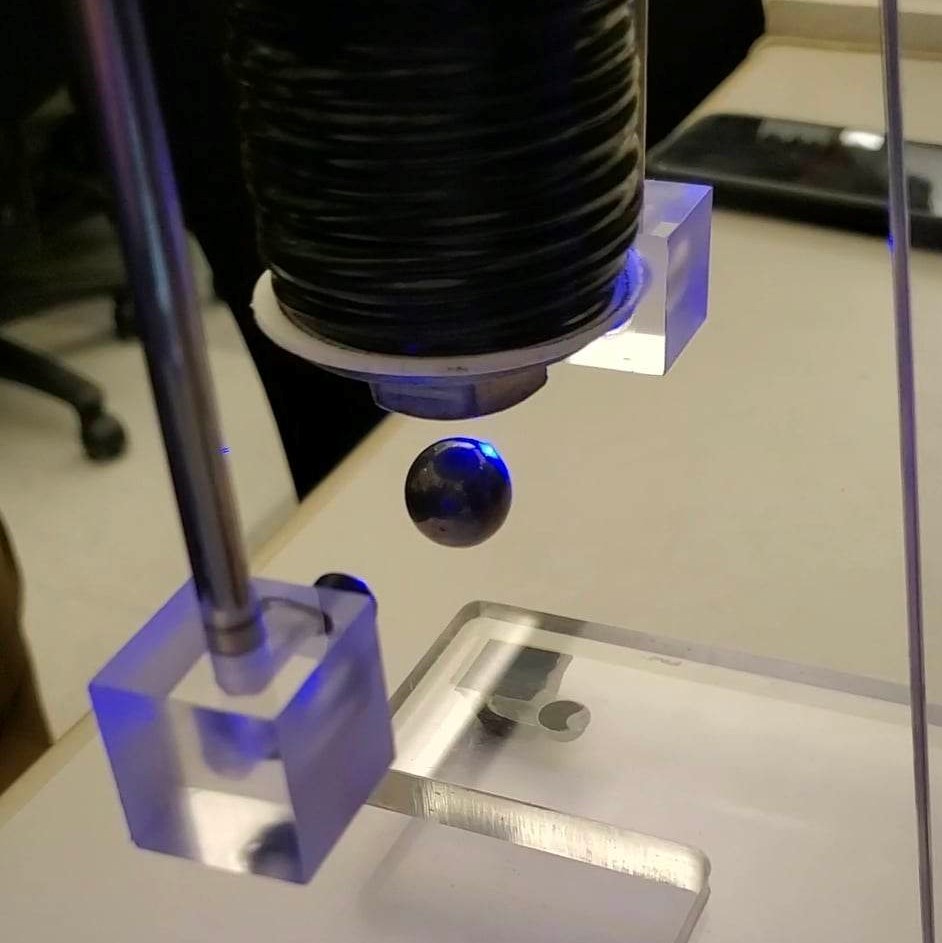
https://youtu.be/36RQNk6GTtM I had a premonition that we fell into a rhythm where the music don’t stop for life… Everyone has tried to levitate an object using a fridge magnet. After a few half-hearted attempts you realize that, though possible in theory, it is not possible in practice. If you get ever so slightly too closeContinueContinue reading “Magnetic Levitation”
Eggspresso
Picture this: you wake up in the morning after hitting the snooze button twice. You’re still feeling sluggish but you need to bounce lest your manager berate you for tardiness again. You load a k-pod into your Keurig and 3 raw eggs into your Eggspresso which takes you 30 seconds tops. For the next 3ContinueContinue reading “Eggspresso”
Viscosity Meter
https://youtu.be/56R0j-nlmV4 Most of us know viscosity as how “thick” or “sticky” a liquid is. For example, honey has a high viscosity while water has a low viscosity. However, the formal definition of viscosity is the “tendency of a fluid to resist shear stress”, and viscosity can actually be measured in Pascal-seconds [Pa-s]. How is thisContinueContinue reading “Viscosity Meter”
UGBA 102B
Managerial Accounting I went into this course dreading it for what I anticipated to come. UGBA 102A, Financial Accounting, though never technically challenging, boiled down to knowledge of a library of accounting rules set out by GAAP to help companies accurately convey their financial status to external investors and the public. Studying for 102A examsContinueContinue reading “UGBA 102B”
Cartesian Philosophy
René Descartes, the 17th century French philosopher whose mind was at work at the height of the Scientific Revolution, was a cornerstone philosopher whose ideas have stood the test of time. Although he is best known for being the creator of the XYZ cartesian coordinate system, geometry as we know it, and the bedrock forContinueContinue reading “Cartesian Philosophy”
Proving God Exists… Casually
Descartes attempts to establish the existence of an infinite higher being, namely God, via the method of causal proof. Causal proof is built on a basis of two forms of reality and the transferring of said realities between a cause and its effect. Formal realities are most aptly characterized as tangible realities and are rankedContinueContinue reading “Proving God Exists… Casually”
“I think, therefore I am”
In his Meditations on First Philosophy, Descartes takes it upon himself to cast aside all that he has previously known by finding clear reason for doubt, and he uses his “blank cognitive slate” as a basis for finding certainty. After establishing that our senses deceive us, Descartes must establish something he can claim with certaintyContinueContinue reading ““I think, therefore I am””
 seanlin.dev